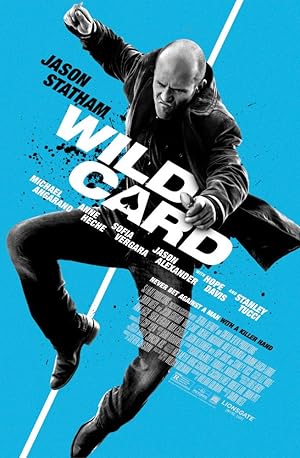
Wild Card
Nick Wild (Jason Statham) is a Las Vegas bodyguard with lethal professional skills and a personal gambling problem. When a friend is beaten by a sadistic thug, Nick strikes back, only to find out the thug is the son of a powerful mob boss. Suddenly Nick is plunged into the criminal underworld, chased by enforcers and wanted by the mob. Having raised the stakes, Nick has one last play to change his fortunes...and this time, it's all or nothing.
The film financial setback against its mid-range budget of $30.0M, earning $6.7M globally (-78% loss). While initial box office returns were modest, the film has gained appreciation for its innovative storytelling within the action genre.


Plot Structure
Story beats plotted across runtime


Narrative Arc
Emotional journey through the story's key moments
Story Circle
Blueprint 15-beat structure
Arcplot Score Breakdown
Weighted: Precision (70%) + Arc (15%) + Theme (15%)
Wild Card (2015) reveals carefully calibrated narrative architecture, characteristic of Simon West's storytelling approach. This structural analysis examines how the film's 15-point plot structure maps to proven narrative frameworks across 1 hour and 32 minutes. With an Arcplot score of 6.9, the film balances conventional beats with creative variation.
Structural Analysis
The Status Quo at 1 minutes (1% through the runtime) establishes Nick Wild sits alone in a Las Vegas diner, establishing his solitary existence as a bodyguard-for-hire living on the margins of the city's underworld, dreaming of escape to Corsica.. The analysis reveals that this early placement immediately immerses viewers in the story world.
The inciting incident occurs at 11 minutes when Holly, a former acquaintance, arrives beaten and traumatized. She reveals that mobster Danny DeMarco brutalized and raped her, begging Nick to help her get revenge.. At 11% through the film, this Disruption aligns precisely with traditional story structure. This beat shifts the emotional landscape, launching the protagonist into the central conflict.
The First Threshold at 22 minutes marks the transition into Act II, occurring at 24% of the runtime. This illustrates the protagonist's commitment to Nick actively commits to helping Holly by confronting Danny DeMarco at his hotel. He humiliates DeMarco and forces him to apologize, knowingly making himself a target of the mob., moving from reaction to action.
At 45 minutes, the Midpoint arrives at 49% of the runtime—precisely centered, creating perfect narrative symmetry. Structural examination shows that this crucial beat Nick goes on an incredible winning streak at the blackjack tables, amassing over $500,000—enough to finally escape to Corsica. A false victory: his addiction won't let him walk away., fundamentally raising what's at risk. The emotional intensity shifts, dividing the narrative into clear before-and-after phases.
The Collapse moment at 69 minutes (75% through) represents the emotional nadir. Here, Nick gambles away everything. His dream of Corsica dies as the last chips disappear. Beaten by DeMarco's thugs and broke, he lies bloodied on the pavement—a whiff of death both literal and metaphorical., demonstrates the protagonist at their lowest point. This beat's placement in the final quarter sets up the climactic reversal.
The Second Threshold at 74 minutes initiates the final act resolution at 80% of the runtime. Cyrus offers Nick the money for Corsica as a gift of friendship. Nick realizes he must accept help and connection—his need—rather than trying to do everything alone. He also resolves to end the threat from Baby., demonstrating the transformation achieved throughout the journey.
Emotional Journey
Wild Card's emotional architecture traces a deliberate progression across 15 carefully calibrated beats.
Narrative Framework
This structural analysis employs systematic plot point analysis that identifies crucial turning points. By mapping Wild Card against these established plot points, we can identify how Simon West utilizes or subverts traditional narrative conventions. The plot point approach reveals not only adherence to structural principles but also creative choices that distinguish Wild Card within the action genre.
Simon West's Structural Approach
Among the 9 Simon West films analyzed on Arcplot, the average structural score is 7.4, reflecting strong command of classical structure. Wild Card takes a more unconventional approach compared to the director's typical style. For comparative analysis, explore the complete Simon West filmography.
Comparative Analysis
Additional action films include The Bad Guys, Puss in Boots and Venom: The Last Dance. For more Simon West analyses, see The Mechanic, The General's Daughter and Old Guy.
Plot Points by Act
Act I
SetupStatus Quo
Nick Wild sits alone in a Las Vegas diner, establishing his solitary existence as a bodyguard-for-hire living on the margins of the city's underworld, dreaming of escape to Corsica.
Theme
Pinky, Nick's friend, tells him that Vegas always wins and that he can't outrun who he is—suggesting that true change must come from within, not from geographical escape.
Worldbuilding
We see Nick's world: his modest apartment, his various odd jobs protecting clients and handling delicate situations, his addiction to gambling, and his obsessive research into Corsica as his dream escape.
Disruption
Holly, a former acquaintance, arrives beaten and traumatized. She reveals that mobster Danny DeMarco brutalized and raped her, begging Nick to help her get revenge.
Resistance
Nick debates whether to help Holly, knowing it means crossing dangerous mob figures. He investigates DeMarco, weighs the risks against his code of honor, and ultimately decides he cannot walk away from someone in need.
Act II
ConfrontationFirst Threshold
Nick actively commits to helping Holly by confronting Danny DeMarco at his hotel. He humiliates DeMarco and forces him to apologize, knowingly making himself a target of the mob.
Mirror World
Cyrus Kinnick, a wealthy young tech entrepreneur, hires Nick for protection. Cyrus represents connection and friendship—everything Nick denies himself—and will become the vehicle for Nick's transformation.
Premise
Nick balances his work with Cyrus, deals with the fallout from the DeMarco confrontation, and indulges his gambling addiction. The promise of the premise: watching a skilled fixer navigate the dangerous Las Vegas underworld.
Midpoint
Nick goes on an incredible winning streak at the blackjack tables, amassing over $500,000—enough to finally escape to Corsica. A false victory: his addiction won't let him walk away.
Opposition
Baby, DeMarco's powerful boss, sends men after Nick. Simultaneously, Nick's gambling addiction consumes him—he cannot stop playing even with his dream within reach. The external and internal enemies close in together.
Collapse
Nick gambles away everything. His dream of Corsica dies as the last chips disappear. Beaten by DeMarco's thugs and broke, he lies bloodied on the pavement—a whiff of death both literal and metaphorical.
Crisis
Nick hits rock bottom, confronting the reality that his addiction destroyed his one chance at freedom. He isolates himself, processing the loss and facing the truth about his self-destructive patterns.
Act III
ResolutionSecond Threshold
Cyrus offers Nick the money for Corsica as a gift of friendship. Nick realizes he must accept help and connection—his need—rather than trying to do everything alone. He also resolves to end the threat from Baby.
Synthesis
Nick confronts Baby and his men in a brutal final showdown at a restaurant. Using his lethal skills, he eliminates the threat, combining his combat expertise with his newfound acceptance of help from Cyrus.
Transformation
Nick, finally free, prepares to leave Las Vegas for Corsica. Unlike the opening where he was alone and trapped, he now leaves with the support of friends, having learned that accepting help is not weakness but strength.