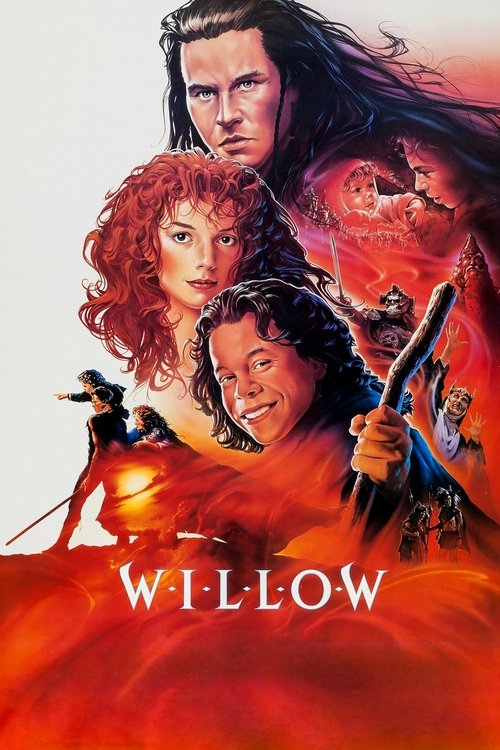
Willow
The evil Queen Bavmorda hunts the newborn princess Elora Danan, a child prophesied to bring about her downfall. When the royal infant is found by Willow, a timid farmer and aspiring sorcerer, he's entrusted with delivering her from evil.
Working with a moderate budget of $35.0M, the film achieved a modest success with $57.3M in global revenue (+64% profit margin).
Nominated for 2 Oscars. 1 win & 13 nominations


Plot Structure
Story beats plotted across runtime


Narrative Arc
Emotional journey through the story's key moments
Story Circle
Blueprint 15-beat structure
Arcplot Score Breakdown
Weighted: Precision (70%) + Arc (15%) + Theme (15%)
Willow (1988) showcases carefully calibrated narrative architecture, characteristic of Ron Howard's storytelling approach. This structural analysis examines how the film's 15-point plot structure maps to proven narrative frameworks across 2 hours and 6 minutes. With an Arcplot score of 7.0, the film balances conventional beats with creative variation.
Structural Analysis
The Status Quo at 1 minutes (1% through the runtime) establishes Willow Ufgood, a diminutive Nelwyn farmer and aspiring sorcerer, struggles with his crops and magic tricks while his village dismisses his dreams of becoming a great wizard.. Of particular interest, this early placement immediately immerses viewers in the story world.
The inciting incident occurs at 15 minutes when Death Dogs attack the Nelwyn village searching for the baby. The village council decides someone must take the baby to the Daikini crossroads to return her to her own kind.. At 12% through the film, this Disruption aligns precisely with traditional story structure. This beat shifts the emotional landscape, launching the protagonist into the central conflict.
The First Threshold at 32 minutes marks the transition into Act II, occurring at 25% of the runtime. This reveals the protagonist's commitment to After the other Nelwyns return home, Willow makes the active choice to continue the quest alone with the baby rather than abandon her to Madmartigan, crossing into the dangerous Daikini world., moving from reaction to action.
At 63 minutes, the Midpoint arrives at 50% of the runtime—precisely centered, creating perfect narrative symmetry. Significantly, this crucial beat Willow finds Fin Raziel, but she's been transformed into a possum by Bavmorda. Despite this setback, they have a false victory when Madmartigan and Sorsha's attraction begins, and they successfully escape the island with Raziel., fundamentally raising what's at risk. The emotional intensity shifts, dividing the narrative into clear before-and-after phases.
The Collapse moment at 95 minutes (75% through) represents the emotional nadir. Here, Bavmorda captures Elora Danan and prepares the ritual to banish her soul to oblivion. The rebel army is decimated by Bavmorda's magic, turned into pigs. All seems lost as evil appears triumphant., illustrates the protagonist at their lowest point. This beat's placement in the final quarter sets up the climactic reversal.
The Second Threshold at 101 minutes initiates the final act resolution at 80% of the runtime. Willow finally succeeds in transforming Fin Raziel back to human form. With her guidance and his growing confidence, they form a plan to infiltrate Nockmaar Castle and stop the ritual., demonstrating the transformation achieved throughout the journey.
Emotional Journey
Willow's emotional architecture traces a deliberate progression across 15 carefully calibrated beats.
Narrative Framework
This structural analysis employs systematic plot point analysis that identifies crucial turning points. By mapping Willow against these established plot points, we can identify how Ron Howard utilizes or subverts traditional narrative conventions. The plot point approach reveals not only adherence to structural principles but also creative choices that distinguish Willow within the fantasy genre.
Ron Howard's Structural Approach
Among the 24 Ron Howard films analyzed on Arcplot, the average structural score is 7.0, demonstrating varied approaches to story architecture. Willow represents one of the director's most structurally precise works. For comparative analysis, explore the complete Ron Howard filmography.
Comparative Analysis
Additional fantasy films include Thinner, Ella Enchanted and Conan the Barbarian. For more Ron Howard analyses, see Apollo 13, Solo: A Star Wars Story and Cinderella Man.
Plot Points by Act
Act I
SetupStatus Quo
Willow Ufgood, a diminutive Nelwyn farmer and aspiring sorcerer, struggles with his crops and magic tricks while his village dismisses his dreams of becoming a great wizard.
Theme
The High Aldwin tells Willow that magic comes from within, not from tricks or wands—foreshadowing that true power lies in believing in oneself.
Worldbuilding
We meet Willow's family, his friend Meegosh, and the Nelwyn village. The evil Queen Bavmorda seeks to destroy a prophesied baby. Willow's children discover the Daikini baby Elora Danan floating down the river.
Disruption
Death Dogs attack the Nelwyn village searching for the baby. The village council decides someone must take the baby to the Daikini crossroads to return her to her own kind.
Resistance
Willow is chosen by the High Aldwin to journey with the baby. He debates leaving his family and safe life. At the crossroads, they encounter the caged warrior Madmartigan, whom Willow initially distrusts.
Act II
ConfrontationFirst Threshold
After the other Nelwyns return home, Willow makes the active choice to continue the quest alone with the baby rather than abandon her to Madmartigan, crossing into the dangerous Daikini world.
Mirror World
Willow encounters the Brownies Franjean and Rool, and meets the exiled fairy sorceress Cherlindrea who reveals Elora's destiny and gives Willow Cherlindrea's wand, entrusting him with real magic for the first time.
Premise
The adventure unfolds as Willow, Madmartigan, and the Brownies journey to find the sorceress Fin Raziel. They encounter dangers, Madmartigan's roguish antics, and Willow begins learning to use real magic.
Midpoint
Willow finds Fin Raziel, but she's been transformed into a possum by Bavmorda. Despite this setback, they have a false victory when Madmartigan and Sorsha's attraction begins, and they successfully escape the island with Raziel.
Opposition
General Kael and Bavmorda's army relentlessly pursue them. Sorsha captures the group. Willow's attempts to transform Raziel back fail repeatedly. The baby is taken to Nockmaar Castle.
Collapse
Bavmorda captures Elora Danan and prepares the ritual to banish her soul to oblivion. The rebel army is decimated by Bavmorda's magic, turned into pigs. All seems lost as evil appears triumphant.
Crisis
Willow despairs as friends are transformed and the baby faces annihilation. He must confront his deepest fears about being powerless and insignificant against such overwhelming dark magic.
Act III
ResolutionSecond Threshold
Willow finally succeeds in transforming Fin Raziel back to human form. With her guidance and his growing confidence, they form a plan to infiltrate Nockmaar Castle and stop the ritual.
Synthesis
The final battle at Nockmaar Castle. Madmartigan duels General Kael. Sorsha joins the heroes. Willow confronts Bavmorda alone in the ritual chamber and uses a disappearing pig trick to fool her, causing her own magic to destroy her.
Transformation
Willow returns home a hero, embraced by his family and village. The High Aldwin acknowledges him as a true sorcerer. The once-doubted farmer has become the great wizard he always dreamed of being.