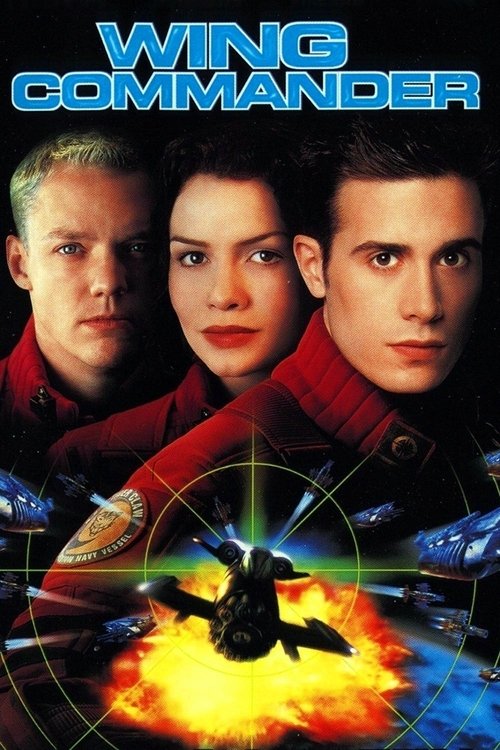
Wing Commander
In the mid-27th century, the Terran Confederation is at war with the vicious alien Kilrathi Empire. When the Kilrathi capture a crucial navigational device that could lead them to Earth, the Confederation’s only hope rests with a small group of young fighter pilots. Lieutenant Christopher Blair, along with his wingman Todd 'Maniac' Marshall and Commander Jeanette 'Angel' Deveraux, must intercept the alien fleet and prevent the destruction of mankind. Battling overwhelming odds and racing against time, they face not only external threats but also inner fears and rivalries as they fight to save Earth from annihilation.
The film financial setback against its mid-range budget of $30.0M, earning $11.6M globally (-61% loss). While initial box office returns were modest, the film has gained appreciation for its fresh perspective within the science fiction genre.


Plot Structure
Story beats plotted across runtime


Narrative Arc
Emotional journey through the story's key moments
Story Circle
Blueprint 15-beat structure
Arcplot Score Breakdown
Weighted: Precision (70%) + Arc (15%) + Theme (15%)
Wing Commander (1999) exemplifies strategically placed plot construction, characteristic of Christopher Roberts's storytelling approach. This structural analysis examines how the film's 15-point plot structure maps to proven narrative frameworks across 1 hour and 40 minutes. With an Arcplot score of 6.8, the film balances conventional beats with creative variation.
Structural Analysis
The Status Quo at 1 minutes (1% through the runtime) establishes The Pegasus Station is attacked by the Kilrathi, establishing the war-torn universe. The Confederation naval base falls, setting up the desperate stakes of humanity's struggle against the alien threat.. Structural examination shows that this early placement immediately immerses viewers in the story world.
The inciting incident occurs at 12 minutes when Blair and Maniac learn the Kilrathi have captured the Pegasus NAVCOM AI, giving them coordinates to jump directly to Earth. The timeline becomes critical: they must warn the fleet before the Kilrathi can launch their attack.. At 12% through the film, this Disruption aligns precisely with traditional story structure. This beat shifts the emotional landscape, launching the protagonist into the central conflict.
The First Threshold at 25 minutes marks the transition into Act II, occurring at 25% of the runtime. This illustrates the protagonist's commitment to Blair makes the choice to use his Pilgrim abilities to navigate the Diligent through a dangerous pulsar anomaly, saving the ship. He commits to embracing his heritage rather than hiding it, proving his value to the skeptical crew., moving from reaction to action.
At 50 minutes, the Midpoint arrives at 50% of the runtime—precisely centered, creating perfect narrative symmetry. Notably, this crucial beat The Tiger Claw discovers the full scope of the Kilrathi plan: a massive fleet heading for Earth through a jump point. The false victory of earlier skirmishes gives way to the realization that they're vastly outnumbered and the stakes are extinction-level., fundamentally raising what's at risk. The emotional intensity shifts, dividing the narrative into clear before-and-after phases.
The Collapse moment at 75 minutes (75% through) represents the emotional nadir. Here, The Tiger Claw is severely damaged in a Kilrathi ambush. Commander Gerald is killed in action, and the carrier seems doomed. Blair's mentor figure is gone, and the mission to save Earth appears to have failed., demonstrates the protagonist at their lowest point. This beat's placement in the final quarter sets up the climactic reversal.
The Second Threshold at 80 minutes initiates the final act resolution at 80% of the runtime. Blair realizes he can use his Pilgrim navigation abilities to locate a hidden jump point that could give them tactical advantage. Angel and the crew finally place their full trust in Blair, synthesizing acceptance with tactical necessity., demonstrating the transformation achieved throughout the journey.
Emotional Journey
Wing Commander's emotional architecture traces a deliberate progression across 15 carefully calibrated beats.
Narrative Framework
This structural analysis employs systematic plot point analysis that identifies crucial turning points. By mapping Wing Commander against these established plot points, we can identify how Christopher Roberts utilizes or subverts traditional narrative conventions. The plot point approach reveals not only adherence to structural principles but also creative choices that distinguish Wing Commander within the science fiction genre.
Comparative Analysis
Additional science fiction films include The Postman, Mad Max 2 and AVP: Alien vs. Predator.
Plot Points by Act
Act I
SetupStatus Quo
The Pegasus Station is attacked by the Kilrathi, establishing the war-torn universe. The Confederation naval base falls, setting up the desperate stakes of humanity's struggle against the alien threat.
Theme
Admiral Tolwyn warns about Pilgrim traitors, stating that trust must be earned. This establishes the theme: Blair must prove himself trustworthy despite his Pilgrim heritage, and learn to trust his own abilities.
Worldbuilding
We meet young pilots Blair and Maniac aboard the Diligent. Blair's Pilgrim heritage is established as both a source of shame and hidden power. The urgency of delivering a message to the Tiger Claw about the Kilrathi fleet creates the mission stakes.
Disruption
Blair and Maniac learn the Kilrathi have captured the Pegasus NAVCOM AI, giving them coordinates to jump directly to Earth. The timeline becomes critical: they must warn the fleet before the Kilrathi can launch their attack.
Resistance
Captain Sansky assigns Blair and Maniac to the Tiger Claw. Blair faces immediate distrust from Angel Deveraux and others due to his Pilgrim heritage. Commander Gerald guides the young pilots while tensions simmer aboard the carrier.
Act II
ConfrontationFirst Threshold
Blair makes the choice to use his Pilgrim abilities to navigate the Diligent through a dangerous pulsar anomaly, saving the ship. He commits to embracing his heritage rather than hiding it, proving his value to the skeptical crew.
Mirror World
Angel begins to see Blair differently after his navigation feat. Their developing relationship represents Blair's integration into the crew and his journey toward acceptance, reflecting the theme of trust transcending prejudice.
Premise
Blair and Maniac fly combat missions against Kilrathi fighters. Blair's piloting skills and Pilgrim instincts prove invaluable in dogfights. The promise of space combat delivers as the young pilots earn their place among the Tiger Claw's squadron.
Midpoint
The Tiger Claw discovers the full scope of the Kilrathi plan: a massive fleet heading for Earth through a jump point. The false victory of earlier skirmishes gives way to the realization that they're vastly outnumbered and the stakes are extinction-level.
Opposition
The Kilrathi close in as the Tiger Claw attempts to reach the fleet and warn Earth. Pilots are lost in increasingly desperate engagements. Internal conflicts arise as some crew members blame Blair's Pilgrim heritage for their troubles.
Collapse
The Tiger Claw is severely damaged in a Kilrathi ambush. Commander Gerald is killed in action, and the carrier seems doomed. Blair's mentor figure is gone, and the mission to save Earth appears to have failed.
Crisis
With the ship crippled and hope fading, the surviving crew must face their likely deaths. Blair grapples with guilt over the losses and whether his heritage brought doom upon them all. The dark night forces a choice: give up or find another way.
Act III
ResolutionSecond Threshold
Blair realizes he can use his Pilgrim navigation abilities to locate a hidden jump point that could give them tactical advantage. Angel and the crew finally place their full trust in Blair, synthesizing acceptance with tactical necessity.
Synthesis
Blair leads the final assault, using his Pilgrim abilities to navigate and guide the remaining fighters. The crew works together to stop the Kilrathi fleet from reaching Earth. In the climactic battle, Blair proves his worth and saves humanity.
Transformation
Blair is celebrated as a hero, fully accepted by Angel and the Tiger Claw crew. He has transformed from a pilot hiding his heritage to one who embraces it. The final image shows Blair confident in his identity, trusted and belonging.