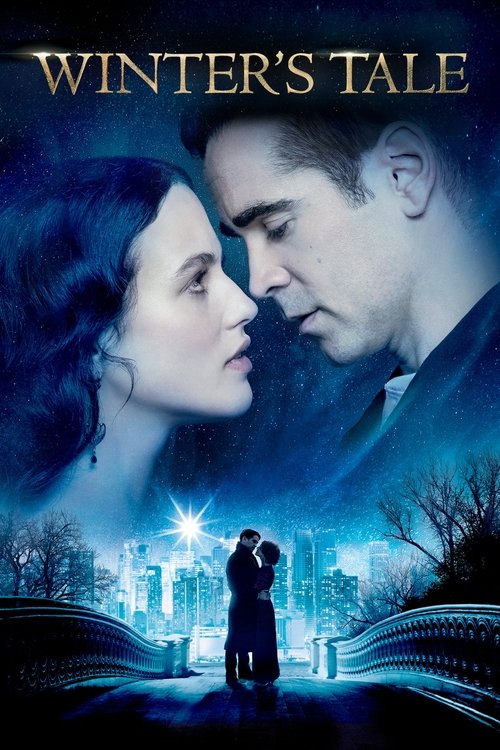
Winter's Tale
A burglar falls for an heiress as she dies in his arms. When he learns that he has the gift of reincarnation, he sets out to save her.
The film disappointed at the box office against its moderate budget of $60.0M, earning $30.8M globally (-49% loss). While initial box office returns were modest, the film has gained appreciation for its innovative storytelling within the drama genre.


Plot Structure
Story beats plotted across runtime


Narrative Arc
Emotional journey through the story's key moments
Story Circle
Blueprint 15-beat structure
Arcplot Score Breakdown
Weighted: Precision (70%) + Arc (15%) + Theme (15%)
Winter's Tale (2014) showcases strategically placed narrative architecture, characteristic of Akiva Goldsman's storytelling approach. This structural analysis examines how the film's 15-point plot structure maps to proven narrative frameworks across 1 hour and 58 minutes. With an Arcplot score of 7.0, the film balances conventional beats with creative variation.
Structural Analysis
The Status Quo at 1 minutes (1% through the runtime) establishes 1916 New York. Peter Lake runs through snowy streets, fleeing from Pearly Soames and his gang. He is a thief on the run, living a life of crime and danger in a magical version of old New York.. Significantly, this early placement immediately immerses viewers in the story world.
The inciting incident occurs at 14 minutes when Peter encounters Beverly Penn at the mansion he intended to rob. Instead of fleeing, he is captivated by her. She is dying of consumption, yet radiantly beautiful. This meeting disrupts his criminal life and awakens something new in him.. At 12% through the film, this Disruption aligns precisely with traditional story structure. This beat shifts the emotional landscape, launching the protagonist into the central conflict.
The First Threshold at 28 minutes marks the transition into Act II, occurring at 24% of the runtime. This demonstrates the protagonist's commitment to Peter chooses to fully commit to Beverly, accepting her father's permission to court her. He actively decides to leave his criminal past behind and embrace love, despite knowing she is dying and Pearly wants him dead., moving from reaction to action.
At 57 minutes, the Midpoint arrives at 48% of the runtime—precisely centered, creating perfect narrative symmetry. The analysis reveals that this crucial beat Beverly dies in Peter's arms despite his desperate attempts to save her. He realizes too late that she was his miracle to perform. Pearly attacks, and Peter falls from a bridge, seemingly to his death. False defeat: love has failed, the miracle unrealized., fundamentally raising what's at risk. The emotional intensity shifts, dividing the narrative into clear before-and-after phases.
The Collapse moment at 85 minutes (72% through) represents the emotional nadir. Here, Peter discovers the truth: Beverly died, and he has forgotten everything, including his true love and his purpose. He faces the realization that he failed his miracle and has been wandering for a century without meaning. His past love is dead and gone., shows the protagonist at their lowest point. This beat's placement in the final quarter sets up the climactic reversal.
The Second Threshold at 93 minutes initiates the final act resolution at 79% of the runtime. Peter realizes his miracle wasn't Beverly—it's Abby, a dying child in the present day (Beverly's descendant). He understands that love and miracles transcend time, and his purpose spans centuries. He now knows what he must do and has the power to heal., demonstrating the transformation achieved throughout the journey.
Emotional Journey
Winter's Tale's emotional architecture traces a deliberate progression across 15 carefully calibrated beats.
Narrative Framework
This structural analysis employs systematic plot point analysis that identifies crucial turning points. By mapping Winter's Tale against these established plot points, we can identify how Akiva Goldsman utilizes or subverts traditional narrative conventions. The plot point approach reveals not only adherence to structural principles but also creative choices that distinguish Winter's Tale within the drama genre.
Comparative Analysis
Additional drama films include After Thomas, South Pacific and Dirty Dancing: Havana Nights.
Plot Points by Act
Act I
SetupStatus Quo
1916 New York. Peter Lake runs through snowy streets, fleeing from Pearly Soames and his gang. He is a thief on the run, living a life of crime and danger in a magical version of old New York.
Theme
Beverly tells Peter about miracles and destiny: "We are all connected. Everyone has a miracle waiting for them." This establishes the film's core theme about destiny, love transcending time, and everyone having a purpose.
Worldbuilding
Establishment of 1916 magical New York where Peter is a thief fleeing his former mentor Pearly Soames (a demon). Peter meets a magical white horse and attempts to rob the Penn mansion, where he encounters the dying Beverly Penn.
Disruption
Peter encounters Beverly Penn at the mansion he intended to rob. Instead of fleeing, he is captivated by her. She is dying of consumption, yet radiantly beautiful. This meeting disrupts his criminal life and awakens something new in him.
Resistance
Peter debates whether to pursue Beverly despite Pearly's threats and her terminal illness. Beverly's father Isaac initially rejects Peter as unsuitable. Peter struggles with being worthy of Beverly's love and the danger he brings to her family.
Act II
ConfrontationFirst Threshold
Peter chooses to fully commit to Beverly, accepting her father's permission to court her. He actively decides to leave his criminal past behind and embrace love, despite knowing she is dying and Pearly wants him dead.
Mirror World
Beverly takes Peter to her family's winter lake house where she must stay in a tent kept below freezing to manage her fever. This magical, isolated world represents their pure love outside normal constraints and embodies the film's themes of miracles.
Premise
Peter and Beverly's romance blossoms at the winter estate. They experience transcendent love despite her illness. Pearly pursues Peter, revealing his demonic nature and seeking permission from Lucifer (Will Smith) to cross into the mortal realm and kill Peter.
Midpoint
Beverly dies in Peter's arms despite his desperate attempts to save her. He realizes too late that she was his miracle to perform. Pearly attacks, and Peter falls from a bridge, seemingly to his death. False defeat: love has failed, the miracle unrealized.
Opposition
Peter wakes in present-day New York with complete amnesia, having lived for a century without aging. He struggles to remember his purpose while Pearly, still alive and hunting him, grows stronger. Peter finds clues to his past but cannot piece together his identity or mission.
Collapse
Peter discovers the truth: Beverly died, and he has forgotten everything, including his true love and his purpose. He faces the realization that he failed his miracle and has been wandering for a century without meaning. His past love is dead and gone.
Crisis
Peter mourns the loss of Beverly and his wasted century. He contemplates giving up, feeling he has no purpose. He visits her grave and struggles with the weight of his failure and immortal existence without love or memory.
Act III
ResolutionSecond Threshold
Peter realizes his miracle wasn't Beverly—it's Abby, a dying child in the present day (Beverly's descendant). He understands that love and miracles transcend time, and his purpose spans centuries. He now knows what he must do and has the power to heal.
Synthesis
Peter confronts Pearly in a final battle to save Abby. He performs his miracle by healing the dying child, fulfilling his cosmic purpose. The white horse returns to aid him. Pearly is defeated when he breaks the demonic rules, and Peter completes his destiny.
Transformation
Peter reunites with Beverly in a transcendent vision/afterlife. Having completed his miracle and saved Abby, he is free to join his true love beyond time. The thief who knew only crime has become a miracle worker who saved a child and found eternal love.