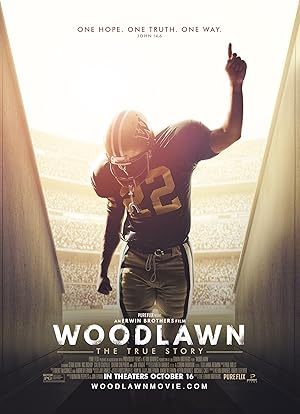
Woodlawn
When Woodlawn High School in Birmingham, Alabama is controversially desegregated in 1973, Tony Nathan, a gifted black high school football player, joins the school's predominantly white football team along with several other black players. The coach, Tandy Gerelds, tells the team to use their shared anger to unite them, but black and white players clash on and off the field. After a riot at the school, Gerelds consents to allowing traveling sports chaplain Hank Erwin to speak to the team as a "motivational speaker". Hank's speech moves nearly the entire team to accept Hank's invitation to commit their lives to Jesus Christ, and join together in prayer. Gerelds does not accept the invitation, and is unsure what to make of the event..
Working with a tight budget of $12.0M, the film achieved a modest success with $14.4M in global revenue (+20% profit margin).


Plot Structure
Story beats plotted across runtime


Narrative Arc
Emotional journey through the story's key moments
Story Circle
Blueprint 15-beat structure
Arcplot Score Breakdown
Weighted: Precision (70%) + Arc (15%) + Theme (15%)
Woodlawn (2015) exemplifies deliberately positioned plot construction, characteristic of Jon Erwin's storytelling approach. This structural analysis examines how the film's 15-point plot structure maps to proven narrative frameworks across 2 hours and 3 minutes. With an Arcplot score of 6.1, the film takes an unconventional approach to traditional narrative frameworks.
Structural Analysis
The Status Quo at 1 minutes (1% through the runtime) establishes Birmingham, Alabama 1973. The city remains deeply divided by racial tension following forced school integration. Woodlawn High School prepares for its first integrated football season amid hostility and fear from both the white and Black communities.. Notably, this early placement immediately immerses viewers in the story world.
The inciting incident occurs at 16 minutes when During a team meeting, Hank delivers a powerful message about Christ's love. In an unexpected spiritual revival, nearly the entire football team—Black and white players alike—accepts the message and commits to faith. This supernatural intervention disrupts the status quo of hatred and division.. At 13% through the film, this Disruption is delayed, allowing extended setup of the story world. This beat shifts the emotional landscape, launching the protagonist into the central conflict.
The First Threshold at 31 minutes marks the transition into Act II, occurring at 25% of the runtime. This reveals the protagonist's commitment to The team makes a collective choice to fully embrace their unity and play as true brothers regardless of race. Coach Gerelds commits to protecting his players and letting them express their faith. Tony steps into his role as a team leader, crossing the threshold from isolated talented player to integrated team member., moving from reaction to action.
At 62 minutes, the Midpoint arrives at 50% of the runtime—precisely centered, creating perfect narrative symmetry. Of particular interest, this crucial beat Woodlawn achieves significant recognition and success, with Tony becoming a celebrated player. The team's unity seems to be changing hearts in the community. However, this is a false victory—their success has drawn unwanted attention from those who oppose integration, and darker forces are gathering against them., fundamentally raising what's at risk. The emotional intensity shifts, dividing the narrative into clear before-and-after phases.
The Collapse moment at 93 minutes (75% through) represents the emotional nadir. Here, Violence erupts as racial hatred reaches its peak. Tony and his family face direct threats. The dream of unity appears shattered as the community's worst elements seem poised to destroy everything the team has built. The whiff of death is present as the very real danger of racial violence threatens lives and the hope that faith could overcome hatred seems naive., shows the protagonist at their lowest point. This beat's placement in the final quarter sets up the climactic reversal.
The Second Threshold at 99 minutes initiates the final act resolution at 81% of the runtime. Tony and the team choose faith over fear, recommitting to play with courage despite the threats. Coach Gerelds rallies the team with the understanding that their unity itself is the victory, regardless of the game's outcome. They decide to take the field for the championship game against Banks High School as a statement of faith., demonstrating the transformation achieved throughout the journey.
Emotional Journey
Woodlawn's emotional architecture traces a deliberate progression across 15 carefully calibrated beats.
Narrative Framework
This structural analysis employs structural analysis methodology used to understand storytelling architecture. By mapping Woodlawn against these established plot points, we can identify how Jon Erwin utilizes or subverts traditional narrative conventions. The plot point approach reveals not only adherence to structural principles but also creative choices that distinguish Woodlawn within the biography genre.
Jon Erwin's Structural Approach
Among the 2 Jon Erwin films analyzed on Arcplot, the average structural score is 6.7, demonstrating varied approaches to story architecture. Woodlawn takes a more unconventional approach compared to the director's typical style. For comparative analysis, explore the complete Jon Erwin filmography.
Comparative Analysis
Additional biography films include After Thomas, Taking Woodstock and The Fire Inside. For more Jon Erwin analyses, see American Underdog.
Plot Points by Act
Act I
SetupStatus Quo
Birmingham, Alabama 1973. The city remains deeply divided by racial tension following forced school integration. Woodlawn High School prepares for its first integrated football season amid hostility and fear from both the white and Black communities.
Theme
Chaplain Hank Erwin speaks to the team about the transformative power of love and faith, stating that hate cannot drive out hate—only love can do that. This establishes the film's central message that spiritual unity can overcome racial division.
Worldbuilding
The fractured world of early 1970s Birmingham is established. Coach Tandy Gerelds struggles to unite a divided team. Black players like Tony Nathan face hostility from white teammates and the community. Tony's exceptional athletic talent is introduced alongside the dangerous racial climate that threatens to tear the team apart.
Disruption
During a team meeting, Hank delivers a powerful message about Christ's love. In an unexpected spiritual revival, nearly the entire football team—Black and white players alike—accepts the message and commits to faith. This supernatural intervention disrupts the status quo of hatred and division.
Resistance
Hank continues mentoring the team while Coach Gerelds wrestles with how to lead these transformed players. The team faces skepticism from the community and school administration. Tony must decide whether this newfound unity is genuine or if the old hatreds will resurface. The players begin tentatively treating each other as brothers.
Act II
ConfrontationFirst Threshold
The team makes a collective choice to fully embrace their unity and play as true brothers regardless of race. Coach Gerelds commits to protecting his players and letting them express their faith. Tony steps into his role as a team leader, crossing the threshold from isolated talented player to integrated team member.
Mirror World
Tony's deepening relationship with his family and his developing brotherhood with white teammate—particularly his bond with teammates who now defend him—embodies the thematic answer. His girlfriend and parents provide the emotional anchor showing that love and faith can create genuine connection across racial lines.
Premise
The promise of the premise unfolds: a spiritually transformed, racially unified team begins dominating on the football field. Tony Nathan emerges as a superstar running back. The Woodlawn Colonels start winning games convincingly. The community begins taking notice as this unlikely brotherhood produces tangible results on the field.
Midpoint
Woodlawn achieves significant recognition and success, with Tony becoming a celebrated player. The team's unity seems to be changing hearts in the community. However, this is a false victory—their success has drawn unwanted attention from those who oppose integration, and darker forces are gathering against them.
Opposition
The backlash intensifies. Racist threats target Tony and his family. The Ku Klux Klan makes their presence known. Community members who oppose integration pressure the school. Internal tensions resurface as the weight of hatred bears down on the team. Coach Gerelds faces pressure to abandon his support of the players' faith expression.
Collapse
Violence erupts as racial hatred reaches its peak. Tony and his family face direct threats. The dream of unity appears shattered as the community's worst elements seem poised to destroy everything the team has built. The whiff of death is present as the very real danger of racial violence threatens lives and the hope that faith could overcome hatred seems naive.
Crisis
In the dark aftermath, Tony, Coach Gerelds, and the team must confront whether their faith is strong enough to overcome genuine evil. The team gathers in fear and uncertainty. Tony questions whether playing football is worth risking his life. The community stands at a crossroads between hatred and hope.
Act III
ResolutionSecond Threshold
Tony and the team choose faith over fear, recommitting to play with courage despite the threats. Coach Gerelds rallies the team with the understanding that their unity itself is the victory, regardless of the game's outcome. They decide to take the field for the championship game against Banks High School as a statement of faith.
Synthesis
The championship game against Banks High School (featuring future Alabama quarterback Jeff Rutledge) unfolds before a massive crowd at Legion Field. The game becomes a symbol larger than football. Tony delivers a transcendent performance. Both teams and their fans witness something remarkable—a game that begins to heal a divided city.
Transformation
The closing images show the transformed reality: a united team that changed a city, Tony Nathan going on to play for Bear Bryant at Alabama and then the NFL, and the legacy of faith and brotherhood that emerged from Woodlawn High School. What began in racial hatred ends in genuine love and lasting change.