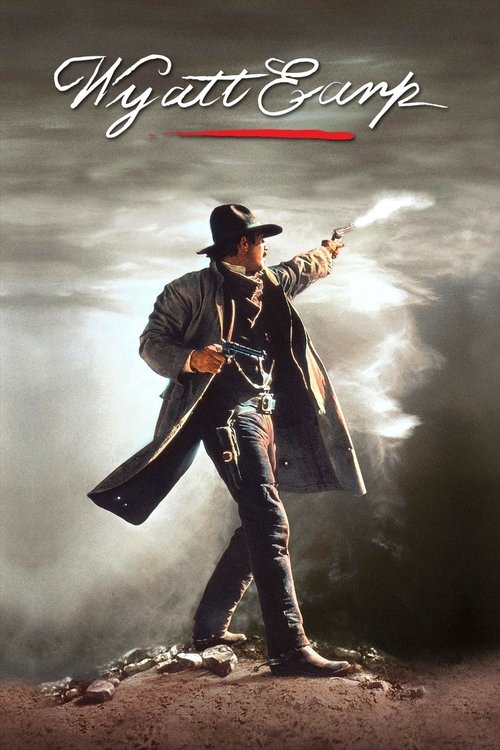
Wyatt Earp
From Wichita to Dodge City, to the O.K. Corral in Tombstone, Wyatt Earp is taught that nothing matters more than family and the law. Joined by his brothers and Doc Holliday, Earp wages war on the dreaded Clanton and McLaury gangs.
The film financial setback against its moderate budget of $63.0M, earning $25.1M globally (-60% loss). While initial box office returns were modest, the film has gained appreciation for its unique voice within the western genre.
Nominated for 1 Oscar. 3 wins & 7 nominations


Plot Structure
Story beats plotted across runtime


Narrative Arc
Emotional journey through the story's key moments
Story Circle
Blueprint 15-beat structure
Arcplot Score Breakdown
Weighted: Precision (70%) + Arc (15%) + Theme (15%)
Wyatt Earp (1994) demonstrates meticulously timed narrative architecture, characteristic of Lawrence Kasdan's storytelling approach. This structural analysis examines how the film's 15-point plot structure maps to proven narrative frameworks across 3 hours and 11 minutes. With an Arcplot score of 6.6, the film balances conventional beats with creative variation.
Structural Analysis
The Status Quo at 2 minutes (1% through the runtime) establishes Young Wyatt Earp on his family's farm in Iowa, watching his father Nicholas prepare to leave for the Civil War. The image of an innocent boy in a peaceful agrarian world establishes the 'before' state of a man who will become defined by violence.. Of particular interest, this early placement immediately immerses viewers in the story world.
The inciting incident occurs at 23 minutes when Urilla dies of typhoid fever while pregnant with their child. This devastating loss shatters Wyatt's dreams of a peaceful life and fundamentally changes his character, setting him on a darker path of grief, alcoholism, and eventual violence.. At 12% through the film, this Disruption aligns precisely with traditional story structure. This beat shifts the emotional landscape, launching the protagonist into the central conflict.
The First Threshold at 48 minutes marks the transition into Act II, occurring at 25% of the runtime. This reveals the protagonist's commitment to Wyatt accepts the position of lawman in Wichita, making an active choice to pursue law and order rather than succumb to grief. This marks his transformation from drifter to the legendary lawman he will become, entering the new world of frontier justice., moving from reaction to action.
At 96 minutes, the Midpoint arrives at 50% of the runtime—precisely centered, creating perfect narrative symmetry. Of particular interest, this crucial beat The Earps arrive in Tombstone, Arizona, to make their fortune in silver mining—a false victory. Wyatt believes he can finally leave law enforcement behind and build wealth legitimately, but Tombstone's lawlessness and the Cowboy gang will inevitably draw him back into violence., fundamentally raising what's at risk. The emotional intensity shifts, dividing the narrative into clear before-and-after phases.
The Collapse moment at 143 minutes (75% through) represents the emotional nadir. Here, Morgan Earp is assassinated while playing billiards, shot through a window by Cowboy assassins. Virgil is also ambushed and crippled. The "whiff of death" becomes literal as Wyatt loses one brother and nearly loses another—the blood family his father said mattered most is being systematically destroyed., shows the protagonist at their lowest point. This beat's placement in the final quarter sets up the climactic reversal.
The Second Threshold at 153 minutes initiates the final act resolution at 80% of the runtime. Wyatt declares his Vendetta Ride, obtaining a federal marshal's commission as cover but operating outside the law. He synthesizes his lawman skills with outlaw ruthlessness. "You tell 'em I'm coming, and hell's coming with me." He crosses into Act 3 with singular purpose: exterminate the Cowboys., demonstrating the transformation achieved throughout the journey.
Emotional Journey
Wyatt Earp's emotional architecture traces a deliberate progression across 15 carefully calibrated beats.
Narrative Framework
This structural analysis employs systematic plot point analysis that identifies crucial turning points. By mapping Wyatt Earp against these established plot points, we can identify how Lawrence Kasdan utilizes or subverts traditional narrative conventions. The plot point approach reveals not only adherence to structural principles but also creative choices that distinguish Wyatt Earp within the western genre.
Lawrence Kasdan's Structural Approach
Among the 8 Lawrence Kasdan films analyzed on Arcplot, the average structural score is 6.8, demonstrating varied approaches to story architecture. Wyatt Earp takes a more unconventional approach compared to the director's typical style. For comparative analysis, explore the complete Lawrence Kasdan filmography.
Comparative Analysis
Additional western films include All the Pretty Horses, Shenandoah and Lone Star. For more Lawrence Kasdan analyses, see The Accidental Tourist, French Kiss and Grand Canyon.
Plot Points by Act
Act I
SetupStatus Quo
Young Wyatt Earp on his family's farm in Iowa, watching his father Nicholas prepare to leave for the Civil War. The image of an innocent boy in a peaceful agrarian world establishes the 'before' state of a man who will become defined by violence.
Theme
Nicholas Earp tells young Wyatt: "Nothing counts so much as blood. The rest are just strangers." This establishes the film's central theme about family loyalty, the bonds of blood, and how far one will go to protect and avenge one's own.
Worldbuilding
Wyatt's formative years are established: his father's strict moral code, the family's westward migration, Wyatt's early marriage to Urilla Sutherland, and his aspirations for a peaceful farming life. The world of the post-Civil War frontier is depicted as a place of both opportunity and lawlessness.
Disruption
Urilla dies of typhoid fever while pregnant with their child. This devastating loss shatters Wyatt's dreams of a peaceful life and fundamentally changes his character, setting him on a darker path of grief, alcoholism, and eventual violence.
Resistance
Wyatt spirals into depression and lawlessness, becoming a horse thief and drunkard. His father rescues him from jail and delivers a harsh ultimatum. Wyatt debates his future: continue self-destruction or rebuild his life. He eventually chooses law enforcement in Wichita, guided by his father's belief in family and order.
Act II
ConfrontationFirst Threshold
Wyatt accepts the position of lawman in Wichita, making an active choice to pursue law and order rather than succumb to grief. This marks his transformation from drifter to the legendary lawman he will become, entering the new world of frontier justice.
Mirror World
Wyatt meets Doc Holliday in Fort Griffin, Texas. Doc, a dying man living fully despite his tuberculosis, becomes Wyatt's unlikely friend and moral mirror. Their relationship embodies the theme of loyalty beyond blood—Doc will prove more faithful than strangers, becoming family by choice.
Premise
The "promise of the premise" delivers classic Western lawman action: Wyatt builds his reputation in Wichita and Dodge City, reunites with brothers Virgil and Morgan, romances actress Mattie Blaylock then meets Josie Marcus, and befriends Doc Holliday. The Earp legend grows through daring confrontations and frontier justice.
Midpoint
The Earps arrive in Tombstone, Arizona, to make their fortune in silver mining—a false victory. Wyatt believes he can finally leave law enforcement behind and build wealth legitimately, but Tombstone's lawlessness and the Cowboy gang will inevitably draw him back into violence.
Opposition
The Cowboys, led by Ike Clanton and Johnny Ringo, grow bolder in their criminality. Tensions escalate as the Earps take positions of authority. Wyatt's relationship with Mattie deteriorates while his affair with Josie deepens. The conflict builds inexorably toward the famous Gunfight at the O.K. Corral, which leaves the Cowboys wounded but not defeated.
Collapse
Morgan Earp is assassinated while playing billiards, shot through a window by Cowboy assassins. Virgil is also ambushed and crippled. The "whiff of death" becomes literal as Wyatt loses one brother and nearly loses another—the blood family his father said mattered most is being systematically destroyed.
Crisis
Wyatt grieves Morgan's death, sending Virgil and the women to safety. He confronts the darkest truth: the law he served cannot protect his family or deliver justice. In this dark night of the soul, Wyatt must decide whether to remain within legal bounds or become the very outlaw violence he once fought against.
Act III
ResolutionSecond Threshold
Wyatt declares his Vendetta Ride, obtaining a federal marshal's commission as cover but operating outside the law. He synthesizes his lawman skills with outlaw ruthlessness. "You tell 'em I'm coming, and hell's coming with me." He crosses into Act 3 with singular purpose: exterminate the Cowboys.
Synthesis
The Vendetta Ride unfolds with brutal efficiency. Wyatt, Doc, and loyal deputies hunt down and kill the Cowboys responsible for Morgan's death and Virgil's maiming. Curly Bill is killed at Iron Springs. Johnny Ringo is executed by Doc (or Wyatt, depending on the account). The Earps achieve bloody justice outside the law.
Transformation
An aged Wyatt, now with Josie, reflects on his life in San Francisco. Unlike the innocent farm boy of the opening, he has become a man forged by loss and violence—yet he found love and outlived his enemies. The transformation shows a man who learned that blood loyalty has costs, but survived to find peace.