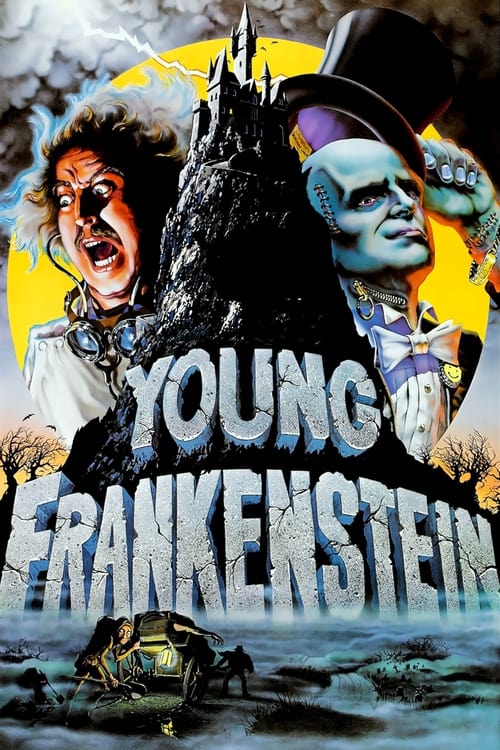
Young Frankenstein
A young neurosurgeon inherits the castle of his grandfather, the famous Dr. Victor von Frankenstein. In the castle he finds a funny hunchback, a pretty lab assistant and the elderly housekeeper. Young Frankenstein believes that the work of his grandfather was delusional, but when he discovers the book where the mad doctor described his reanimation experiment, he suddenly changes his mind.
Despite its modest budget of $2.8M, Young Frankenstein became a commercial juggernaut, earning $86.3M worldwide—a remarkable 2981% return. The film's compelling narrative found its audience, showing that strong storytelling can transcend budget limitations.
Nominated for 2 Oscars. 10 wins & 8 nominations


Plot Structure
Story beats plotted across runtime


Narrative Arc
Emotional journey through the story's key moments
Story Circle
Blueprint 15-beat structure
Arcplot Score Breakdown
Weighted: Precision (70%) + Arc (15%) + Theme (15%)
Young Frankenstein (1974) demonstrates strategically placed narrative design, characteristic of Mel Brooks's storytelling approach. This structural analysis examines how the film's 15-point plot structure maps to proven narrative frameworks across 1 hour and 46 minutes. With an Arcplot score of 6.5, the film balances conventional beats with creative variation.
Structural Analysis
The Status Quo at 1 minutes (1% through the runtime) establishes Dr. Frederick Frankenstein lectures at an American medical school, insisting his name is pronounced "Fronkensteen" and aggressively distancing himself from his grandfather's infamous experiments in reanimation.. Of particular interest, this early placement immediately immerses viewers in the story world.
The inciting incident occurs at 13 minutes when Frederick learns he has inherited his grandfather's estate in Transylvania. Despite his reluctance, he must travel there to settle the will—the call to adventure that will force him to confront his denied heritage.. At 12% through the film, this Disruption aligns precisely with traditional story structure. This beat shifts the emotional landscape, launching the protagonist into the central conflict.
The First Threshold at 27 minutes marks the transition into Act II, occurring at 25% of the runtime. This demonstrates the protagonist's commitment to Frederick discovers his grandfather's secret laboratory and private journal ("How I Did It"). Reading his grandfather's brilliant notes, he makes the fateful choice to continue the experiments—embracing "Frankenstein" and committing to creating life., moving from reaction to action.
At 53 minutes, the Midpoint arrives at 50% of the runtime—precisely centered, creating perfect narrative symmetry. Notably, this crucial beat The Monster is alive and responsive. Frederick presents him to a theater audience in a triumphant showcase where they perform "Puttin' on the Ritz" together—a false victory as the Monster appears civilized and Frederick seems vindicated as a genius., fundamentally raising what's at risk. The emotional intensity shifts, dividing the narrative into clear before-and-after phases.
The Collapse moment at 80 minutes (75% through) represents the emotional nadir. Here, The Monster has kidnapped Elizabeth, the villagers are ready to kill them both, and Frederick faces the complete failure of his experiment. His dream of controlled, scientific reanimation has created only chaos and destruction—the "whiff of death" as his creation may be destroyed., indicates the protagonist at their lowest point. This beat's placement in the final quarter sets up the climactic reversal.
The Second Threshold at 85 minutes initiates the final act resolution at 80% of the runtime. Frederick has the breakthrough: he will use his grandfather's equipment to transfer some of his own brain power to the Monster. He fully embraces being a Frankenstein, willing to sacrifice part of himself to complete his creation—synthesis of old and new., demonstrating the transformation achieved throughout the journey.
Emotional Journey
Young Frankenstein's emotional architecture traces a deliberate progression across 15 carefully calibrated beats.
Narrative Framework
This structural analysis employs a 15-point narrative structure framework that maps key story moments. By mapping Young Frankenstein against these established plot points, we can identify how Mel Brooks utilizes or subverts traditional narrative conventions. The plot point approach reveals not only adherence to structural principles but also creative choices that distinguish Young Frankenstein within the comedy genre.
Mel Brooks's Structural Approach
Among the 8 Mel Brooks films analyzed on Arcplot, the average structural score is 7.1, reflecting strong command of classical structure. Young Frankenstein takes a more unconventional approach compared to the director's typical style. For comparative analysis, explore the complete Mel Brooks filmography.
Comparative Analysis
Additional comedy films include The Bad Guys, Ella Enchanted and The Evening Star. For more Mel Brooks analyses, see High Anxiety, History of the World: Part I and Spaceballs.
Plot Points by Act
Act I
SetupStatus Quo
Dr. Frederick Frankenstein lectures at an American medical school, insisting his name is pronounced "Fronkensteen" and aggressively distancing himself from his grandfather's infamous experiments in reanimation.
Theme
A student challenges Frederick about whether his grandfather's work could actually bring the dead back to life. Frederick defensively declares "my grandfather was a very sick man" - setting up the thematic question of whether one can truly escape their family legacy.
Worldbuilding
Frederick's respectable American life is established: his prestigious teaching position, his frigid fiancée Elizabeth who won't let him touch her, and his complete rejection of the Frankenstein family legacy. He receives word of an inheritance in Transylvania.
Disruption
Frederick learns he has inherited his grandfather's estate in Transylvania. Despite his reluctance, he must travel there to settle the will—the call to adventure that will force him to confront his denied heritage.
Resistance
Frederick travels to Transylvania where he meets Igor (pronounced "Eye-gor"), the beautiful lab assistant Inga, and the mysterious housekeeper Frau Blücher. He explores the castle while maintaining his determination to simply handle the estate and leave.
Act II
ConfrontationFirst Threshold
Frederick discovers his grandfather's secret laboratory and private journal ("How I Did It"). Reading his grandfather's brilliant notes, he makes the fateful choice to continue the experiments—embracing "Frankenstein" and committing to creating life.
Mirror World
Frederick and Inga begin working closely together in the laboratory, their chemistry evident. Inga represents warmth, passion, and acceptance of who Frederick truly is—the opposite of Elizabeth's cold rejection of anything improper.
Premise
The fun and games of mad science: Frederick, Igor, and Inga steal a corpse, Igor brings back an "Abby Normal" brain, and Frederick successfully brings the Monster to life. Classic horror parody sequences including the "Puttin' on the Ritz" rehearsals and charades with the Monster.
Midpoint
The Monster is alive and responsive. Frederick presents him to a theater audience in a triumphant showcase where they perform "Puttin' on the Ritz" together—a false victory as the Monster appears civilized and Frederick seems vindicated as a genius.
Opposition
Everything falls apart: the theater performance goes wrong when the Monster panics from fire, he escapes and terrorizes the village (including the blind hermit scene), Inspector Kemp rallies an angry mob, and Elizabeth arrives and is abducted by the Monster. Frederick's creation has become uncontrollable.
Collapse
The Monster has kidnapped Elizabeth, the villagers are ready to kill them both, and Frederick faces the complete failure of his experiment. His dream of controlled, scientific reanimation has created only chaos and destruction—the "whiff of death" as his creation may be destroyed.
Crisis
Frederick must confront the consequences of his choices. He realizes that the Monster isn't truly the problem—it's the incomplete nature of the creation. The Monster needs more than life; he needs humanity, intelligence, and acceptance.
Act III
ResolutionSecond Threshold
Frederick has the breakthrough: he will use his grandfather's equipment to transfer some of his own brain power to the Monster. He fully embraces being a Frankenstein, willing to sacrifice part of himself to complete his creation—synthesis of old and new.
Synthesis
The brain transfer procedure, Frederick and the Monster connected. The mob breaks in but the now-eloquent Monster calms them with a sophisticated speech. Frederick awakens changed but alive, having given part of himself to his creation. Resolution: Frederick marries Inga, Elizabeth runs off with the Monster.
Transformation
Frederick in bed with Inga, now fully at peace with his Frankenstein heritage. When Inga asks about the "enormous schwanzstucker," Frederick howls like the Monster—he has joyfully integrated both his refined intellect and his grandfather's mad creative passion. He is whole.