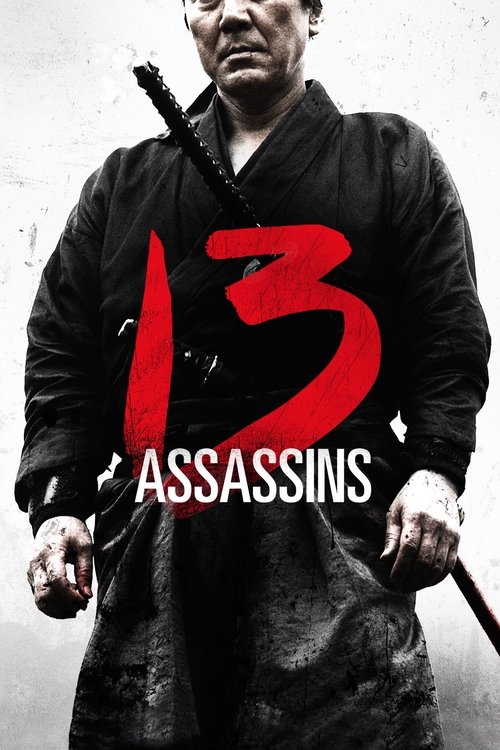
13 Assassins
A bravado period action film set at the end of Japan's feudal era in which a group of unemployed samurai are enlisted to bring down a sadistic lord and prevent him from ascending to the throne and plunging the country into a war-torn future.
Despite its modest budget of $6.0M, 13 Assassins became a commercial success, earning $17.6M worldwide—a 193% return.
15 wins & 28 nominations


Plot Structure
Story beats plotted across runtime


Narrative Arc
Emotional journey through the story's key moments
Story Circle
Blueprint 15-beat structure
Arcplot Score Breakdown
Weighted: Precision (70%) + Arc (15%) + Theme (15%)
13 Assassins (2010) demonstrates meticulously timed dramatic framework, characteristic of Takashi Miike's storytelling approach. This structural analysis examines how the film's 15-point plot structure maps to proven narrative frameworks across 2 hours and 21 minutes. With an Arcplot score of 7.0, the film balances conventional beats with creative variation.
Characters
Cast & narrative archetypes

Shinzaemon Shimada
Lord Naritsugu Matsudaira
Koyata Kiga
Kuranaga Saheita
Hanbei Kitou
Hirayama Kuranojo
Mitsuhashi Sahei
Ogura Shume
Higuchi Akashi
Main Cast & Characters
Shinzaemon Shimada
Played by Koji Yakusho
A masterless samurai recruited to assassinate the cruel Lord Naritsugu. Stoic, strategic, and willing to sacrifice everything for justice.
Lord Naritsugu Matsudaira
Played by Goro Inagaki
The sadistic half-brother of the Shogun who commits horrific atrocities without consequence. The primary antagonist.
Koyata Kiga
Played by Yusuke Iseya
A wild mountain hunter who joins the assassins. Unpredictable, skilled, and claims to be immortal.
Kuranaga Saheita
Played by Hiroki Matsukata
Shinzaemon's devoted nephew and skilled swordsman. Eager to prove himself and honor his uncle.
Hanbei Kitou
Played by Masachika Ichimura
Lord Naritsugu's chief samurai and protector. Loyal to a fault, conflicted between duty and morality.
Hirayama Kuranojo
Played by Tsuyoshi Ihara
A samurai whose family was destroyed by Naritsugu. Joins the assassination plot seeking vengeance and justice.
Mitsuhashi Sahei
Played by Takayuki Yamada
A gambler and ronin recruited by Shinzaemon. Brings street-fighting skills and humor to the group.
Ogura Shume
Played by Kazuki Namioka
A skilled warrior and loyal member of Shinzaemon's assassination team.
Higuchi Akashi
Played by Ikki Sawamura
A samurai who joins the assassination plot to stop Naritsugu's reign of terror.
Structural Analysis
The Status Quo at 1 minutes (1% through the runtime) establishes A samurai commits seppuku in protest against Lord Naritsugu's cruelty, establishing the dark status quo of a corrupt feudal system where evil goes unchallenged.. Structural examination shows that this early placement immediately immerses viewers in the story world.
The inciting incident occurs at 17 minutes when Sir Doi secretly commissions Shinzaemon to assassinate Lord Naritsugu before he gains more power. This forbidden mission disrupts Shinzaemon's peaceful retirement and demands he choose between loyalty to the system and moral justice.. At 12% through the film, this Disruption aligns precisely with traditional story structure. This beat shifts the emotional landscape, launching the protagonist into the central conflict.
The First Threshold at 36 minutes marks the transition into Act II, occurring at 25% of the runtime. This indicates the protagonist's commitment to Shinzaemon accepts the mission with resolve, stating "If this world has become a place where evil can prosper, then let me die in the old world." He actively chooses death with honor over a peaceful life, crossing into the world of the assassination plot., moving from reaction to action.
At 72 minutes, the Midpoint arrives at 51% of the runtime—precisely centered, creating perfect narrative symmetry. The analysis reveals that this crucial beat Hanbei, Naritsugu's brilliant samurai protector and Shinzaemon's old rival, deduces the assassination plot. The stakes raise dramatically as the hunters become the hunted. What seemed like a perfect plan now faces an equal strategic mind, transforming this into a true contest., fundamentally raising what's at risk. The emotional intensity shifts, dividing the narrative into clear before-and-after phases.
The Collapse moment at 105 minutes (75% through) represents the emotional nadir. Here, The massive battle begins and the assassins start dying one by one. The village burns, traps fail, and the warriors are overwhelmed by sheer numbers. Shinzaemon's carefully laid plans crumble into chaos. Death surrounds them—literal and unavoidable., demonstrates the protagonist at their lowest point. This beat's placement in the final quarter sets up the climactic reversal.
The Second Threshold at 112 minutes initiates the final act resolution at 79% of the runtime. Shinzaemon has a moment of clarity in the chaos. He synthesizes the old samurai way with the bonds of brotherhood formed during the mission. Accepts that death with purpose is the ultimate samurai achievement. Renewed resolve to reach Naritsugu at any cost., demonstrating the transformation achieved throughout the journey.
Emotional Journey
13 Assassins's emotional architecture traces a deliberate progression across 15 carefully calibrated beats.
Narrative Framework
This structural analysis employs systematic plot point analysis that identifies crucial turning points. By mapping 13 Assassins against these established plot points, we can identify how Takashi Miike utilizes or subverts traditional narrative conventions. The plot point approach reveals not only adherence to structural principles but also creative choices that distinguish 13 Assassins within the adventure genre.
Takashi Miike's Structural Approach
Among the 6 Takashi Miike films analyzed on Arcplot, the average structural score is 6.9, demonstrating varied approaches to story architecture. 13 Assassins represents one of the director's most structurally precise works. For comparative analysis, explore the complete Takashi Miike filmography.
Comparative Analysis
Additional adventure films include The Black Stallion, The Bad Guys and Puss in Boots. For more Takashi Miike analyses, see One Missed Call, The Great Yokai War and Laplace's Witch.
Plot Points by Act
Act I
SetupStatus Quo
A samurai commits seppuku in protest against Lord Naritsugu's cruelty, establishing the dark status quo of a corrupt feudal system where evil goes unchallenged.
Theme
Sir Doi tells Shinzaemon that samurai exist to serve their lord, but asks: "What if the lord is evil?" This question frames the film's exploration of duty versus justice.
Worldbuilding
Introduction to the peaceful Edo period where samurai have no wars to fight. We witness Lord Naritsugu's sadistic atrocities and meet Shinzaemon, an aging samurai living a quiet life. The political stakes are established: Naritsugu will soon become Shogun's advisor, making him untouchable.
Disruption
Sir Doi secretly commissions Shinzaemon to assassinate Lord Naritsugu before he gains more power. This forbidden mission disrupts Shinzaemon's peaceful retirement and demands he choose between loyalty to the system and moral justice.
Resistance
Shinzaemon debates accepting the mission, knowing it means certain death. He researches Naritsugu's evil, witnesses the mutilated daughter of a family Naritsugu destroyed, and contemplates the weight of the mission. His nephew Shinrokuro provides youthful perspective on the samurai code.
Act II
ConfrontationFirst Threshold
Shinzaemon accepts the mission with resolve, stating "If this world has become a place where evil can prosper, then let me die in the old world." He actively chooses death with honor over a peaceful life, crossing into the world of the assassination plot.
Mirror World
Shinzaemon begins recruiting his team of assassins, each representing different aspects of the samurai spirit. Their camaraderie and shared purpose create the brotherhood subplot that carries the theme of honor and sacrifice.
Premise
The "assembling the team" sequence delivers the promise of the premise: watching master warriors prepare for an impossible mission. Each recruit brings skills and personality. They scout locations, plan the ambush, and transform a village into a deadly trap. The fun of preparation and strategy.
Midpoint
Hanbei, Naritsugu's brilliant samurai protector and Shinzaemon's old rival, deduces the assassination plot. The stakes raise dramatically as the hunters become the hunted. What seemed like a perfect plan now faces an equal strategic mind, transforming this into a true contest.
Opposition
The assassins fortify their village trap while racing against time. Hanbei maneuvers to protect Naritsugu and counter their plan. Tension builds as the enemy approaches. The 13 face impossible odds: 200+ samurai guards. Doubt creeps in; some question if they'll succeed.
Collapse
The massive battle begins and the assassins start dying one by one. The village burns, traps fail, and the warriors are overwhelmed by sheer numbers. Shinzaemon's carefully laid plans crumble into chaos. Death surrounds them—literal and unavoidable.
Crisis
The darkest moments of the 45-minute battle. More assassins fall. Exhaustion and wounds mount. Shinzaemon faces the possibility that everyone will die without completing the mission. The psychological toll of watching comrades perish for the cause.
Act III
ResolutionSecond Threshold
Shinzaemon has a moment of clarity in the chaos. He synthesizes the old samurai way with the bonds of brotherhood formed during the mission. Accepts that death with purpose is the ultimate samurai achievement. Renewed resolve to reach Naritsugu at any cost.
Synthesis
The final push through impossible odds. The surviving assassins fight with supernatural determination. Hanbei faces Shinzaemon in a climactic duel between old rivals. Shinzaemon finally reaches Naritsugu, and the evil lord is executed. Justice is served through ultimate sacrifice.
Transformation
Only four assassins survive. They emerge from the burning village into sunlight, transformed. Where the opening showed samurai as powerless servants to corruption, the closing shows that true samurai can still change the world through sacrifice. Shinrokuro smiles, having found meaning in the warrior's path.