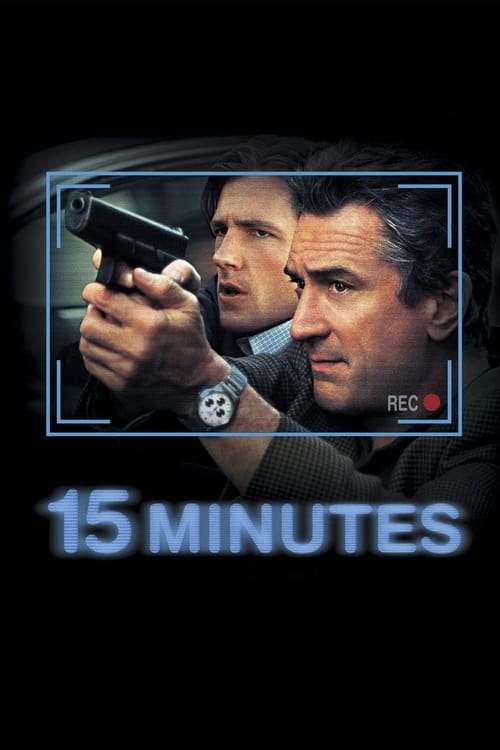
15 Minutes
When Eastern European criminals Oleg and Emil come to New York City to pick up their share of a heist score, Oleg steals a video camera and starts filming their activities, both legal and illegal. When they learn how the American media circus can make a remorseless killer look like the victim and make them rich, they target media-savvy NYPD Homicide Detective Eddie Flemming and media-naive FDNY Fire Marshal Jordy Warsaw, the cops investigating their murder and torching of their former criminal partner, filming everything to sell to the local tabloid TV show "Top Story."
The film disappointed at the box office against its moderate budget of $60.0M, earning $56.4M globally (-6% loss).


Plot Structure
Story beats plotted across runtime


Narrative Arc
Emotional journey through the story's key moments
Story Circle
Blueprint 15-beat structure
Arcplot Score Breakdown
Weighted: Precision (70%) + Arc (15%) + Theme (15%)
15 Minutes (2001) exemplifies meticulously timed narrative design, characteristic of John Herzfeld's storytelling approach. This structural analysis examines how the film's 15-point plot structure maps to proven narrative frameworks across 2 hours. With an Arcplot score of 7.6, the film showcases strong structural fundamentals.
Characters
Cast & narrative archetypes

Eddie Flemming
Jordy Warsaw
Emil Slovak
Oleg Razgul
Robert Hawkins
Nicolette Karas
Cassandra
Main Cast & Characters
Eddie Flemming
Played by Robert De Niro
Celebrity NYPD detective who craves media attention and uses fame to solve crimes.
Jordy Warsaw
Played by Edward Burns
Fire marshal and arson investigator who partners with Flemming, more grounded and ethical.
Emil Slovak
Played by Karel Roden
Czech criminal who murders and films his crimes for profit and fame, ruthless and manipulative.
Oleg Razgul
Played by Oleg Taktarov
Emil's accomplice, simple-minded and follows orders, operates the camera for their crimes.
Robert Hawkins
Played by Avery Brooks
High-profile defense attorney who represents Emil, morally flexible and media-savvy.
Nicolette Karas
Played by Melina Kanakaredes
Ambitious tabloid TV journalist who will do anything for ratings and a story.
Cassandra
Played by Vera Farmiga
Sex worker who becomes Emil and Oleg's first victim in New York.
Structural Analysis
The Status Quo at 1 minutes (1% through the runtime) establishes Detective Eddie Flemming is a media-savvy NYPD homicide detective at the height of his fame, working the streets of New York with his confident, celebrity-detective persona intact.. The analysis reveals that this early placement immediately immerses viewers in the story world.
The inciting incident occurs at 14 minutes when Emil and Oleg commit their first brutal murder, filming it on video camera - establishing the central threat of criminals who weaponize media coverage for profit and fame.. At 12% through the film, this Disruption aligns precisely with traditional story structure. This beat shifts the emotional landscape, launching the protagonist into the central conflict.
The First Threshold at 30 minutes marks the transition into Act II, occurring at 25% of the runtime. This shows the protagonist's commitment to Eddie and Jordy fully commit to pursuing these killers as a team when evidence reveals the calculated, media-driven nature of the crimes. The investigation becomes personal and urgent., moving from reaction to action.
At 60 minutes, the Midpoint arrives at 50% of the runtime—precisely centered, creating perfect narrative symmetry. Significantly, this crucial beat False defeat: The criminals escalate their violence and media manipulation. Eddie begins to realize that his own fame-seeking has created the environment these criminals exploit. The stakes raise dramatically., fundamentally raising what's at risk. The emotional intensity shifts, dividing the narrative into clear before-and-after phases.
The Collapse moment at 90 minutes (75% through) represents the emotional nadir. Here, Eddie is murdered on camera by the criminals in a shocking twist - the ultimate "whiff of death." The hero detective becomes a victim of the very media spectacle he helped create. Jordy witnesses or discovers the aftermath., demonstrates the protagonist at their lowest point. This beat's placement in the final quarter sets up the climactic reversal.
The Second Threshold at 96 minutes initiates the final act resolution at 80% of the runtime. Jordy gains new resolve and understanding - he must beat the killers at their own game. Unlike Eddie, he won't seek fame but will use their media obsession against them. The path to justice becomes clear., demonstrating the transformation achieved throughout the journey.
Emotional Journey
15 Minutes's emotional architecture traces a deliberate progression across 15 carefully calibrated beats.
Narrative Framework
This structural analysis employs proven narrative structure principles that track dramatic progression. By mapping 15 Minutes against these established plot points, we can identify how John Herzfeld utilizes or subverts traditional narrative conventions. The plot point approach reveals not only adherence to structural principles but also creative choices that distinguish 15 Minutes within the action genre.
John Herzfeld's Structural Approach
Among the 3 John Herzfeld films analyzed on Arcplot, the average structural score is 7.5, reflecting strong command of classical structure. 15 Minutes represents one of the director's most structurally precise works. For comparative analysis, explore the complete John Herzfeld filmography.
Comparative Analysis
Additional action films include The Bad Guys, Puss in Boots and Venom: The Last Dance. For more John Herzfeld analyses, see Two of a Kind, 2 Days in the Valley.
Plot Points by Act
Act I
SetupStatus Quo
Detective Eddie Flemming is a media-savvy NYPD homicide detective at the height of his fame, working the streets of New York with his confident, celebrity-detective persona intact.
Theme
Discussion about fame, media coverage, and the "15 minutes of fame" concept - foreshadowing how the pursuit of celebrity corrupts justice and morality.
Worldbuilding
Establishment of Eddie's celebrity detective status, introduction of Fire Marshal Jordy Warsaw, and the arrival of Czech criminals Emil and Oleg who immediately begin filming everything for their planned media exploitation.
Disruption
Emil and Oleg commit their first brutal murder, filming it on video camera - establishing the central threat of criminals who weaponize media coverage for profit and fame.
Resistance
Eddie and Jordy begin investigating the crime scene and developing their partnership. The criminals continue filming, revealing their plan to use the insanity defense and sell their story. Eddie must adapt to hunting media-savvy criminals.
Act II
ConfrontationFirst Threshold
Eddie and Jordy fully commit to pursuing these killers as a team when evidence reveals the calculated, media-driven nature of the crimes. The investigation becomes personal and urgent.
Mirror World
Introduction of tabloid TV journalist Robert Hawkins and deeper exploration of Eddie's relationship with witness/love interest Nicolette - the B-story that carries the theme of media ethics and authentic human connection versus exploitation.
Premise
The cat-and-mouse game intensifies as Eddie and Jordy hunt the killers while the criminals film more violence. The promise of the premise: a detective thriller where the villains are as media-obsessed as the hero, creating a disturbing mirror.
Midpoint
False defeat: The criminals escalate their violence and media manipulation. Eddie begins to realize that his own fame-seeking has created the environment these criminals exploit. The stakes raise dramatically.
Opposition
The killers stay ahead of the investigation, continuing to film atrocities. Eddie's celebrity status becomes a liability. The media circus intensifies, and the criminals' plan to exploit the legal system becomes clearer.
Collapse
Eddie is murdered on camera by the criminals in a shocking twist - the ultimate "whiff of death." The hero detective becomes a victim of the very media spectacle he helped create. Jordy witnesses or discovers the aftermath.
Crisis
Jordy processes the devastating loss of his partner and the horror of Eddie's filmed murder. The dark night contemplating whether justice is even possible when criminals can game the media system.
Act III
ResolutionSecond Threshold
Jordy gains new resolve and understanding - he must beat the killers at their own game. Unlike Eddie, he won't seek fame but will use their media obsession against them. The path to justice becomes clear.
Synthesis
Jordy executes his plan to stop the killers and expose their crimes. Final confrontation where the media circus finally turns against the criminals. Justice is served, but at tremendous cost.
Transformation
Closing image shows the aftermath - the media's role in crime and justice questioned. Jordy emerges not as a celebrity detective like Eddie, but as someone who understands the dangerous intersection of fame and justice. The world is changed.