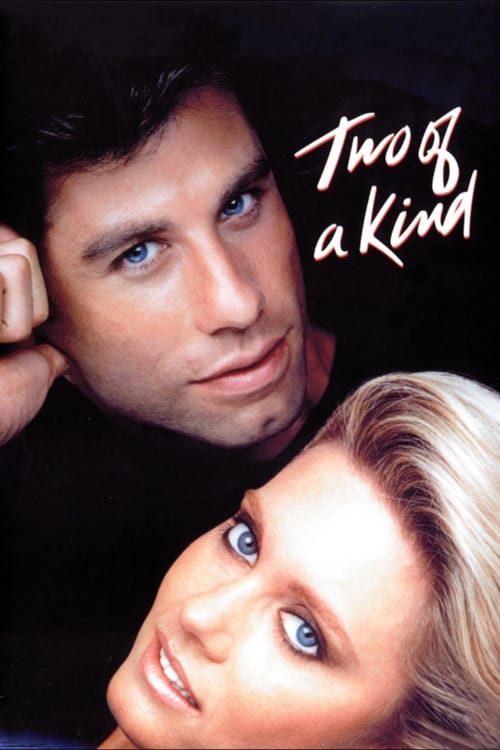
Two of a Kind
God has had enough of the bad behavior and attitude of humankind, and has decided to start it all over. It is up to a struggling inventor and a bank teller, both with very amateur criminal minds, to save the world by falling in love.
Working with a modest budget of $14.0M, the film achieved a steady performer with $23.6M in global revenue (+69% profit margin).
6 nominations
Plot Structure
Story beats plotted across runtime


Narrative Arc
Emotional journey through the story's key moments
Story Circle
Blueprint 15-beat structure
Arcplot Score Breakdown
Weighted: Precision (70%) + Arc (15%) + Theme (15%)
Two of a Kind (1983) exhibits meticulously timed dramatic framework, characteristic of John Herzfeld's storytelling approach. This structural analysis examines how the film's 15-point plot structure maps to proven narrative frameworks across 1 hour and 28 minutes. With an Arcplot score of 7.5, the film showcases strong structural fundamentals.
Characters
Cast & narrative archetypes

Zack Melon
Debbie Wyler
Charlie
God (The Voice)
Stuart
Ruth
Main Cast & Characters
Zack Melon
Played by John Travolta
A struggling inventor and con artist who owes money to dangerous people and becomes part of a divine test to save humanity.
Debbie Wyler
Played by Olivia Newton-John
A bank teller who gets caught up in robbery and becomes romantically involved with Zack while both are tested by celestial forces.
Charlie
Played by Charles Durning
An angel who argues for giving humanity another chance and works to help Zack and Debbie prove humanity's worth.
God (The Voice)
Played by Gene Hackman
The divine authority who has grown weary of humanity and considers destroying the world again unless proven otherwise.
Stuart
Played by Oliver Reed
A criminal and loan shark who pressures Zack for money he owes, creating the circumstances that lead to the robbery.
Ruth
Played by Beatrice Straight
An angel who is initially skeptical about humanity and works alongside Charlie in the celestial intervention.
Structural Analysis
The Status Quo at 1 minutes (1% through the runtime) establishes Heaven debates Earth's fate. Four angels discuss God's disappointment with humanity and the possibility of a second flood. Zack is a struggling inventor/con artist, Debbie is a bank teller in debt - both flawed, ordinary people.. Significantly, this early placement immediately immerses viewers in the story world.
The inciting incident occurs at 10 minutes when Zack decides to rob Debbie's bank out of desperation. Debbie, equally desperate for money, has already embezzled funds. Their criminal paths collide in the worst possible way.. At 12% through the film, this Disruption aligns precisely with traditional story structure. This beat shifts the emotional landscape, launching the protagonist into the central conflict.
The First Threshold at 22 minutes marks the transition into Act II, occurring at 25% of the runtime. This shows the protagonist's commitment to Zack and Debbie make the choice to work together to fix their situation rather than betray each other. They commit to a plan that requires cooperation, entering a partnership neither expected., moving from reaction to action.
At 44 minutes, the Midpoint arrives at 50% of the runtime—precisely centered, creating perfect narrative symmetry. Of particular interest, this crucial beat Zack and Debbie fall in love and seem to have found a way forward together. False victory: their relationship appears successful, but they haven't yet been truly tested on selflessness versus self-interest. Stakes raise as heavenly forces intensify the test., fundamentally raising what's at risk. The emotional intensity shifts, dividing the narrative into clear before-and-after phases.
The Collapse moment at 66 minutes (75% through) represents the emotional nadir. Here, Zack and Debbie's relationship falls apart. Betrayal or perceived betrayal occurs. They choose self-interest over love. Heaven loses faith - humanity has failed the test. The countdown to Earth's destruction appears inevitable., illustrates the protagonist at their lowest point. This beat's placement in the final quarter sets up the climactic reversal.
The Second Threshold at 70 minutes initiates the final act resolution at 80% of the runtime. Zack and Debbie each have a realization about true love requiring sacrifice. They understand that saving each other matters more than saving themselves. Armed with this insight, they choose love and selflessness., demonstrating the transformation achieved throughout the journey.
Emotional Journey
Two of a Kind's emotional architecture traces a deliberate progression across 15 carefully calibrated beats.
Narrative Framework
This structural analysis employs proven narrative structure principles that track dramatic progression. By mapping Two of a Kind against these established plot points, we can identify how John Herzfeld utilizes or subverts traditional narrative conventions. The plot point approach reveals not only adherence to structural principles but also creative choices that distinguish Two of a Kind within the fantasy genre.
John Herzfeld's Structural Approach
Among the 3 John Herzfeld films analyzed on Arcplot, the average structural score is 7.5, reflecting strong command of classical structure. Two of a Kind represents one of the director's most structurally precise works. For comparative analysis, explore the complete John Herzfeld filmography.
Comparative Analysis
Additional fantasy films include Thinner, Ella Enchanted and Conan the Barbarian. For more John Herzfeld analyses, see 2 Days in the Valley, 15 Minutes.
Plot Points by Act
Act I
SetupStatus Quo
Heaven debates Earth's fate. Four angels discuss God's disappointment with humanity and the possibility of a second flood. Zack is a struggling inventor/con artist, Debbie is a bank teller in debt - both flawed, ordinary people.
Theme
An angel states that humanity needs to prove it's capable of love and selflessness to be spared. The theme: can flawed people choose good over self-interest?
Worldbuilding
We see Zack's desperate financial situation and failed inventions. Debbie works at a bank, struggling with her own debts. Both are tempted by shortcuts. God gives humanity one last test through these two unknowing participants.
Disruption
Zack decides to rob Debbie's bank out of desperation. Debbie, equally desperate for money, has already embezzled funds. Their criminal paths collide in the worst possible way.
Resistance
After the botched robbery, Zack and Debbie are forced into an uneasy partnership. Angels watch and debate whether they'll choose redemption. Both resist change, blaming circumstances and each other.
Act II
ConfrontationFirst Threshold
Zack and Debbie make the choice to work together to fix their situation rather than betray each other. They commit to a plan that requires cooperation, entering a partnership neither expected.
Mirror World
Romantic tension emerges between Zack and Debbie. Their relationship becomes the "B Story" that will teach them about selflessness and love - the very qualities heaven is testing humanity for.
Premise
The "fun and games" of their romantic comedy dynamic. Zack and Debbie scheme together, growing closer. Comic misadventures ensue. Angels watch with hope, but also tempt them toward selfish choices to test their resolve.
Midpoint
Zack and Debbie fall in love and seem to have found a way forward together. False victory: their relationship appears successful, but they haven't yet been truly tested on selflessness versus self-interest. Stakes raise as heavenly forces intensify the test.
Opposition
Evil forces/tempting angels work to break them apart and prove humanity's unworthiness. External pressures mount: money problems resurface, trust issues emerge, their past mistakes catch up. Each faces temptation to save themselves at the other's expense.
Collapse
Zack and Debbie's relationship falls apart. Betrayal or perceived betrayal occurs. They choose self-interest over love. Heaven loses faith - humanity has failed the test. The countdown to Earth's destruction appears inevitable.
Crisis
Dark night of the soul. Zack and Debbie separately realize what they've lost. They face the emptiness of choosing selfishness over love. Internal reckoning with who they've become versus who they could be.
Act III
ResolutionSecond Threshold
Zack and Debbie each have a realization about true love requiring sacrifice. They understand that saving each other matters more than saving themselves. Armed with this insight, they choose love and selflessness.
Synthesis
The finale. Zack and Debbie each make sacrificial choices to help the other, proving humanity capable of genuine love. Their acts of selflessness convince heaven that humanity deserves another chance. Earth is spared.
Transformation
Zack and Debbie reunited, transformed from selfish individuals into people capable of true love and sacrifice. The final image mirrors the opening but shows growth - humanity redeemed through their love.