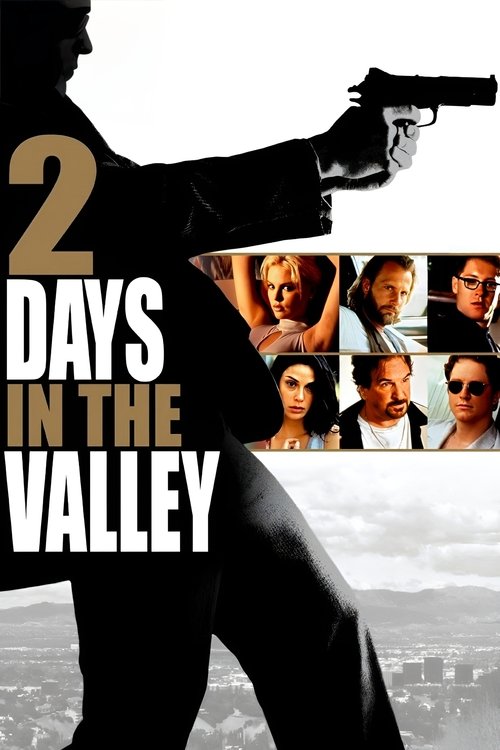
2 Days in the Valley
In a sleepy bedroom community of LA's San Fernando Valley, the murder of a professional athlete by two hit men sets into motion a chain of events that puts the mundane lives of a dozen residents on a collision course. This clever tale tells the story of two hit men, a mistress, a nurse, a vindictive ex-wife, a wealthy art dealer and his lovelorn assistant, a suicidal writer and his dog, and a bitter cop and his partner.
The film earned $11.1M at the global box office.


Plot Structure
Story beats plotted across runtime


Narrative Arc
Emotional journey through the story's key moments
Story Circle
Blueprint 15-beat structure
Arcplot Score Breakdown
Weighted: Precision (70%) + Arc (15%) + Theme (15%)
2 Days in the Valley (1996) reveals carefully calibrated dramatic framework, characteristic of John Herzfeld's storytelling approach. This structural analysis examines how the film's 15-point plot structure maps to proven narrative frameworks across 1 hour and 44 minutes. With an Arcplot score of 7.3, the film balances conventional beats with creative variation.
Characters
Cast & narrative archetypes

Lee Woods
Dosmo Pizzo
Becky Foxx
Allan Hopper
Helga Svelgen
Wes Taylor
Alvin Strayer
Audrey Hopper
Main Cast & Characters
Lee Woods
Played by James Spader
A cold-blooded hitman who kills for money and betrays his partner
Dosmo Pizzo
Played by Danny Aiello
Lee's partner, a volatile hitman left to die after being shot
Becky Foxx
Played by Teri Hatcher
A nurse who helps Dosmo and gets caught up in the criminal chaos
Allan Hopper
Played by Greg Cruttwell
An art dealer contemplating suicide whose life intersects with the chaos
Helga Svelgen
Played by Glenne Headly
Allan's personal assistant who becomes entangled in his problems
Wes Taylor
Played by Eric Stoltz
A vice cop investigating the murder case with his partner
Alvin Strayer
Played by Jeff Daniels
Wes's partner, a veteran detective close to retirement
Audrey Hopper
Played by Marsha Mason
Allan's estranged wife who hires Lee to kill her husband
Structural Analysis
The Status Quo at 1 minutes (1% through the runtime) establishes Opening montage establishes the San Fernando Valley at dawn. Multiple characters in their separate worlds: hitman Lee Woods preparing for a job, Olympic skier Becky Fox in her mansion, struggling vice cop Dosmo Pizzo contemplating his loaded gun. The interconnected web of lives about to collide.. Significantly, this early placement immediately immerses viewers in the story world.
The inciting incident occurs at 12 minutes when The murder plan goes sideways when Lee's partner Dosmo (the hitman, not the cop) kills the target but Lee double-crosses him, shooting Dosmo and leaving him for dead in the victim's house. This betrayal sets multiple plot lines in motion as the carefully controlled crime spins out of control.. At 12% through the film, this Disruption aligns precisely with traditional story structure. This beat shifts the emotional landscape, launching the protagonist into the central conflict.
The First Threshold at 26 minutes marks the transition into Act II, occurring at 25% of the runtime. This demonstrates the protagonist's commitment to Multiple characters make active choices to enter the "new world": Dosmo the cop chooses life over suicide when interrupted; wounded hitman Dosmo commits to crawling to the art dealers' house for help; Lee commits to his cover-up plan; Becky actively engages in survival mode. The separate storylines are now in motion toward collision., moving from reaction to action.
At 51 minutes, the Midpoint arrives at 50% of the runtime—precisely centered, creating perfect narrative symmetry. Structural examination shows that this crucial beat False defeat/stakes raise: The police investigation intensifies and begins connecting dots; Lee's control over his hostages becomes more tenuous and violent; wounded Dosmo's condition worsens but he's holding the art dealers at gunpoint. The clock is ticking and multiple situations are deteriorating. What seemed manageable is now spiraling., fundamentally raising what's at risk. The emotional intensity shifts, dividing the narrative into clear before-and-after phases.
The Collapse moment at 77 minutes (74% through) represents the emotional nadir. Here, The "whiff of death" moment: Multiple crisis points converge - violence erupts, hopes are dashed, and characters face the consequences of their choices. The careful separation between storylines collapses. What characters thought they could control or escape is now unavoidable. Rock bottom for multiple arcs., demonstrates the protagonist at their lowest point. This beat's placement in the final quarter sets up the climactic reversal.
The Second Threshold at 82 minutes initiates the final act resolution at 79% of the runtime. Synthesis and revelation: Key information comes together; Dosmo Pizzo finds new purpose and clarity; survivors find strength; the various plot threads converge toward final confrontation. Characters combine what they've learned with decisive action. The path forward becomes clear even if dangerous., demonstrating the transformation achieved throughout the journey.
Emotional Journey
2 Days in the Valley's emotional architecture traces a deliberate progression across 15 carefully calibrated beats.
Narrative Framework
This structural analysis employs a 15-point narrative structure framework that maps key story moments. By mapping 2 Days in the Valley against these established plot points, we can identify how John Herzfeld utilizes or subverts traditional narrative conventions. The plot point approach reveals not only adherence to structural principles but also creative choices that distinguish 2 Days in the Valley within the comedy genre.
John Herzfeld's Structural Approach
Among the 3 John Herzfeld films analyzed on Arcplot, the average structural score is 7.5, reflecting strong command of classical structure. 2 Days in the Valley takes a more unconventional approach compared to the director's typical style. For comparative analysis, explore the complete John Herzfeld filmography.
Comparative Analysis
Additional comedy films include The Bad Guys, Ella Enchanted and The Evening Star. For more John Herzfeld analyses, see Two of a Kind, 15 Minutes.
Plot Points by Act
Act I
SetupStatus Quo
Opening montage establishes the San Fernando Valley at dawn. Multiple characters in their separate worlds: hitman Lee Woods preparing for a job, Olympic skier Becky Fox in her mansion, struggling vice cop Dosmo Pizzo contemplating his loaded gun. The interconnected web of lives about to collide.
Theme
During the setup of the hit, dialogue about "everyone having a plan until they get punched in the face" - establishing the theme of how random violence and chance encounters disrupt carefully laid plans and expose who people really are under pressure.
Worldbuilding
Introduction of the ensemble: Lee Woods and his volatile partner Dosmo execute a murder-for-hire scheme; Becky Fox the target's ex-wife; art dealers Teddy and Allan; director couple; washed-up vice cop Dosmo Pizzo on the edge. The Valley as a character - sprawling, disconnected lives in parallel.
Disruption
The murder plan goes sideways when Lee's partner Dosmo (the hitman, not the cop) kills the target but Lee double-crosses him, shooting Dosmo and leaving him for dead in the victim's house. This betrayal sets multiple plot lines in motion as the carefully controlled crime spins out of control.
Resistance
Aftermath and reactions: Becky realizes she's implicated in her ex-husband's murder; wounded Dosmo (hitman) crawls toward help; Lee tries to maintain control while holding Becky and her assistant hostage; Dosmo Pizzo (cop) debates suicide but is interrupted. Each character debates their next move - run, fight, or surrender to circumstances.
Act II
ConfrontationFirst Threshold
Multiple characters make active choices to enter the "new world": Dosmo the cop chooses life over suicide when interrupted; wounded hitman Dosmo commits to crawling to the art dealers' house for help; Lee commits to his cover-up plan; Becky actively engages in survival mode. The separate storylines are now in motion toward collision.
Mirror World
Introduction of the unlikely partnership between washed-up cop Dosmo Pizzo and his younger partner. Their relationship becomes the thematic heart - redemption, second chances, and finding purpose. Also: wounded Dosmo arrives at art dealers' home, creating a hostage situation that mirrors Lee's situation with Becky.
Premise
The "fun and games" of ensemble crime thriller: parallel hostage situations develop; cops investigate the murder scene; characters negotiate, manipulate, and scheme. Dark comedy emerges from desperate people making increasingly bad decisions. The promise of the premise: watching interconnected crimes and lies spiral toward inevitable collision in the Valley.
Midpoint
False defeat/stakes raise: The police investigation intensifies and begins connecting dots; Lee's control over his hostages becomes more tenuous and violent; wounded Dosmo's condition worsens but he's holding the art dealers at gunpoint. The clock is ticking and multiple situations are deteriorating. What seemed manageable is now spiraling.
Opposition
Pressure intensifies on all fronts: Lee becomes more violent and desperate; Becky and her assistant must outwit him to survive; the art dealers try to manage their armed intruder; Dosmo Pizzo (cop) gets drawn into the case; various threads begin to converge as characters' worst traits emerge under pressure. Time and options run out.
Collapse
The "whiff of death" moment: Multiple crisis points converge - violence erupts, hopes are dashed, and characters face the consequences of their choices. The careful separation between storylines collapses. What characters thought they could control or escape is now unavoidable. Rock bottom for multiple arcs.
Crisis
Dark night of the soul across the ensemble: characters process their losses and failures; Dosmo Pizzo contemplates what he's willing to do for redemption; survivors process trauma; the guilty face consequences. The emotional low point before final confrontations.
Act III
ResolutionSecond Threshold
Synthesis and revelation: Key information comes together; Dosmo Pizzo finds new purpose and clarity; survivors find strength; the various plot threads converge toward final confrontation. Characters combine what they've learned with decisive action. The path forward becomes clear even if dangerous.
Synthesis
The finale: All storylines converge in the Valley for final confrontations and resolutions. Justice (legal and karmic) is served; survivors reckon with who they've become; the guilty face consequences; Dosmo Pizzo finds redemption; the interconnected web of lives reaches resolution. The 48 hours conclude.
Transformation
Closing images mirror the opening: the Valley at dawn/dusk, but the characters are transformed. Those who survived are changed - some redeemed, some scarred, some starting over. The same sprawling landscape now holds different meaning. Dosmo Pizzo, previously suicidal, has found purpose. The chaos has passed, leaving new reality.