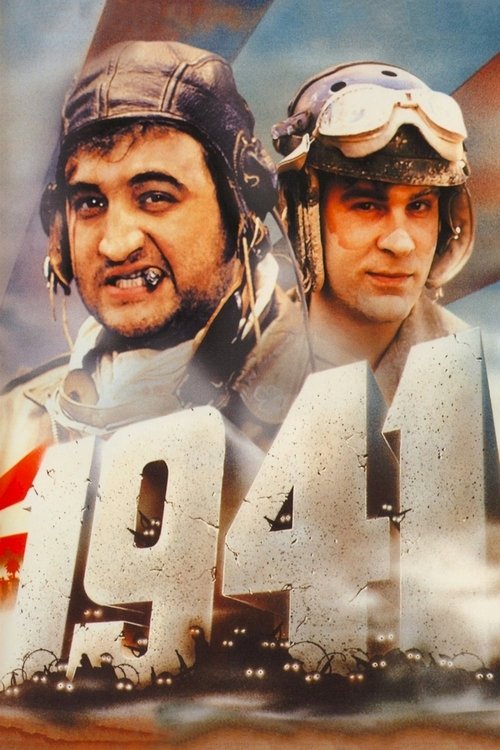
1941
In the days after the attack on Pearl Harbor, panic grips California, where a military officer leads a mob chasing a Japanese sub.
Despite a respectable budget of $35.0M, 1941 became a solid performer, earning $94.9M worldwide—a 171% return.
Nominated for 3 Oscars. 6 nominations


Plot Structure
Story beats plotted across runtime


Narrative Arc
Emotional journey through the story's key moments
Story Circle
Blueprint 15-beat structure
Arcplot Score Breakdown
Weighted: Precision (70%) + Arc (15%) + Theme (15%)
1941 (1979) exhibits precise plot construction, characteristic of Steven Spielberg's storytelling approach. This structural analysis examines how the film's 15-point plot structure maps to proven narrative frameworks across 1 hour and 58 minutes. With an Arcplot score of 7.1, the film balances conventional beats with creative variation.
Characters
Cast & narrative archetypes

Sgt. Frank Tree
Wild Bill Kelso
Wally Stephens
Donna Stratton
Capt. Loomis Birkhead
Cmdr. Akiro Mitamura
Ward Douglas
Betty Douglas
Joan Douglas
Gen. Joseph W. Stilwell
Main Cast & Characters
Sgt. Frank Tree
Played by Dan Aykroyd
A paranoid tank commander convinced the Japanese are invading California, leads a Sherman tank through Los Angeles.
Wild Bill Kelso
Played by John Belushi
A crazed, glory-seeking fighter pilot who gets lost trying to find the Japanese and wreaks havoc across LA.
Wally Stephens
Played by Ned Beatty
A mild-mannered homeowner whose house sits on a coastal cliff and becomes the center of military defense chaos.
Donna Stratton
Played by Nancy Allen
Wally's sexually frustrated daughter who is obsessed with military men and seeks excitement.
Capt. Loomis Birkhead
Played by Tim Matheson
An uptight Army officer trying to maintain order at coastal defense headquarters while dealing with incompetence.
Cmdr. Akiro Mitamura
Played by Toshiro Mifune
The Japanese submarine commander leading the actual (comedic) invasion attempt off the California coast.
Ward Douglas
Played by Bobby Di Cicco
A young man trying to protect his girlfriend Donna from lecherous servicemen while caught in the hysteria.
Betty Douglas
Played by Dianne Kay
Ward's mother and a USO hostess who gets caught up in the chaos at a dance hall riot.
Joan Douglas
Played by Lorraine Gary
Ward's patriotic mother figure trying to maintain normalcy during the panic.
Gen. Joseph W. Stilwell
Played by Robert Stack
The actual historical general trying to watch Dumbo at a movie theater while chaos erupts around him.
Structural Analysis
The Status Quo at 1 minutes (1% through the runtime) establishes A woman skinny-dips peacefully off the California coast in a Jaws homage, establishing the calm before the storm of war hysteria that will consume Los Angeles.. The analysis reveals that this early placement immediately immerses viewers in the story world.
The inciting incident occurs at 15 minutes when Reports of Japanese submarines off the coast spread through Los Angeles, triggering widespread panic and transforming rational citizens into paranoid, trigger-happy civilians ready to see enemies everywhere.. At 13% through the film, this Disruption is delayed, allowing extended setup of the story world. This beat shifts the emotional landscape, launching the protagonist into the central conflict.
The First Threshold at 30 minutes marks the transition into Act II, occurring at 25% of the runtime. This illustrates the protagonist's commitment to The anti-aircraft gun is installed on the Douglas house and Wild Bill Kelso takes to the skies. Los Angeles fully commits to defending itself against an enemy that may not even be there, crossing into full-scale mobilization., moving from reaction to action.
At 60 minutes, the Midpoint arrives at 51% of the runtime—precisely centered, creating perfect narrative symmetry. Significantly, this crucial beat The USO dance hall erupts into a riot between soldiers and zoot-suiters while simultaneously the Japanese submarine actually surfaces off the coast - the imagined threat becomes real just as internal chaos peaks. False defeat., fundamentally raising what's at risk. The emotional intensity shifts, dividing the narrative into clear before-and-after phases.
The Collapse moment at 89 minutes (75% through) represents the emotional nadir. Here, The Douglas home - symbol of American domestic stability - is completely destroyed by friendly fire and chaos, sliding off its foundation into the ocean. The hysteria has caused more destruction than any enemy could have., demonstrates the protagonist at their lowest point. This beat's placement in the final quarter sets up the climactic reversal.
The Second Threshold at 95 minutes initiates the final act resolution at 81% of the runtime. Characters realize the futility of their paranoia and violence. The real battle was against their own fear and hysteria, not an external enemy. They must let go of the war fever., demonstrating the transformation achieved throughout the journey.
Emotional Journey
1941's emotional architecture traces a deliberate progression across 15 carefully calibrated beats.
Narrative Framework
This structural analysis employs structural analysis methodology used to understand storytelling architecture. By mapping 1941 against these established plot points, we can identify how Steven Spielberg utilizes or subverts traditional narrative conventions. The plot point approach reveals not only adherence to structural principles but also creative choices that distinguish 1941 within the comedy genre.
Steven Spielberg's Structural Approach
Among the 33 Steven Spielberg films analyzed on Arcplot, the average structural score is 5.8, showcasing experimental approaches to narrative form. 1941 represents one of the director's most structurally precise works. For comparative analysis, explore the complete Steven Spielberg filmography.
Comparative Analysis
Additional comedy films include The Bad Guys, Ella Enchanted and The Evening Star. For more Steven Spielberg analyses, see The Adventures of Tintin, Close Encounters of the Third Kind and War Horse.
Plot Points by Act
Act I
SetupStatus Quo
A woman skinny-dips peacefully off the California coast in a Jaws homage, establishing the calm before the storm of war hysteria that will consume Los Angeles.
Theme
A military officer states that "the real enemy is panic" - the film's central theme that paranoia and fear are more dangerous than any external threat.
Worldbuilding
Introduction of the ensemble cast in Los Angeles days after Pearl Harbor: the Douglas family, military personnel, zealous civilians, and a Japanese submarine crew searching for Hollywood. The city teeters on the edge of mass hysteria.
Disruption
Reports of Japanese submarines off the coast spread through Los Angeles, triggering widespread panic and transforming rational citizens into paranoid, trigger-happy civilians ready to see enemies everywhere.
Resistance
Various characters debate how to respond to the threat: Ward Douglas reluctantly allows an anti-aircraft gun on his property, Wally pursues military glory to impress Betty, and military commanders struggle to maintain order amid chaos.
Act II
ConfrontationFirst Threshold
The anti-aircraft gun is installed on the Douglas house and Wild Bill Kelso takes to the skies. Los Angeles fully commits to defending itself against an enemy that may not even be there, crossing into full-scale mobilization.
Mirror World
The developing romance between Wally and Betty Douglas reflects the film's theme: Wally's desire to prove himself through violence mirrors society's need to fight an enemy, real or imagined, to feel purposeful.
Premise
The "promise of the premise" - chaos escalates across Los Angeles. The Japanese sub hunts for Hollywood, Kelso searches for enemies in the sky, a tank crew goes rogue, and the USO dance becomes a battleground. Pure comedic mayhem.
Midpoint
The USO dance hall erupts into a riot between soldiers and zoot-suiters while simultaneously the Japanese submarine actually surfaces off the coast - the imagined threat becomes real just as internal chaos peaks. False defeat.
Opposition
Pressure intensifies as multiple storylines converge on catastrophe: the sub prepares to fire on Hollywood, Kelso continues his rampage, the tank crew threatens civilians, and the Douglas house becomes ground zero for a military disaster.
Collapse
The Douglas home - symbol of American domestic stability - is completely destroyed by friendly fire and chaos, sliding off its foundation into the ocean. The hysteria has caused more destruction than any enemy could have.
Crisis
In the aftermath of destruction, characters confront the absurdity of what they've done. The Japanese submarine retreats having accomplished nothing, and Los Angeles surveys the damage it inflicted upon itself.
Act III
ResolutionSecond Threshold
Characters realize the futility of their paranoia and violence. The real battle was against their own fear and hysteria, not an external enemy. They must let go of the war fever.
Synthesis
The chaos winds down as day breaks. Military forces stand down, civilians return to normalcy, and the various characters deal with the consequences of their hysteria-driven actions during the long night.
Transformation
Dawn reveals a battered but standing Los Angeles. The Douglas family, despite losing their home, remains intact. The ferris wheel where Betty and Wally connected still stands - human connection survived the madness.