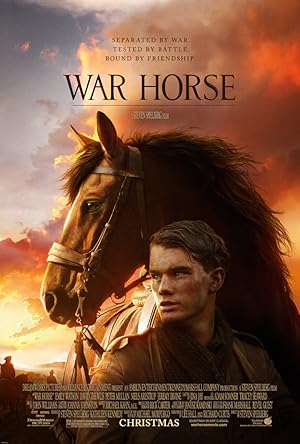
War Horse
On the outbreak of the First World War, Albert's beloved horse 'Joey' is sold to the Cavalry by his Father. After being sent to France, in a bid to survive, Joey has an unexpected journey across war torn Europe. Albert enlists in the British Army, and is wounded during the Battle of the Somme. Whilst recovering in Hospital, he learns of a Horse, found in no mans land.
Despite a mid-range budget of $66.0M, War Horse became a commercial success, earning $177.6M worldwide—a 169% return.
Nominated for 6 Oscars. 15 wins & 76 nominations


Plot Structure
Story beats plotted across runtime


Narrative Arc
Emotional journey through the story's key moments
Story Circle
Blueprint 15-beat structure
Arcplot Score Breakdown
Weighted: Precision (70%) + Arc (15%) + Theme (15%)
War Horse (2011) showcases precise narrative architecture, characteristic of Steven Spielberg's storytelling approach. This structural analysis examines how the film's 15-point plot structure maps to proven narrative frameworks across 2 hours and 26 minutes. With an Arcplot score of 5.9, the film takes an unconventional approach to traditional narrative frameworks.
Structural Analysis
The Status Quo at 2 minutes (1% through the runtime) establishes The idyllic Devon countryside before WWI. Albert's father Ted impulsively bids on a thoroughbred foal at auction, establishing the family's financial struggles and Ted's pride-driven decisions.. Notably, this early placement immediately immerses viewers in the story world.
The inciting incident occurs at 15 minutes when Albert successfully plows the rocky field with Joey, but a rainstorm destroys the turnip crop. Ted must sell Joey to the cavalry to pay rent. Albert loses his beloved horse to Captain Nicholls as WWI begins.. At 10% through the film, this Disruption aligns precisely with traditional story structure. This beat shifts the emotional landscape, launching the protagonist into the central conflict.
The First Threshold at 32 minutes marks the transition into Act II, occurring at 22% of the runtime. This illustrates the protagonist's commitment to Joey and the British cavalry charge into their first battle in France. This is Joey's irreversible entry into the war world—no return to peaceful Devon. Captain Nicholls is killed in the charge, breaking his promise to Albert., moving from reaction to action.
At 66 minutes, the Midpoint arrives at 45% of the runtime—arriving early, accelerating into Act IIb complications. Structural examination shows that this crucial beat German forces requisition Joey from Emilie's farm. Her grandfather protests but Joey is taken for the brutal work of pulling artillery. This false defeat separates Joey from compassionate care and puts him in the worst conditions of the war., fundamentally raising what's at risk. The emotional intensity shifts, dividing the narrative into clear before-and-after phases.
The Collapse moment at 97 minutes (67% through) represents the emotional nadir. Here, Topthorn, Joey's companion horse, dies from exhaustion. Joey panics and flees through no-man's-land during a battle, becoming entangled in barbed wire. This is Joey's "whiff of death" moment—alone, wounded, trapped between enemy lines with shells exploding around him., shows the protagonist at their lowest point. This beat's placement in the final quarter sets up the climactic reversal.
The Second Threshold at 103 minutes initiates the final act resolution at 70% of the runtime. A British and German soldier meet in no-man's-land, declaring a temporary truce to free Joey from the barbed wire. They flip a coin to determine who keeps him. Humanity transcends war—the synthesis of the film's theme. The British soldier wins and brings Joey back., demonstrating the transformation achieved throughout the journey.
Emotional Journey
War Horse's emotional architecture traces a deliberate progression across 15 carefully calibrated beats.
Narrative Framework
This structural analysis employs a 15-point narrative structure framework that maps key story moments. By mapping War Horse against these established plot points, we can identify how Steven Spielberg utilizes or subverts traditional narrative conventions. The plot point approach reveals not only adherence to structural principles but also creative choices that distinguish War Horse within the adventure genre.
Steven Spielberg's Structural Approach
Among the 33 Steven Spielberg films analyzed on Arcplot, the average structural score is 5.8, showcasing experimental approaches to narrative form. War Horse represents one of the director's most structurally precise works. For comparative analysis, explore the complete Steven Spielberg filmography.
Comparative Analysis
Additional adventure films include The Black Stallion, The Bad Guys and Puss in Boots. For more Steven Spielberg analyses, see The Adventures of Tintin, Close Encounters of the Third Kind and Ready Player One.
Plot Points by Act
Act I
SetupStatus Quo
The idyllic Devon countryside before WWI. Albert's father Ted impulsively bids on a thoroughbred foal at auction, establishing the family's financial struggles and Ted's pride-driven decisions.
Theme
Albert's mother Rose tells Ted: "The best thing a man can do is right by his family." This establishes the theme of duty, sacrifice, and what we owe to those we love.
Worldbuilding
Albert bonds with Joey the foal, training him despite everyone's doubts. The relationship between Albert and Joey deepens. Ted's debt to landlord Lyons creates pressure. Albert must train Joey to plow rocky soil to save the farm.
Disruption
Albert successfully plows the rocky field with Joey, but a rainstorm destroys the turnip crop. Ted must sell Joey to the cavalry to pay rent. Albert loses his beloved horse to Captain Nicholls as WWI begins.
Resistance
Captain Nicholls promises to care for Joey and return him after the war. Albert debates whether to enlist (he's too young). Joey enters cavalry training. The war escalates. Albert receives sketches of Joey from Nicholls, maintaining hope.
Act II
ConfrontationFirst Threshold
Joey and the British cavalry charge into their first battle in France. This is Joey's irreversible entry into the war world—no return to peaceful Devon. Captain Nicholls is killed in the charge, breaking his promise to Albert.
Mirror World
Joey is captured by German forces and cared for by Gunther, a young German soldier who shows compassion. His younger brother Michael also bonds with Joey, mirroring Albert's relationship and showing humanity exists on both sides.
Premise
Joey's journey through the war: serving German forces, Gunther and Michael desert to save Joey and themselves, they hide at a French farm where young Emilie claims Joey. Multiple humans across battle lines show love for the horse, demonstrating the theme. Meanwhile, Albert enlists and searches for Joey.
Midpoint
German forces requisition Joey from Emilie's farm. Her grandfather protests but Joey is taken for the brutal work of pulling artillery. This false defeat separates Joey from compassionate care and puts him in the worst conditions of the war.
Opposition
Joey endures horrific conditions pulling German artillery alongside his companion horse Topthorn. The work is brutal and many horses die. Topthorn weakens. Albert fights in the trenches, getting closer geographically but still separated. The war intensifies around both of them.
Collapse
Topthorn, Joey's companion horse, dies from exhaustion. Joey panics and flees through no-man's-land during a battle, becoming entangled in barbed wire. This is Joey's "whiff of death" moment—alone, wounded, trapped between enemy lines with shells exploding around him.
Crisis
Joey struggles in the barbed wire, near death. Both British and German soldiers hear his cries. The hopelessness of the moment reflects the broader senselessness of war. All seems lost for Joey and for the hope of reunion.
Act III
ResolutionSecond Threshold
A British and German soldier meet in no-man's-land, declaring a temporary truce to free Joey from the barbed wire. They flip a coin to determine who keeps him. Humanity transcends war—the synthesis of the film's theme. The British soldier wins and brings Joey back.
Synthesis
Joey is brought to British medical camp where Albert is recovering from gas blindness. Albert calls for Joey using their special whistle. Joey recognizes the call. They are reunited but the veterinarian wants to euthanize Joey due to his injuries. The regiment pools money to buy Joey at auction. Emilie's grandfather appears and outbids everyone, but recognizes Albert's bond and gives Joey to him.
Transformation
Albert and Joey walk together across the Devon countryside toward home at sunset, silhouetted against the sky. The mirror of the opening's pastoral beauty, but transformed—both have survived the war, their bond proven unbreakable, carrying the scars and wisdom of their journey.