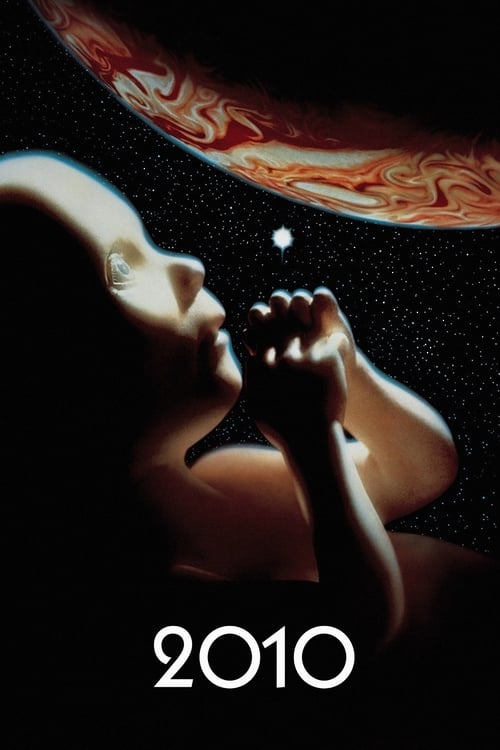
2010
While planet Earth poises on the brink of nuclear self-destruction, a team of Russian and American scientists aboard the Leonov hurtles to a rendezvous with the still-orbiting Discovery spacecraft and its sole known survivor, the homicidal computer HAL.
Working with a moderate budget of $28.0M, the film achieved a steady performer with $40.4M in global revenue (+44% profit margin).
Nominated for 5 Oscars. 1 win & 9 nominations


Plot Structure
Story beats plotted across runtime


Narrative Arc
Emotional journey through the story's key moments
Story Circle
Blueprint 15-beat structure
Arcplot Score Breakdown
Weighted: Precision (70%) + Arc (15%) + Theme (15%)
2010 (1984) exhibits precise narrative architecture, characteristic of Peter Hyams's storytelling approach. This structural analysis examines how the film's 15-point plot structure maps to proven narrative frameworks across 1 hour and 56 minutes. With an Arcplot score of 6.8, the film balances conventional beats with creative variation.
Characters
Cast & narrative archetypes

Dr. Heywood Floyd
Dr. Dimitri Moisevitch
Dr. Walter Curnow
HAL 9000
Dr. Chandra
Tanya Kirbuk
Dave Bowman
Main Cast & Characters
Dr. Heywood Floyd
Played by Roy Scheider
American scientist leading the joint mission to Jupiter to uncover what happened to Discovery One and HAL 9000.
Dr. Dimitri Moisevitch
Played by Dana Elcar
Soviet scientist and Floyd's friend who helps arrange the joint US-Soviet mission to Jupiter.
Dr. Walter Curnow
Played by John Lithgow
Discovery One's engineer who must reactivate the damaged spacecraft and understand its systems.
HAL 9000
Played by Douglas Rain
The artificial intelligence from Discovery One, now dormant, whose malfunction must be investigated and explained.
Dr. Chandra
Played by Bob Balaban
HAL 9000's creator who seeks to understand what caused HAL's breakdown and restore the AI's integrity.
Tanya Kirbuk
Played by Helen Mirren
Soviet captain of the Leonov spacecraft, responsible for the mission and crew safety during the Jupiter expedition.
Dave Bowman
Played by Keir Dullea
The missing astronaut from Discovery One who has transcended physical form and appears as a mysterious entity.
Structural Analysis
The Status Quo at 1 minutes (1% through the runtime) establishes Dr. Heywood Floyd lives in disgrace after the Discovery disaster, haunted by the failure of the HAL 9000 mission to Jupiter and the unexplained loss of the crew. The world sees him as responsible for the mysterious catastrophe.. Of particular interest, this early placement immediately immerses viewers in the story world.
The inciting incident occurs at 14 minutes when Floyd is offered a chance at redemption: join the Soviet mission to Jupiter aboard the Leonov to investigate what happened to Discovery. Despite Cold War tensions, he must work with the Soviets or lose the only opportunity to find answers.. At 12% through the film, this Disruption aligns precisely with traditional story structure. This beat shifts the emotional landscape, launching the protagonist into the central conflict.
The First Threshold at 29 minutes marks the transition into Act II, occurring at 25% of the runtime. This reveals the protagonist's commitment to The Leonov launches for Jupiter. Floyd commits fully to the mission, leaving Earth and entering the unknown with former adversaries. The joint crew crosses into the "mirror world" of space where old allegiances must be reconsidered., moving from reaction to action.
At 58 minutes, the Midpoint arrives at 50% of the runtime—precisely centered, creating perfect narrative symmetry. Significantly, this crucial beat False defeat: HAL is successfully reactivated, but Dr. Chandra discovers the truth—HAL was given contradictory orders and wasn't responsible for the disaster. However, Earth tensions escalate as the US and USSR move toward war, threatening to tear the crew apart., fundamentally raising what's at risk. The emotional intensity shifts, dividing the narrative into clear before-and-after phases.
The Collapse moment at 87 minutes (75% through) represents the emotional nadir. Here, All is lost: Earth is on the brink of nuclear war, orders arrive demanding the Americans and Soviets separate, and the mission appears doomed. The crew faces the whiff of death—literal annihilation from both the geopolitical crisis and Jupiter's increasing instability., demonstrates the protagonist at their lowest point. This beat's placement in the final quarter sets up the climactic reversal.
The Second Threshold at 93 minutes initiates the final act resolution at 80% of the runtime. The monolith delivers a warning through Dave Bowman's transformed consciousness: "All these worlds are yours except Europa. Attempt no landing there. Use them together. Use them in peace." The crew synthesizes their mission—cooperation is the only path to survival., demonstrating the transformation achieved throughout the journey.
Emotional Journey
2010's emotional architecture traces a deliberate progression across 15 carefully calibrated beats.
Narrative Framework
This structural analysis employs a 15-point narrative structure framework that maps key story moments. By mapping 2010 against these established plot points, we can identify how Peter Hyams utilizes or subverts traditional narrative conventions. The plot point approach reveals not only adherence to structural principles but also creative choices that distinguish 2010 within the thriller genre.
Peter Hyams's Structural Approach
Among the 14 Peter Hyams films analyzed on Arcplot, the average structural score is 7.1, reflecting strong command of classical structure. 2010 takes a more unconventional approach compared to the director's typical style. For comparative analysis, explore the complete Peter Hyams filmography.
Comparative Analysis
Additional thriller films include The Warriors, Thunderball and Rustom. For more Peter Hyams analyses, see Capricorn One, Timecop and The Musketeer.
Plot Points by Act
Act I
SetupStatus Quo
Dr. Heywood Floyd lives in disgrace after the Discovery disaster, haunted by the failure of the HAL 9000 mission to Jupiter and the unexplained loss of the crew. The world sees him as responsible for the mysterious catastrophe.
Theme
Dr. Chandra states: "Whether we are based on carbon or silicon makes no fundamental difference; we should each be treated with appropriate respect." The theme of reconciliation—between nations, humans and AI, past and future—is introduced.
Worldbuilding
Establishing the geopolitical tension between the US and USSR in the near future, Floyd's guilt over the Discovery mission, the mystery of HAL's malfunction, and the approaching launch window to reach the derelict Discovery before it falls into Jupiter's gravity.
Disruption
Floyd is offered a chance at redemption: join the Soviet mission to Jupiter aboard the Leonov to investigate what happened to Discovery. Despite Cold War tensions, he must work with the Soviets or lose the only opportunity to find answers.
Resistance
Floyd debates joining the Soviet mission, deals with political pressures and personal fears. He recruits Dr. Chandra, HAL's creator, and prepares for the joint US-Soviet journey. Tensions and mistrust between the American and Soviet crews are established.
Act II
ConfrontationFirst Threshold
The Leonov launches for Jupiter. Floyd commits fully to the mission, leaving Earth and entering the unknown with former adversaries. The joint crew crosses into the "mirror world" of space where old allegiances must be reconsidered.
Mirror World
Floyd develops a cautious friendship with Soviet captain Tanya Kirbuk. Their relationship represents the thematic heart: former enemies learning to trust and cooperate, mirroring the necessary reconciliation between humans and HAL.
Premise
The "fun and games" of space exploration: the crew arrives at Jupiter, boards the derelict Discovery, reactivates HAL 9000, and investigates the massive monolith orbiting Jupiter. The promise of the premise—solving the mystery of 2001—is delivered.
Midpoint
False defeat: HAL is successfully reactivated, but Dr. Chandra discovers the truth—HAL was given contradictory orders and wasn't responsible for the disaster. However, Earth tensions escalate as the US and USSR move toward war, threatening to tear the crew apart.
Opposition
The monolith exhibits strange behavior, multiplying around Jupiter's moon Europa. The US-Soviet conflict intensifies back on Earth, with orders coming to separate the crews. The window to escape Jupiter's gravity is narrowing, and they must choose between national loyalty and survival.
Collapse
All is lost: Earth is on the brink of nuclear war, orders arrive demanding the Americans and Soviets separate, and the mission appears doomed. The crew faces the whiff of death—literal annihilation from both the geopolitical crisis and Jupiter's increasing instability.
Crisis
Dark night of the soul: Floyd and the crew confront their mortality and the futility of human conflict in the face of cosmic forces. They must decide whether to honor their national allegiances or trust each other to survive.
Act III
ResolutionSecond Threshold
The monolith delivers a warning through Dave Bowman's transformed consciousness: "All these worlds are yours except Europa. Attempt no landing there. Use them together. Use them in peace." The crew synthesizes their mission—cooperation is the only path to survival.
Synthesis
The finale: Americans and Soviets work together to escape as Jupiter transforms into a new star. HAL sacrifices himself to save the crew. The monolith's gift—a second sun—ends the Cold War as humanity witnesses a cosmic rebirth demanding unity.
Transformation
Floyd, redeemed and at peace, watches from Earth as two suns rise in the sky. The closing image mirrors the opening disgrace with transformation: hope replacing guilt, cooperation replacing conflict, and humanity given a second chance at its own evolution.