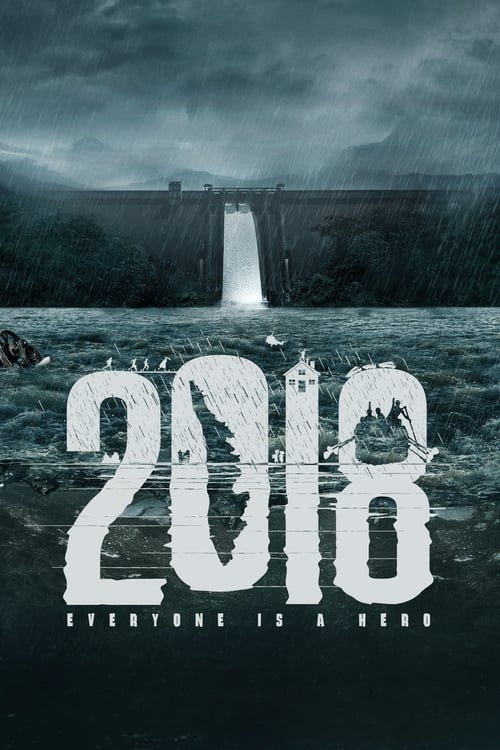
2018
A disaster film set during the 2018 Kerala Floods where people from all walks of life faced catastrophic consequences and put in collective efforts to survive the calamity.
Despite its tight budget of $3.0M, 2018 became a massive hit, earning $24.1M worldwide—a remarkable 700% return. The film's unconventional structure engaged audiences, confirming that strong storytelling can transcend budget limitations.

Plot Structure
Story beats plotted across runtime


Narrative Arc
Emotional journey through the story's key moments
Story Circle
Blueprint 15-beat structure
Arcplot Score Breakdown
Weighted: Precision (70%) + Arc (15%) + Theme (15%)
2018 (2023) exemplifies carefully calibrated narrative architecture, characteristic of Jude Anthany Joseph's storytelling approach. This structural analysis examines how the film's 15-point plot structure maps to proven narrative frameworks across 2 hours and 30 minutes. With an Arcplot score of 7.7, the film showcases strong structural fundamentals.
Structural Analysis
The Status Quo at 2 minutes (1% through the runtime) establishes Establishing shots of Kerala's lush landscapes and daily life. Multiple storylines introduce ordinary people in their everyday routines - families preparing meals, workers commuting, children at school - showing the vibrant normalcy before disaster strikes.. The analysis reveals that this early placement immediately immerses viewers in the story world.
The inciting incident occurs at 18 minutes when Heavy rainfall intensifies beyond normal monsoon levels. News reports indicate unprecedented water levels. The first dam releases water, and flood warnings are issued. The ordinary world is disrupted as nature's fury begins to manifest.. At 12% through the film, this Disruption aligns precisely with traditional story structure. This beat shifts the emotional landscape, launching the protagonist into the central conflict.
The First Threshold at 38 minutes marks the transition into Act II, occurring at 25% of the runtime. This illustrates the protagonist's commitment to All dam shutters are opened simultaneously - an unprecedented event. Massive flooding begins across Kerala. Communities are cut off. The point of no return has been crossed - characters must now fight for survival rather than prevention. The disaster fully arrives., moving from reaction to action.
At 75 minutes, the Midpoint arrives at 50% of the runtime—precisely centered, creating perfect narrative symmetry. Of particular interest, this crucial beat A major setback occurs - a critical rescue fails, resources run dangerously low, or a key location is completely submerged. False defeat: despite heroic efforts, the water continues rising and the situation appears overwhelming. The stakes are raised as hope wavers., fundamentally raising what's at risk. The emotional intensity shifts, dividing the narrative into clear before-and-after phases.
The Collapse moment at 113 minutes (75% through) represents the emotional nadir. Here, A devastating loss - perhaps a rescue worker dies, a family is lost, or a critical location is abandoned to the waters. The "whiff of death" moment where the human cost becomes viscerally real. The darkest moment of the disaster when all seems lost., illustrates the protagonist at their lowest point. This beat's placement in the final quarter sets up the climactic reversal.
The Second Threshold at 120 minutes initiates the final act resolution at 80% of the runtime. A breakthrough moment - perhaps the rain finally stops, water levels begin to recede, or a massive coordinated rescue effort mobilizes. New resolve emerges from shared grief. The community's collective strength synthesizes into determined action for one final push to save those still stranded., demonstrating the transformation achieved throughout the journey.
Emotional Journey
2018's emotional architecture traces a deliberate progression across 15 carefully calibrated beats.
Narrative Framework
This structural analysis employs structural analysis methodology used to understand storytelling architecture. By mapping 2018 against these established plot points, we can identify how Jude Anthany Joseph utilizes or subverts traditional narrative conventions. The plot point approach reveals not only adherence to structural principles but also creative choices that distinguish 2018 within the thriller genre.
Comparative Analysis
Additional thriller films include The Warriors, Thunderball and Rustom.
Plot Points by Act
Act I
SetupStatus Quo
Establishing shots of Kerala's lush landscapes and daily life. Multiple storylines introduce ordinary people in their everyday routines - families preparing meals, workers commuting, children at school - showing the vibrant normalcy before disaster strikes.
Theme
A character remarks on community solidarity or the power of unity in Kerala's culture, foreshadowing the collective response that will be needed. The theme of human resilience and community strength in the face of natural catastrophe is established.
Worldbuilding
Introduction to the ensemble cast across Kerala - rescue workers, government officials, ordinary families in different regions. Establishes the geography, the monsoon season context, and early weather warnings that are not yet taken seriously. Shows the interconnected lives that will soon face crisis.
Disruption
Heavy rainfall intensifies beyond normal monsoon levels. News reports indicate unprecedented water levels. The first dam releases water, and flood warnings are issued. The ordinary world is disrupted as nature's fury begins to manifest.
Resistance
Initial responses to the flooding - some evacuate, others debate staying. Emergency services mobilize. Officials weigh options. Citizens prepare or resist leaving homes. The scale of the threat becomes clearer as water levels rise and multiple dam shutters must be opened.
Act II
ConfrontationFirst Threshold
All dam shutters are opened simultaneously - an unprecedented event. Massive flooding begins across Kerala. Communities are cut off. The point of no return has been crossed - characters must now fight for survival rather than prevention. The disaster fully arrives.
Mirror World
Amid the chaos, acts of extraordinary humanity emerge. Rescue workers risk everything, strangers become family, communities organize. A key relationship or rescue operation begins that embodies the film's heart - showing humanity at its finest when circumstances are at their worst.
Premise
The heart of the disaster - multiple rescue operations, families trapped on rooftops, helicopter evacuations, boat rescues navigating submerged streets. The promise of the premise: a large-scale disaster film showing the 2018 Kerala floods from multiple perspectives with heroic rescue efforts.
Midpoint
A major setback occurs - a critical rescue fails, resources run dangerously low, or a key location is completely submerged. False defeat: despite heroic efforts, the water continues rising and the situation appears overwhelming. The stakes are raised as hope wavers.
Opposition
The fight intensifies as conditions worsen. Night falls, making rescues more dangerous. Supplies dwindle. Communication breaks down. The flood water - the antagonist - continues its relentless advance. Rescuers face exhaustion, equipment failures, and impossible choices about who to save first.
Collapse
A devastating loss - perhaps a rescue worker dies, a family is lost, or a critical location is abandoned to the waters. The "whiff of death" moment where the human cost becomes viscerally real. The darkest moment of the disaster when all seems lost.
Crisis
The emotional aftermath of the collapse. Survivors and rescuers process the tragedy. Grief, exhaustion, and despair threaten to overcome the rescue efforts. Characters question whether they can continue, whether anything they do matters against such overwhelming force.
Act III
ResolutionSecond Threshold
A breakthrough moment - perhaps the rain finally stops, water levels begin to recede, or a massive coordinated rescue effort mobilizes. New resolve emerges from shared grief. The community's collective strength synthesizes into determined action for one final push to save those still stranded.
Synthesis
The finale - massive coordinated rescue operations bring together all available resources. Military, civilians, fishermen, volunteers unite. Final desperate rescues are completed. The immediate crisis resolves as flood waters recede. The community comes together in the aftermath to account for survivors and begin recovery.
Transformation
Closing images mirror the opening but show transformation - the same landscapes now recovering, communities rebuilding together. Survivors reunited. The strength and unity displayed during the disaster has fundamentally changed Kerala. Text reveals the real-world impact and recovery, honoring those lost and those who saved thousands.