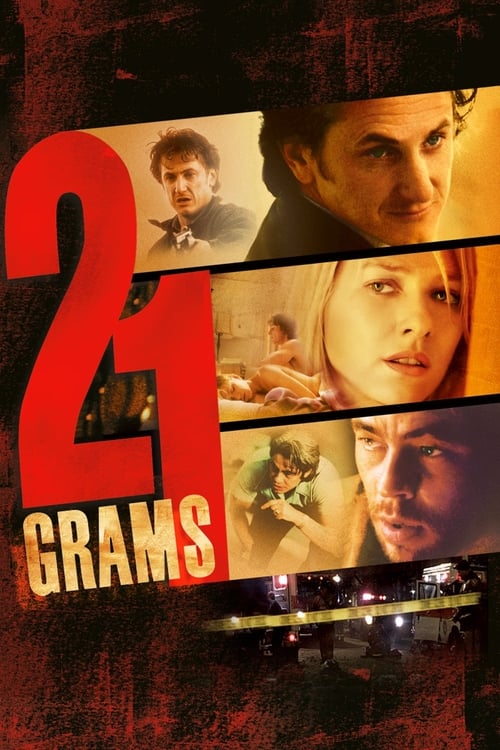
21 Grams
Paul Rivers, an ailing mathematician lovelessly married to an English émigré; Christina Peck, an upper-middle-class suburban housewife and mother of two girls; and Jack Jordan, a born-again ex-con, are brought together by a terrible accident that changes their lives.
Despite a moderate budget of $20.0M, 21 Grams became a commercial success, earning $60.4M worldwide—a 202% return.
Nominated for 2 Oscars. 30 wins & 79 nominations


Plot Structure
Story beats plotted across runtime


Narrative Arc
Emotional journey through the story's key moments
Story Circle
Blueprint 15-beat structure
Arcplot Score Breakdown
Weighted: Precision (70%) + Arc (15%) + Theme (15%)
21 Grams (2003) exhibits carefully calibrated story structure, characteristic of Alejandro González Iñárritu's storytelling approach. This structural analysis examines how the film's 15-point plot structure maps to proven narrative frameworks across 2 hours and 4 minutes. With an Arcplot score of 6.6, the film balances conventional beats with creative variation.
Characters
Cast & narrative archetypes

Paul Rivers
Cristina Peck
Jack Jordan
Mary Rivers
Marianne Jordan
Main Cast & Characters
Paul Rivers
Played by Sean Penn
A critically ill mathematician awaiting a heart transplant, whose life becomes intertwined with a tragic accident.
Cristina Peck
Played by Naomi Watts
A former drug addict whose husband and daughters are killed in a hit-and-run accident, sending her into grief and darkness.
Jack Jordan
Played by Benicio del Toro
An ex-con and born-again Christian whose moment of recklessness causes a fatal accident that destroys multiple lives.
Mary Rivers
Played by Charlotte Gainsbourg
Paul's estranged wife who desperately wants to have a baby before Paul dies.
Marianne Jordan
Played by Melissa Leo
Jack's devoted wife who struggles with his guilt and religious transformation.
Structural Analysis
The Status Quo at 1 minutes (1% through the runtime) establishes Paul Rivers lies in a hospital bed, dying from heart failure, his body frail and time running out. This fragmented opening establishes the broken worlds of three strangers whose lives will collide through tragedy.. Of particular interest, this early placement immediately immerses viewers in the story world.
The inciting incident occurs at 15 minutes when Jack Jordan, driving distracted, hits and kills Cristina's husband Michael and their two young daughters in a hit-and-run accident. This single moment of impact shatters all three lives irrevocably and sets the tragedy in motion.. At 12% through the film, this Disruption aligns precisely with traditional story structure. This beat shifts the emotional landscape, launching the protagonist into the central conflict.
The First Threshold at 30 minutes marks the transition into Act II, occurring at 24% of the runtime. This indicates the protagonist's commitment to Paul actively investigates and tracks down Cristina, the widow of his heart donor, choosing to enter her world rather than simply accepting his transplant as a gift. This is his deliberate decision to become entangled in the tragedy that saved his life., moving from reaction to action.
At 63 minutes, the Midpoint arrives at 51% of the runtime—precisely centered, creating perfect narrative symmetry. Of particular interest, this crucial beat Paul and Cristina discover Jack Jordan's identity as the killer. This revelation shifts their grief into a desire for revenge, transforming their relationship from mutual healing into a conspiracy for retribution. The stakes escalate from emotional to potentially violent., fundamentally raising what's at risk. The emotional intensity shifts, dividing the narrative into clear before-and-after phases.
The Collapse moment at 94 minutes (76% through) represents the emotional nadir. Here, Paul confronts Jack with the gun but cannot pull the trigger. Instead, in a moment of despair and transferred rage, Paul shoots himself in the chest. This is the whiff of death—Paul's literal near-death and the death of the revenge fantasy that was sustaining both him and Cristina., shows the protagonist at their lowest point. This beat's placement in the final quarter sets up the climactic reversal.
The Second Threshold at 101 minutes initiates the final act resolution at 82% of the runtime. Cristina chooses to let Paul go, refusing extraordinary measures to keep him alive. She synthesizes her grief—accepting that revenge won't restore what she lost, and that holding onto Paul won't fill the void. She releases him, and in doing so, releases herself., demonstrating the transformation achieved throughout the journey.
Emotional Journey
21 Grams's emotional architecture traces a deliberate progression across 15 carefully calibrated beats.
Narrative Framework
This structural analysis employs systematic plot point analysis that identifies crucial turning points. By mapping 21 Grams against these established plot points, we can identify how Alejandro González Iñárritu utilizes or subverts traditional narrative conventions. The plot point approach reveals not only adherence to structural principles but also creative choices that distinguish 21 Grams within the drama genre.
Alejandro González Iñárritu's Structural Approach
Among the 5 Alejandro González Iñárritu films analyzed on Arcplot, the average structural score is 6.8, demonstrating varied approaches to story architecture. 21 Grams takes a more unconventional approach compared to the director's typical style. For comparative analysis, explore the complete Alejandro González Iñárritu filmography.
Comparative Analysis
Additional drama films include After Thomas, South Pacific and Dirty Dancing: Havana Nights. For more Alejandro González Iñárritu analyses, see Birdman or (The Unexpected Virtue of Ignorance), The Revenant and Babel.
Plot Points by Act
Act I
SetupStatus Quo
Paul Rivers lies in a hospital bed, dying from heart failure, his body frail and time running out. This fragmented opening establishes the broken worlds of three strangers whose lives will collide through tragedy.
Theme
A character reflects on the weight of existence: "How many lives do we live? How many times do we die?" This introduces the film's central question about guilt, redemption, and the interconnectedness of human suffering.
Worldbuilding
Through fragmented scenes, we meet three separate lives: Paul, a mathematics professor awaiting a heart transplant; Cristina, a recovering addict with a husband and two daughters; and Jack, an ex-con who has found Jesus and struggles to stay righteous. Their worlds are intact but precarious.
Disruption
Jack Jordan, driving distracted, hits and kills Cristina's husband Michael and their two young daughters in a hit-and-run accident. This single moment of impact shatters all three lives irrevocably and sets the tragedy in motion.
Resistance
The aftermath unfolds: Jack flees but turns himself in; Cristina spirals into devastating grief and relapse; Paul receives Michael's heart in a transplant. Each struggles with their new reality—Jack debates confession, Cristina debates survival, Paul debates what to do with his second chance.
Act II
ConfrontationFirst Threshold
Paul actively investigates and tracks down Cristina, the widow of his heart donor, choosing to enter her world rather than simply accepting his transplant as a gift. This is his deliberate decision to become entangled in the tragedy that saved his life.
Mirror World
Paul and Cristina meet and begin a connection born from death and survival. She represents his thematic mirror—both are living because of the accident, both are haunted by guilt and grief, both must decide if life after such loss has meaning.
Premise
Paul and Cristina develop an intense relationship fueled by shared trauma and need. They investigate the accident together, growing closer while both deteriorate—she into addiction, he into obsession. The premise explores how tragedy binds people in destructive intimacy.
Midpoint
Paul and Cristina discover Jack Jordan's identity as the killer. This revelation shifts their grief into a desire for revenge, transforming their relationship from mutual healing into a conspiracy for retribution. The stakes escalate from emotional to potentially violent.
Opposition
Paul obtains a gun and stalks Jack, while Cristina pushes him toward murder. Jack, released from a brief incarceration, spirals into guilt and self-punishment, abandoning his family. All three characters close in on a violent confrontation, their humanity eroding under the weight of guilt and vengeance.
Collapse
Paul confronts Jack with the gun but cannot pull the trigger. Instead, in a moment of despair and transferred rage, Paul shoots himself in the chest. This is the whiff of death—Paul's literal near-death and the death of the revenge fantasy that was sustaining both him and Cristina.
Crisis
Paul lies dying in the hospital from his self-inflicted wound and failing transplanted heart. Cristina keeps vigil, confronting the emptiness of revenge. Jack turns himself in again, confessing everything. All three sit in the darkness of their choices, stripped of illusions.
Act III
ResolutionSecond Threshold
Cristina chooses to let Paul go, refusing extraordinary measures to keep him alive. She synthesizes her grief—accepting that revenge won't restore what she lost, and that holding onto Paul won't fill the void. She releases him, and in doing so, releases herself.
Synthesis
Paul dies peacefully with Cristina beside him. Jack faces the consequences of his actions. Cristina begins to process her trauma without the crutch of revenge or romantic obsession. The finale shows the weight of their choices and the possibility—however faint—of moving forward.
Transformation
Cristina stands alone, neither destroyed nor redeemed, but bearing the weight of all that has happened. The closing image mirrors the fragmented opening but with acceptance—she has lived through multiple deaths and emerged changed, carrying the 21 grams of the soul.