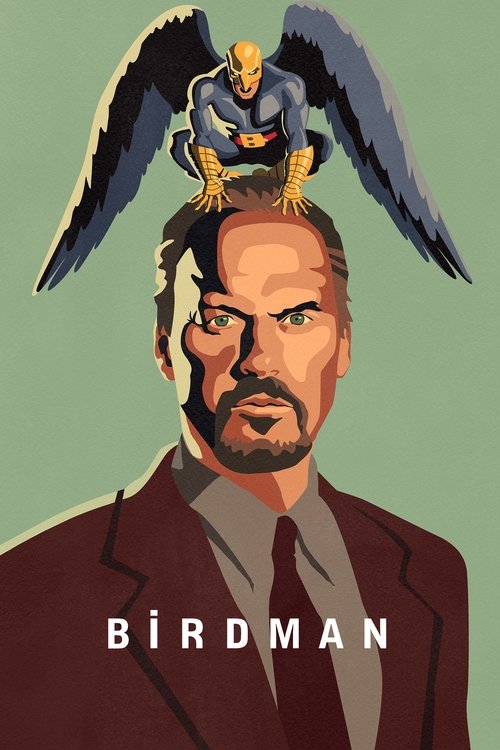
Birdman or (The Unexpected Virtue of Ignorance)
A fading actor best known for his portrayal of a popular superhero attempts to mount a comeback by appearing in a Broadway play. As opening night approaches, his attempts to become more altruistic, rebuild his career, and reconnect with friends and family prove more difficult than expected.
Despite a respectable budget of $18.0M, Birdman or (The Unexpected Virtue of Ignorance) became a box office success, earning $103.2M worldwide—a 473% return.
4 Oscars. 193 wins & 297 nominations


Plot Structure
Story beats plotted across runtime


Narrative Arc
Emotional journey through the story's key moments
Story Circle
Blueprint 15-beat structure
Arcplot Score Breakdown
Weighted: Precision (70%) + Arc (15%) + Theme (15%)
Birdman or (The Unexpected Virtue of Ignorance) (2014) demonstrates deliberately positioned story structure, characteristic of Alejandro González Iñárritu's storytelling approach. This structural analysis examines how the film's 15-point plot structure maps to proven narrative frameworks across 2 hours. With an Arcplot score of 6.6, the film balances conventional beats with creative variation.
Characters
Cast & narrative archetypes

Riggan Thomson
Mike Shiner
Sam Thomson
Lesley
Laura
Jake
Tabitha Dickinson
Main Cast & Characters
Riggan Thomson
Played by Michael Keaton
Former blockbuster superhero actor attempting a Broadway comeback to reclaim his artistic credibility and sense of self-worth.
Mike Shiner
Played by Edward Norton
Volatile method actor who threatens to derail Riggan's play while embodying raw authenticity and artistic integrity.
Sam Thomson
Played by Emma Stone
Riggan's recovering addict daughter working as his assistant, cynical about her father's relevance and motivations.
Lesley
Played by Naomi Watts
Dedicated actress in Riggan's play who struggles with Mike's unpredictability and her own insecurities about performance.
Laura
Played by Andrea Riseborough
Actress in the play romantically involved with Riggan, who reveals her pregnancy during the chaotic production.
Jake
Played by Zach Galifianakis
Riggan's loyal lawyer and best friend who manages the pragmatic and business aspects of the Broadway production.
Tabitha Dickinson
Played by Lindsay Duncan
Powerful New York Times theater critic who represents the establishment gatekeepers Riggan desperately seeks approval from.
Structural Analysis
The Status Quo at 1 minutes (1% through the runtime) establishes Riggan Thomson levitates in his underwear in his dressing room, a washed-up movie star meditating on his former glory as Birdman while preparing for his Broadway comeback.. Notably, this early placement immediately immerses viewers in the story world.
The inciting incident occurs at 15 minutes when During a preview performance, a falling stage light injures actor Ralph, forcing Riggan to find a replacement just days before opening night, threatening the entire production.. At 12% through the film, this Disruption aligns precisely with traditional story structure. This beat shifts the emotional landscape, launching the protagonist into the central conflict.
The First Threshold at 29 minutes marks the transition into Act II, occurring at 25% of the runtime. This indicates the protagonist's commitment to Riggan commits to keeping Mike in the play despite the actor's erratic behavior during the first rehearsal, choosing to risk everything on this dangerous collaboration rather than cancel the show., moving from reaction to action.
At 61 minutes, the Midpoint arrives at 51% of the runtime—precisely centered, creating perfect narrative symmetry. Of particular interest, this crucial beat Mike breaks character during the preview and actually drinks real gin on stage, then attempts to have real sex with Lesley in front of the audience, causing a public spectacle that both generates viral attention and threatens Riggan's artistic credibility., fundamentally raising what's at risk. The emotional intensity shifts, dividing the narrative into clear before-and-after phases.
The Collapse moment at 88 minutes (74% through) represents the emotional nadir. Here, After his emotional breakdown goes viral (not as art but as spectacle), Riggan walks through Times Square in his underwear, embodying total humiliation. His attempt at meaningful art has been reduced to clickbait, and he's become exactly what he feared: a joke., demonstrates the protagonist at their lowest point. This beat's placement in the final quarter sets up the climactic reversal.
The Second Threshold at 97 minutes initiates the final act resolution at 81% of the runtime. Riggan returns to the theater for opening night with newfound resolve, choosing to face the performance with radical authenticity. He replaces the prop gun with a real one, deciding to make the art devastatingly, dangerously real., demonstrating the transformation achieved throughout the journey.
Emotional Journey
Birdman or (The Unexpected Virtue of Ignorance)'s emotional architecture traces a deliberate progression across 15 carefully calibrated beats.
Narrative Framework
This structural analysis employs systematic plot point analysis that identifies crucial turning points. By mapping Birdman or (The Unexpected Virtue of Ignorance) against these established plot points, we can identify how Alejandro González Iñárritu utilizes or subverts traditional narrative conventions. The plot point approach reveals not only adherence to structural principles but also creative choices that distinguish Birdman or (The Unexpected Virtue of Ignorance) within the drama genre.
Alejandro González Iñárritu's Structural Approach
Among the 5 Alejandro González Iñárritu films analyzed on Arcplot, the average structural score is 6.8, demonstrating varied approaches to story architecture. Birdman or (The Unexpected Virtue of Ignorance) takes a more unconventional approach compared to the director's typical style. For comparative analysis, explore the complete Alejandro González Iñárritu filmography.
Comparative Analysis
Additional drama films include After Thomas, South Pacific and Dirty Dancing: Havana Nights. For more Alejandro González Iñárritu analyses, see 21 Grams, The Revenant and Babel.
Plot Points by Act
Act I
SetupStatus Quo
Riggan Thomson levitates in his underwear in his dressing room, a washed-up movie star meditating on his former glory as Birdman while preparing for his Broadway comeback.
Theme
Tabitha, the theater critic, warns Riggan that she will destroy his play, saying "You're not an actor, you're a celebrity," establishing the theme of authentic artistic relevance versus commercial fame.
Worldbuilding
Riggan's chaotic world backstage at the St. James Theatre is established: his difficult relationship with his daughter Sam (fresh from rehab), his producer Jake, his co-stars, and the massive financial risk he's taken adapting Raymond Carver to stage.
Disruption
During a preview performance, a falling stage light injures actor Ralph, forcing Riggan to find a replacement just days before opening night, threatening the entire production.
Resistance
Riggan reluctantly brings in Mike Shiner, a talented but volatile method actor recommended by Lesley. Mike's brilliant but unpredictable presence creates new challenges as Riggan debates whether this solution will save or doom the production.
Act II
ConfrontationFirst Threshold
Riggan commits to keeping Mike in the play despite the actor's erratic behavior during the first rehearsal, choosing to risk everything on this dangerous collaboration rather than cancel the show.
Mirror World
Sam confronts Riggan on the rooftop, telling him he doesn't matter and that his play is irrelevant, forcing him to face the harsh truth about his cultural obsolescence while she represents the younger generation's perspective on meaning and legacy.
Premise
Riggan navigates the promise of his theatrical comeback: Mike's brilliant but chaotic performances, mounting publicity, his budding connection with Laura, battles with his Birdman alter-ego, and the surreal blend of his superhero past haunting his artistic present.
Midpoint
Mike breaks character during the preview and actually drinks real gin on stage, then attempts to have real sex with Lesley in front of the audience, causing a public spectacle that both generates viral attention and threatens Riggan's artistic credibility.
Opposition
Pressures intensify from all sides: Mike's ego battles with Riggan, Laura reveals she's pregnant, Sam and Mike begin a relationship, Riggan's ex-wife Sylvia questions his motives, financial ruin looms, and the Birdman voice grows louder, mocking his artistic pretensions.
Collapse
After his emotional breakdown goes viral (not as art but as spectacle), Riggan walks through Times Square in his underwear, embodying total humiliation. His attempt at meaningful art has been reduced to clickbait, and he's become exactly what he feared: a joke.
Crisis
Riggan sits in a bar drowning his sorrows, has a devastating conversation with Mike about truth and performance, then experiences a dark fantasy of Birdman-powered destruction across New York City, wrestling with whether to surrender to his superhero past or his artistic aspirations.
Act III
ResolutionSecond Threshold
Riggan returns to the theater for opening night with newfound resolve, choosing to face the performance with radical authenticity. He replaces the prop gun with a real one, deciding to make the art devastatingly, dangerously real.
Synthesis
Opening night performance unfolds with raw intensity. Riggan delivers a searing, truthful performance and shoots himself on stage with the real gun, blowing off his nose. The act creates the authentic moment he's been seeking, collapsing the boundary between performance and reality.
Transformation
In the hospital, Riggan removes his nose bandages and sees himself in the mirror. Sam enters to find the window open and her father gone. She looks up and smiles—whether he's flown away, jumped, or simply stepped out, he's finally transcended his need for validation.