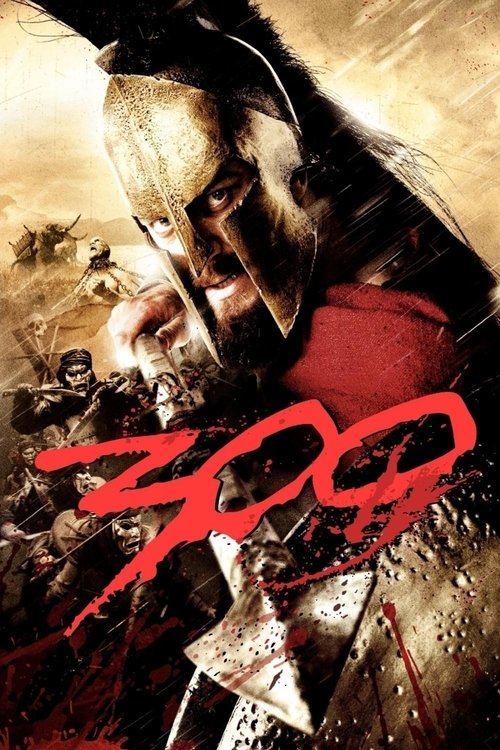
300
300 men in bikinis defend their country from the superior forces of another man in a bikini.
Despite a respectable budget of $65.0M, 300 became a massive hit, earning $456.1M worldwide—a remarkable 602% return.


Plot Structure
Story beats plotted across runtime


Narrative Arc
Emotional journey through the story's key moments
Story Circle
Blueprint 15-beat structure
Arcplot Score Breakdown
Weighted: Precision (70%) + Arc (15%) + Theme (15%)
300 (2007) reveals precise plot construction, characteristic of Zack Snyder's storytelling approach. This structural analysis examines how the film's 15-point plot structure maps to proven narrative frameworks across 1 hour and 56 minutes. With an Arcplot score of 7.2, the film balances conventional beats with creative variation.
Characters
Cast & narrative archetypes

King Leonidas
Queen Gorgo
Xerxes
Dilios
Theron
Captain Artemis
Stelios
Ephialtes
Main Cast & Characters
King Leonidas
Played by Gerard Butler
Spartan king who leads 300 warriors against the Persian army at Thermopylae, embodying warrior honor and sacrifice.
Queen Gorgo
Played by Lena Headey
Leonidas' wife, politically astute and fiercely loyal, who fights for Sparta's support on the home front.
Xerxes
Played by Rodrigo Santoro
God-king of Persia who commands a massive army, seeking absolute power and the subjugation of Sparta.
Dilios
Played by David Wenham
Spartan warrior and storyteller who survives to tell the tale of the 300, serving as narrator and warrior.
Theron
Played by Dominic West
Corrupt Spartan politician who opposes sending aid to Leonidas while pursuing his own treacherous agenda.
Captain Artemis
Played by Vincent Regan
Leonidas' loyal captain and closest military companion, fighting alongside him until the end.
Stelios
Played by Michael Fassbender
Young, fierce Spartan warrior known for his combat prowess and unwavering loyalty to Leonidas.
Ephialtes
Played by Andrew Tiernan
Deformed Spartan outcast who betrays the Greeks by revealing the secret path to Xerxes.
Structural Analysis
The Status Quo at 1 minutes (1% through the runtime) establishes Young Leonidas' agoge training montage establishes Spartan warrior culture and the protagonist's world of discipline, strength, and honor. Shows who Leonidas is: a king forged by brutal tradition.. The analysis reveals that this early placement immediately immerses viewers in the story world.
The inciting incident occurs at 13 minutes when Leonidas kicks the Persian messenger into the bottomless pit, shouting "This is Sparta!" This act of defiance means war is inevitable, disrupting any possibility of peace and forcing Leonidas to act.. At 12% through the film, this Disruption aligns precisely with traditional story structure. This beat shifts the emotional landscape, launching the protagonist into the central conflict.
The First Threshold at 29 minutes marks the transition into Act II, occurring at 25% of the runtime. This illustrates the protagonist's commitment to Leonidas and his 300 Spartans march out of Sparta, leaving their families behind. This is Leonidas's active choice to defy the Ephors and commit to battle, knowing they likely won't return. They enter the world of war., moving from reaction to action.
At 57 minutes, the Midpoint arrives at 50% of the runtime—precisely centered, creating perfect narrative symmetry. Of particular interest, this crucial beat Ephialtes, the deformed Spartan rejected from the 300, is denied a place in the phalanx by Leonidas. False defeat: this rejection drives Ephialtes to betray Sparta to Xerxes, revealing the secret goat path. The stakes dramatically raise., fundamentally raising what's at risk. The emotional intensity shifts, dividing the narrative into clear before-and-after phases.
The Collapse moment at 86 minutes (74% through) represents the emotional nadir. Here, Leonidas learns of Ephialtes's betrayal and realizes they will be surrounded by dawn. The "whiff of death" - he knows they cannot win and will all die. He orders the Greek allies to retreat, keeping only the 300 to make their final stand., shows the protagonist at their lowest point. This beat's placement in the final quarter sets up the climactic reversal.
The Second Threshold at 92 minutes initiates the final act resolution at 80% of the runtime. Leonidas realizes the truth: their sacrifice will inspire all of Greece. "The world will know that free men stood against a tyrant." He accepts death as the path to victory. Gorgo kills Theron, whose robes reveal Persian bribes, turning the Council., demonstrating the transformation achieved throughout the journey.
Emotional Journey
300's emotional architecture traces a deliberate progression across 15 carefully calibrated beats.
Narrative Framework
This structural analysis employs systematic plot point analysis that identifies crucial turning points. By mapping 300 against these established plot points, we can identify how Zack Snyder utilizes or subverts traditional narrative conventions. The plot point approach reveals not only adherence to structural principles but also creative choices that distinguish 300 within the n/a genre.
Zack Snyder's Structural Approach
Among the 12 Zack Snyder films analyzed on Arcplot, the average structural score is 7.0, demonstrating varied approaches to story architecture. 300 represents one of the director's most structurally precise works. For comparative analysis, explore the complete Zack Snyder filmography.
Comparative Analysis
Additional n/a films include Roald Dahl's Matilda the Musical, I Care a Lot and The Blackening. For more Zack Snyder analyses, see Dawn of the Dead, Justice League and Army of the Dead.
Plot Points by Act
Act I
SetupStatus Quo
Young Leonidas' agoge training montage establishes Spartan warrior culture and the protagonist's world of discipline, strength, and honor. Shows who Leonidas is: a king forged by brutal tradition.
Theme
The Persian messenger declares "Choose your next words carefully, they may be your last" - establishing the central theme that words, honor, and defiance matter more than survival. Spartans value freedom and glory over submission.
Worldbuilding
Establishment of Sparta's warrior society, Leonidas's relationship with Queen Gorgo, the political tension with the Ephors and council, and the arrival of the Persian messenger demanding submission. Sets up the clash between freedom and tyranny.
Disruption
Leonidas kicks the Persian messenger into the bottomless pit, shouting "This is Sparta!" This act of defiance means war is inevitable, disrupting any possibility of peace and forcing Leonidas to act.
Resistance
Leonidas seeks permission from the corrupt Ephors and Oracle to go to war. Denied due to the Carneia festival, he debates his options. Gorgo counsels him. He finds a loophole: taking 300 personal guards on a "walk" to meet the Persian army.
Act II
ConfrontationFirst Threshold
Leonidas and his 300 Spartans march out of Sparta, leaving their families behind. This is Leonidas's active choice to defy the Ephors and commit to battle, knowing they likely won't return. They enter the world of war.
Mirror World
Queen Gorgo's political subplot is established as she begins working to convince the Spartan Council to send reinforcements. This B-story carries the theme: her sacrifice and political battle mirrors Leonidas's physical one.
Premise
The "promise of the premise" - epic battle sequences at Thermopylae. The 300 Spartans use the narrow terrain to slaughter waves of Persian forces. Spectacular combat showcasing Spartan tactics, brotherhood, and martial prowess against impossible odds.
Midpoint
Ephialtes, the deformed Spartan rejected from the 300, is denied a place in the phalanx by Leonidas. False defeat: this rejection drives Ephialtes to betray Sparta to Xerxes, revealing the secret goat path. The stakes dramatically raise.
Opposition
Xerxes unleashes escalating horrors: the Immortals, executioners, explosives, and war beasts. The Persians discover the mountain pass through Ephialtes's betrayal. In Sparta, Gorgo faces opposition from Theron. Pressure intensifies on both fronts.
Collapse
Leonidas learns of Ephialtes's betrayal and realizes they will be surrounded by dawn. The "whiff of death" - he knows they cannot win and will all die. He orders the Greek allies to retreat, keeping only the 300 to make their final stand.
Crisis
The dark night before the final battle. Leonidas and his men face their mortality, share quiet moments, and prepare for certain death. Gorgo's political battle in Sparta also reaches its darkest point as Theron assaults her.
Act III
ResolutionSecond Threshold
Leonidas realizes the truth: their sacrifice will inspire all of Greece. "The world will know that free men stood against a tyrant." He accepts death as the path to victory. Gorgo kills Theron, whose robes reveal Persian bribes, turning the Council.
Synthesis
The finale: Leonidas and the 300 make their legendary last stand, fighting to the last man. Intercut with Gorgo's successful plea to the Council, securing the Spartan army for Greece. The sacrifice achieves its purpose on both battlefields.
Transformation
Dilios, sent back by Leonidas to tell the tale, leads a united Greek army of 30,000 against the Persians at Plataea. The closing image shows Greece united and free - the transformation from 300 to thousands, from defeat to victory, from death to immortal legend.