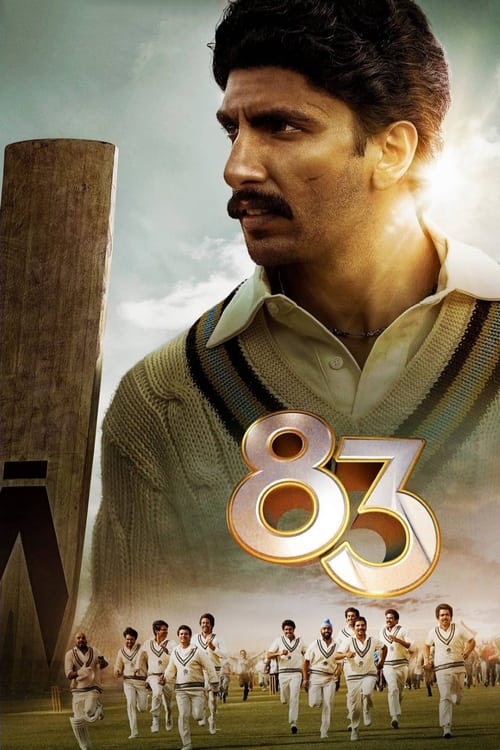
83
On the 25th of June 1983, the Lord’s Cricket Ground witnessed one of the biggest underdog stories in the history of sports. Fourteen inspired players - led by a man's self-belief and conviction - fought against all odds and orchestrated India’s greatest sporting triumph by beating the two-time World Champions West Indies.
The film struggled financially against its respectable budget of $36.8M, earning $25.5M globally (-31% loss). While initial box office returns were modest, the film has gained appreciation for its unique voice within the drama genre.


Plot Structure
Story beats plotted across runtime


Narrative Arc
Emotional journey through the story's key moments
Story Circle
Blueprint 15-beat structure
Arcplot Score Breakdown
Weighted: Precision (70%) + Arc (15%) + Theme (15%)
83 (2021) showcases deliberately positioned story structure, characteristic of Kabir Khan's storytelling approach. This structural analysis examines how the film's 15-point plot structure maps to proven narrative frameworks across 2 hours and 40 minutes. With an Arcplot score of 7.3, the film balances conventional beats with creative variation.
Characters
Cast & narrative archetypes

Kapil Dev

Romi Bhatia

Mohinder Amarnath

Sunil Gavaskar

Krishnamachari Srikkanth

Sandeep Patil

Yashpal Sharma

Roger Binny

Madan Lal

Balwinder Singh Sandhu

PR Man Singh
Main Cast & Characters
Kapil Dev
Played by Ranveer Singh
Captain of the Indian cricket team, an inspiring leader who rallies his underdog team to World Cup victory against all odds.
Romi Bhatia
Played by Deepika Padukone
Kapil Dev's supportive wife who provides emotional grounding and encouragement throughout the tournament.
Mohinder Amarnath
Played by Saqib Saleem
Veteran all-rounder and vice-captain, steady and reliable, provides crucial performances in key matches.
Sunil Gavaskar
Played by Tahir Raj Bhasin
Legendary opening batsman and the team's biggest star, initially skeptical of the team's chances.
Krishnamachari Srikkanth
Played by Jiiva
Aggressive opening batsman known for his fearless batting style and positive energy.
Sandeep Patil
Played by Chirag Patil
Stylish middle-order batsman who plays a crucial innings against Pakistan.
Yashpal Sharma
Played by Jatin Sarna
Middle-order batsman who provides steady contributions and team solidarity.
Roger Binny
Played by Nishant Dahiya
Medium-pace bowler who becomes the tournament's leading wicket-taker.
Madan Lal
Played by Harrdy Sandhu
Experienced medium-pacer who takes the crucial catch to dismiss Viv Richards in the final.
Balwinder Singh Sandhu
Played by Ammy Virk
Swing bowler who delivers the opening breakthrough against West Indies in the final.
PR Man Singh
Played by Pankaj Tripathi
Team manager who handles logistics and supports the team through the tournament.
Structural Analysis
The Status Quo at 1 minutes (1% through the runtime) establishes India is seen as the underdog of world cricket. News montage shows India's poor performance and low expectations. The team is not taken seriously on the international stage.. Structural examination shows that this early placement immediately immerses viewers in the story world.
The inciting incident occurs at 18 minutes when The team arrives in England for the 1983 Cricket World Cup. They are ignored by media, given poor accommodations, and face open mockery. The reality of being unwanted underdogs hits hard.. At 11% through the film, this Disruption aligns precisely with traditional story structure. This beat shifts the emotional landscape, launching the protagonist into the central conflict.
The First Threshold at 39 minutes marks the transition into Act II, occurring at 24% of the runtime. This reveals the protagonist's commitment to The opening match against West Indies begins. Despite fear and doubt, Kapil makes the active choice to lead with confidence. The team commits to playing without fear, embracing their underdog status as freedom rather than burden., moving from reaction to action.
At 78 minutes, the Midpoint arrives at 49% of the runtime—precisely centered, creating perfect narrative symmetry. Significantly, this crucial beat Kapil Dev's legendary 175* against Zimbabwe - the greatest ODI innings at that time. False victory: the team believes they've arrived, media takes notice, but the stakes are now higher. They're no longer ignored - they're expected to perform., fundamentally raising what's at risk. The emotional intensity shifts, dividing the narrative into clear before-and-after phases.
The Collapse moment at 117 minutes (73% through) represents the emotional nadir. Here, Final match: India vs West Indies. The "whiff of death" - India posts a low total of 183. In the break, the team faces the crushing reality that their score seems insufficient against the world's greatest batting lineup. The dream appears dead., demonstrates the protagonist at their lowest point. This beat's placement in the final quarter sets up the climactic reversal.
The Second Threshold at 127 minutes initiates the final act resolution at 80% of the runtime. Kapil gives a rousing speech: "We didn't come here to participate, we came to win." The team synthesizes everything they've learned - belief, brotherhood, skill. They take the field with new determination, combining individual talents into collective purpose., demonstrating the transformation achieved throughout the journey.
Emotional Journey
83's emotional architecture traces a deliberate progression across 15 carefully calibrated beats.
Narrative Framework
This structural analysis employs a 15-point narrative structure framework that maps key story moments. By mapping 83 against these established plot points, we can identify how Kabir Khan utilizes or subverts traditional narrative conventions. The plot point approach reveals not only adherence to structural principles but also creative choices that distinguish 83 within the drama genre.
Kabir Khan's Structural Approach
Among the 2 Kabir Khan films analyzed on Arcplot, the average structural score is 7.0, reflecting strong command of classical structure. 83 represents one of the director's most structurally precise works. For comparative analysis, explore the complete Kabir Khan filmography.
Comparative Analysis
Additional drama films include Eye for an Eye, South Pacific and Kiss of the Spider Woman. For more Kabir Khan analyses, see Phantom.
Plot Points by Act
Act I
SetupStatus Quo
India is seen as the underdog of world cricket. News montage shows India's poor performance and low expectations. The team is not taken seriously on the international stage.
Theme
PR Man Singh tells Kapil Dev: "You need to make them believe they can win." The theme of self-belief versus external doubt is established - the journey is about internal transformation, not just external victory.
Worldbuilding
Introduction of the 1983 Indian cricket team members, their individual personalities, insecurities, and dynamics. Kapil Dev is appointed captain. The team prepares for the World Cup amid media skepticism and public indifference.
Disruption
The team arrives in England for the 1983 Cricket World Cup. They are ignored by media, given poor accommodations, and face open mockery. The reality of being unwanted underdogs hits hard.
Resistance
Kapil Dev struggles to unite the team and build confidence. Internal conflicts emerge - players doubt themselves and each other. Early practice sessions show their weaknesses. Kapil tries different approaches to motivate the team.
Act II
ConfrontationFirst Threshold
The opening match against West Indies begins. Despite fear and doubt, Kapil makes the active choice to lead with confidence. The team commits to playing without fear, embracing their underdog status as freedom rather than burden.
Mirror World
The relationship between Kapil and his wife Romi (via phone calls) deepens. She represents unwavering belief and emotional anchor. The team also bonds as brothers, creating a family dynamic that mirrors the theme of collective belief.
Premise
The "fun and games" of tournament play. Early victories against Zimbabwe and unexpected wins build momentum. The team discovers their strength, enjoys the thrill of competition, and starts believing. Montage of victories, growing confidence, and media attention shifting.
Midpoint
Kapil Dev's legendary 175* against Zimbabwe - the greatest ODI innings at that time. False victory: the team believes they've arrived, media takes notice, but the stakes are now higher. They're no longer ignored - they're expected to perform.
Opposition
Pressure intensifies as they advance through knockout rounds. Opponents take them seriously now. Internal team tensions resurface - fear of failure grows. The weight of a nation's expectations builds. Close matches test their resolve.
Collapse
Final match: India vs West Indies. The "whiff of death" - India posts a low total of 183. In the break, the team faces the crushing reality that their score seems insufficient against the world's greatest batting lineup. The dream appears dead.
Crisis
Dark night of the soul in the locker room. Players process impending defeat. Silence, doubt, and fear dominate. Kapil sits quietly, absorbing the darkness before finding resolve.
Act III
ResolutionSecond Threshold
Kapil gives a rousing speech: "We didn't come here to participate, we came to win." The team synthesizes everything they've learned - belief, brotherhood, skill. They take the field with new determination, combining individual talents into collective purpose.
Synthesis
The finale: India defends 183 against West Indies. Crucial wickets fall - Mohinder Amarnath, Kapil's catch of Viv Richards, Madan Lal's bowling. Each player contributes. The impossible becomes possible through collective effort and unwavering belief.
Transformation
India wins the World Cup. Kapil lifts the trophy at Lord's. Mirrors the opening image of doubt and disrespect - now they are champions, believing in themselves. The transformation is complete: from underdogs who didn't believe, to champions who proved belief conquers all.