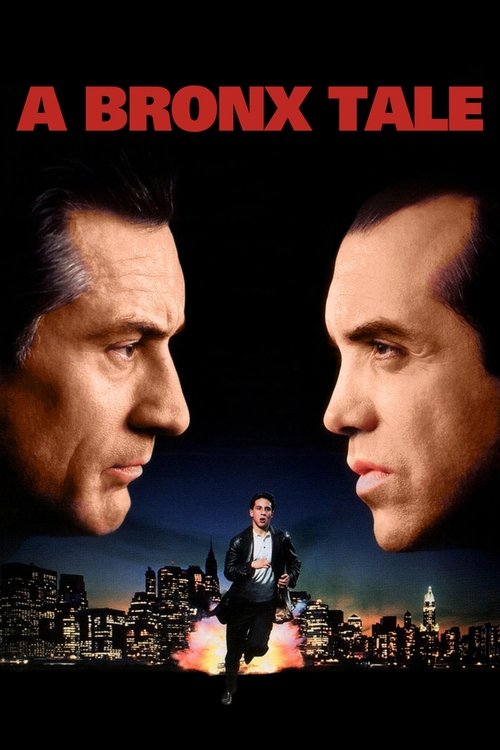
A Bronx Tale
Set in the Bronx during the tumultuous 1960s, an adolescent boy is torn between his honest, working-class father and a violent yet charismatic crime boss. Complicating matters is the youngster's growing attraction - forbidden in his neighborhood - for a beautiful black girl.
The film disappointed at the box office against its mid-range budget of $22.0M, earning $17.3M globally (-21% loss).
1 win & 4 nominations


Plot Structure
Story beats plotted across runtime


Narrative Arc
Emotional journey through the story's key moments
Story Circle
Blueprint 15-beat structure
Arcplot Score Breakdown
Weighted: Precision (70%) + Arc (15%) + Theme (15%)
A Bronx Tale (1993) reveals deliberately positioned story structure, characteristic of Robert De Niro's storytelling approach. This structural analysis examines how the film's 15-point plot structure maps to proven narrative frameworks across 2 hours and 1 minutes. With an Arcplot score of 7.6, the film showcases strong structural fundamentals.
Characters
Cast & narrative archetypes

Calogero 'C' Anello (Adult)
Sonny LoSpecchio
Lorenzo Anello
Jane Williams
Calogero 'C' Anello (Child)
Rosina Anello
Main Cast & Characters
Calogero 'C' Anello (Adult)
Played by Lillo Brancato
Narrator reflecting on his coming-of-age in the Bronx, torn between two father figures and their opposing worldviews.
Sonny LoSpecchio
Played by Chazz Palminteri
Charismatic mob boss who mentors young C, teaching him street wisdom and the allure of power.
Lorenzo Anello
Played by Robert De Niro
C's hardworking bus driver father who instills values of honesty, integrity, and earning an honest living.
Jane Williams
Played by Taral Hicks
African-American girl C falls in love with, their relationship tested by racial tensions of the era.
Calogero 'C' Anello (Child)
Played by Francis Capra
Nine-year-old boy who witnesses a murder and becomes fascinated by the neighborhood mob boss.
Rosina Anello
Played by Katherine Narducci
C's protective mother who worries about Sonny's influence on her son.
Structural Analysis
The Status Quo at 1 minutes (1% through the runtime) establishes Nine-year-old Calogero watches from his Bronx stoop, narrating his world where the working-class honest bus driver father and the neighborhood mobster Sonny represent two paths. The boy is caught between two father figures from the start.. Structural examination shows that this early placement immediately immerses viewers in the story world.
The inciting incident occurs at 13 minutes when C refuses to identify Sonny to the police. This act of omerta bonds him to Sonny and begins driving a wedge between C and his father Lorenzo, disrupting the family dynamic.. At 11% through the film, this Disruption aligns precisely with traditional story structure. This beat shifts the emotional landscape, launching the protagonist into the central conflict.
The First Threshold at 30 minutes marks the transition into Act II, occurring at 24% of the runtime. This shows the protagonist's commitment to C actively chooses to pursue Jane, an African-American girl from his school, despite the racial tensions in the neighborhood and peer pressure from his friends. This choice to follow his heart over tribal loyalty launches him into uncharted territory., moving from reaction to action.
At 59 minutes, the Midpoint arrives at 49% of the runtime—precisely centered, creating perfect narrative symmetry. Notably, this crucial beat C's friends, including Slick, plan a violent retaliation against the black neighborhood. Sonny warns C about the friends he keeps, saying "You're only allowed three great ones." The stakes raise as C realizes his two worlds are heading toward collision., fundamentally raising what's at risk. The emotional intensity shifts, dividing the narrative into clear before-and-after phases.
The Collapse moment at 88 minutes (72% through) represents the emotional nadir. Here, Sonny is shot and killed in the bar. C's mentor, protector, and father figure dies. The whiff of death is literal. C loses the man who taught him street wisdom but also kept him safe from the worst consequences of that life., indicates the protagonist at their lowest point. This beat's placement in the final quarter sets up the climactic reversal.
The Second Threshold at 96 minutes initiates the final act resolution at 80% of the runtime. C realizes his friends are going to get themselves killed in their planned attack. He races to stop them, synthesizing Lorenzo's moral compass with Sonny's street wisdom. He finally chooses his own path, not Sonny's or Lorenzo's, but his own., demonstrating the transformation achieved throughout the journey.
Emotional Journey
A Bronx Tale's emotional architecture traces a deliberate progression across 15 carefully calibrated beats.
Narrative Framework
This structural analysis employs proven narrative structure principles that track dramatic progression. By mapping A Bronx Tale against these established plot points, we can identify how Robert De Niro utilizes or subverts traditional narrative conventions. The plot point approach reveals not only adherence to structural principles but also creative choices that distinguish A Bronx Tale within the drama genre.
Robert De Niro's Structural Approach
Among the 2 Robert De Niro films analyzed on Arcplot, the average structural score is 7.2, reflecting strong command of classical structure. A Bronx Tale represents one of the director's most structurally precise works. For comparative analysis, explore the complete Robert De Niro filmography.
Comparative Analysis
Additional drama films include After Thomas, South Pacific and Dirty Dancing: Havana Nights. For more Robert De Niro analyses, see The Good Shepherd.
Plot Points by Act
Act I
SetupStatus Quo
Nine-year-old Calogero watches from his Bronx stoop, narrating his world where the working-class honest bus driver father and the neighborhood mobster Sonny represent two paths. The boy is caught between two father figures from the start.
Theme
Sonny tells young Calogero: "Nobody cares. The saddest thing in life is wasted talent." This establishes the central thematic question: what defines a life well-lived, honest work or street power?
Worldbuilding
Young C witnesses Sonny murder a man over a parking spot, refuses to identify him to police despite his father Lorenzo's pressure to do the right thing. Sonny takes C under his wing, creating the fundamental conflict between Lorenzo's working-class values and Sonny's mob world.
Disruption
C refuses to identify Sonny to the police. This act of omerta bonds him to Sonny and begins driving a wedge between C and his father Lorenzo, disrupting the family dynamic.
Resistance
Time jump to 1968. Seventeen-year-old C (now called "C" by Sonny) works for Sonny despite Lorenzo's disapproval. C navigates both worlds: his father's honest values and Sonny's street power. The debate between right living and easy money intensifies.
Act II
ConfrontationFirst Threshold
C actively chooses to pursue Jane, an African-American girl from his school, despite the racial tensions in the neighborhood and peer pressure from his friends. This choice to follow his heart over tribal loyalty launches him into uncharted territory.
Mirror World
C's relationship with Jane deepens. She represents the world beyond the Bronx, beyond the false choice between his father and Sonny. She embodies the theme: finding your own authentic path requires courage.
Premise
C enjoys the best of both worlds: respect from Sonny's crew, secret romance with Jane, and the guidance of both father figures. He learns street wisdom from Sonny (door test, working man vs. wise guy) while maintaining his essential decency.
Midpoint
C's friends, including Slick, plan a violent retaliation against the black neighborhood. Sonny warns C about the friends he keeps, saying "You're only allowed three great ones." The stakes raise as C realizes his two worlds are heading toward collision.
Opposition
Racial tensions explode. C's friends discover his relationship with Jane and pressure him to join their planned attack. Both Lorenzo and Sonny pressure C from different angles. C's attempt to straddle both worlds becomes impossible.
Collapse
Sonny is shot and killed in the bar. C's mentor, protector, and father figure dies. The whiff of death is literal. C loses the man who taught him street wisdom but also kept him safe from the worst consequences of that life.
Crisis
C mourns Sonny while his friends prepare for their attack on the black neighborhood. C must process the loss and decide who he will become without Sonny's protection or influence.
Act III
ResolutionSecond Threshold
C realizes his friends are going to get themselves killed in their planned attack. He races to stop them, synthesizing Lorenzo's moral compass with Sonny's street wisdom. He finally chooses his own path, not Sonny's or Lorenzo's, but his own.
Synthesis
C tries to prevent the attack but arrives as his friends' car explodes (Molotov cocktail backfire), killing them all. C is saved by his earlier choice to pursue Jane. He reconciles with his father, who finally acknowledges C's growth and choices.
Transformation
C stands at Sonny's funeral, narrating that he lost his friends but learned the lessons both father figures taught him. He became his own man, choosing love over hate, conscience over loyalty. The closing mirrors the opening stoop, but C is transformed.