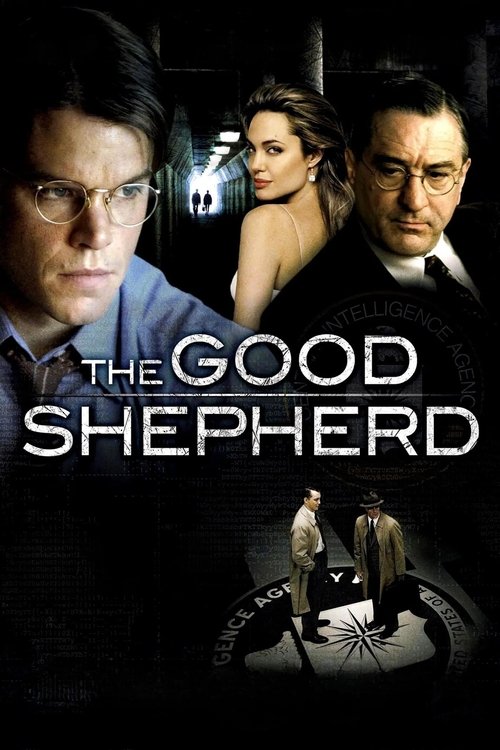
The Good Shepherd
Edward Wilson, the only witness to his father's suicide and member of the Skull and Bones Society while a student at Yale, is a morally upright young man who values honor and discretion, qualities that help him to be recruited for a career in the newly founded OSS. His dedication to his work does not come without a price though, leading him to sacrifice his ideals and eventually his family.
Working with a considerable budget of $85.0M, the film achieved a modest success with $100.3M in global revenue (+18% profit margin).
Nominated for 1 Oscar. 2 wins & 13 nominations


Plot Structure
Story beats plotted across runtime


Narrative Arc
Emotional journey through the story's key moments
Story Circle
Blueprint 15-beat structure
Arcplot Score Breakdown
Weighted: Precision (70%) + Arc (15%) + Theme (15%)
The Good Shepherd (2006) exemplifies carefully calibrated story structure, characteristic of Robert De Niro's storytelling approach. This structural analysis examines how the film's 15-point plot structure maps to proven narrative frameworks across 2 hours and 47 minutes. With an Arcplot score of 6.7, the film balances conventional beats with creative variation.
Characters
Cast & narrative archetypes

Edward Wilson
Clover Russell Wilson
Bill Sullivan
Philip Allen
Richard Hayes
Sam Murach
Laura
Edward Wilson Sr.
Arch Cummings
Hanna Schiller
Main Cast & Characters
Edward Wilson
Played by Matt Damon
A reserved Yale student who becomes a founding member of the CIA, sacrificing his personal life for duty and secrecy.
Clover Russell Wilson
Played by Angelina Jolie
Edward's unhappy wife who married him out of obligation, trapped in a loveless marriage.
Bill Sullivan
Played by Robert De Niro
Edward's FBI mentor and father figure who recruits him into intelligence work.
Philip Allen
Played by William Hurt
Skull and Bones member and CIA colleague who operates with moral ambiguity.
Richard Hayes
Played by Lee Pace
Edward's Skull and Bones friend and CIA colleague who becomes compromised.
Sam Murach
Played by Alec Baldwin
FBI agent and rival to Edward, representing a more aggressive approach to intelligence.
Laura
Played by Tammy Blanchard
Edward's true love and deaf woman he meets in London, representing the life he could have had.
Edward Wilson Sr.
Played by Timothy Hutton
Edward's father, an admiral who commits suicide, leaving a legacy of shame and duty.
Arch Cummings
Played by Billy Crudup
CIA operative and Edward's colleague in counterintelligence operations.
Hanna Schiller
Played by Martina Gedeck
German agent who has a brief affair with Edward, later used as leverage.
Structural Analysis
The Status Quo at 2 minutes (1% through the runtime) establishes April 1961: Edward Wilson receives a mysterious package containing a photograph and audio recording just as the Bay of Pigs invasion fails. We see a man trapped in secrecy and isolation, unable to trust anyone—establishing his emotional numbness.. Structural examination shows that this early placement immediately immerses viewers in the story world.
The inciting incident occurs at 20 minutes when FBI Agent Sam Murach approaches Edward, revealing his poetry professor Dr. Fredericks is a Nazi spy. Edward is asked to help expose him—his innocent academic world shatters as he's drawn into espionage, betraying his mentor and beginning his descent into moral compromise.. At 12% through the film, this Disruption aligns precisely with traditional story structure. This beat shifts the emotional landscape, launching the protagonist into the central conflict.
The First Threshold at 42 minutes marks the transition into Act II, occurring at 25% of the runtime. This demonstrates the protagonist's commitment to Edward marries Margaret out of obligation rather than love, abandoning Laura, and accepts the OSS assignment to London. He actively chooses duty and institutional loyalty over personal happiness—crossing into a world of permanent secrecy and emotional isolation., moving from reaction to action.
At 84 minutes, the Midpoint arrives at 50% of the runtime—precisely centered, creating perfect narrative symmetry. Notably, this crucial beat False defeat: Edward discovers his Soviet lover was an operative who manipulated him. In 1961, he identifies a potential mole within the agency. The two timelines converge on betrayal—he realizes trust is impossible in his world. His personal and professional lives are equally compromised., fundamentally raising what's at risk. The emotional intensity shifts, dividing the narrative into clear before-and-after phases.
The Collapse moment at 125 minutes (75% through) represents the emotional nadir. Here, Edward confirms that Miriam, his son's fiancée, is connected to Soviet intelligence. The "whiff of death"—his son's happiness and innocence must be sacrificed. Edward has become the very thing he hunted: someone who destroys lives for institutional purposes. His humanity has died., illustrates the protagonist at their lowest point. This beat's placement in the final quarter sets up the climactic reversal.
The Second Threshold at 134 minutes initiates the final act resolution at 80% of the runtime. Edward makes his decision: he will handle Miriam. His synthesis is dark—he fully accepts that the institution requires any sacrifice, including his son's future. He chooses the agency over family, completing his transformation into a man with no identity beyond his role., demonstrating the transformation achieved throughout the journey.
Emotional Journey
The Good Shepherd's emotional architecture traces a deliberate progression across 15 carefully calibrated beats.
Narrative Framework
This structural analysis employs systematic plot point analysis that identifies crucial turning points. By mapping The Good Shepherd against these established plot points, we can identify how Robert De Niro utilizes or subverts traditional narrative conventions. The plot point approach reveals not only adherence to structural principles but also creative choices that distinguish The Good Shepherd within the drama genre.
Robert De Niro's Structural Approach
Among the 2 Robert De Niro films analyzed on Arcplot, the average structural score is 7.2, reflecting strong command of classical structure. The Good Shepherd takes a more unconventional approach compared to the director's typical style. For comparative analysis, explore the complete Robert De Niro filmography.
Comparative Analysis
Additional drama films include After Thomas, South Pacific and Dirty Dancing: Havana Nights. For more Robert De Niro analyses, see A Bronx Tale.
Plot Points by Act
Act I
SetupStatus Quo
April 1961: Edward Wilson receives a mysterious package containing a photograph and audio recording just as the Bay of Pigs invasion fails. We see a man trapped in secrecy and isolation, unable to trust anyone—establishing his emotional numbness.
Theme
During Edward's Yale initiation into Skull and Bones, the ritual demands confession and absolute loyalty: "Who are you?" The question haunts him—the theme of sacrificing personal identity for institutional loyalty is stated through the secret society's demand for complete devotion.
Worldbuilding
The film establishes two timelines: 1961 post-Bay of Pigs and 1939 Yale. Young Edward is a poetry-loving student, initiated into Skull and Bones, revealing his father's suicide and shame. We see his relationship with deaf classmate Laura and the elite WASP world that will shape the CIA.
Disruption
FBI Agent Sam Murach approaches Edward, revealing his poetry professor Dr. Fredericks is a Nazi spy. Edward is asked to help expose him—his innocent academic world shatters as he's drawn into espionage, betraying his mentor and beginning his descent into moral compromise.
Resistance
Edward debates his path: he exposes Dr. Fredericks, is recruited by General Sullivan for OSS work, and his relationship with Margaret deepens after she becomes pregnant. He weighs duty against personal desires, mentored by Sullivan who represents the establishment's call to service.
Act II
ConfrontationFirst Threshold
Edward marries Margaret out of obligation rather than love, abandoning Laura, and accepts the OSS assignment to London. He actively chooses duty and institutional loyalty over personal happiness—crossing into a world of permanent secrecy and emotional isolation.
Mirror World
In London, Edward meets and falls for a mysterious woman at a party—later revealed as a Soviet agent. This relationship represents what he sacrificed: passion, connection, authenticity. She embodies the theme's counterpoint—genuine human intimacy versus institutional loyalty.
Premise
Edward operates in wartime London and post-war Berlin, running counterintelligence operations. The "promise of the premise"—spy games, double agents, moral compromises. He helps found the CIA, masters tradecraft, but grows increasingly cold. The 1961 timeline shows him analyzing the leak.
Midpoint
False defeat: Edward discovers his Soviet lover was an operative who manipulated him. In 1961, he identifies a potential mole within the agency. The two timelines converge on betrayal—he realizes trust is impossible in his world. His personal and professional lives are equally compromised.
Opposition
Pressure intensifies from all sides: Soviet counterintelligence closes in, the Bay of Pigs failure demands accountability, and his son Edward Jr. becomes romantically involved with a woman who may be a Soviet plant. Edward's paranoia consumes his family relationships as he investigates everyone.
Collapse
Edward confirms that Miriam, his son's fiancée, is connected to Soviet intelligence. The "whiff of death"—his son's happiness and innocence must be sacrificed. Edward has become the very thing he hunted: someone who destroys lives for institutional purposes. His humanity has died.
Crisis
Edward processes the impossible choice: protect his son's happiness or protect the agency. Margaret confronts him about their hollow marriage. He sits in darkness, the weight of decades of moral compromise crushing him. He has lost everything personal while gaining institutional power.
Act III
ResolutionSecond Threshold
Edward makes his decision: he will handle Miriam. His synthesis is dark—he fully accepts that the institution requires any sacrifice, including his son's future. He chooses the agency over family, completing his transformation into a man with no identity beyond his role.
Synthesis
Edward arranges for Miriam to be thrown from a plane. His son, devastated, remains ignorant of his father's role. Edward identifies and confronts the actual mole. The agency survives; the family is destroyed. He executes the mission with the cold efficiency he has perfected.
Transformation
Final image: Edward sits alone in his office, having been promoted to lead the CIA. He has everything the institution promised and nothing human left. The answer to "Who are you?" is: no one. His transformation is complete—a hollow man who sacrificed identity for power.