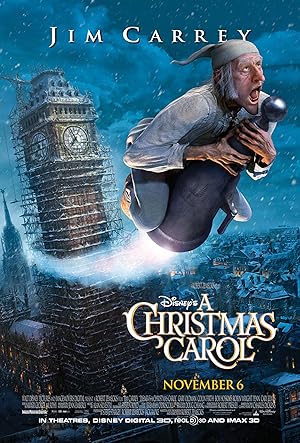
A Christmas Carol
Miser Ebenezer Scrooge is awakened on Christmas Eve by spirits who reveal to him his own miserable existence, what opportunities he wasted in his youth, his current cruelties, and the dire fate that awaits him if he does not change his ways. Scrooge is faced with his own story of growing bitterness and meanness, and must decide what his own future will hold: death or redemption.
Working with a major studio investment of $200.0M, the film achieved a steady performer with $325.3M in global revenue (+63% profit margin).
3 wins & 5 nominations


Plot Structure
Story beats plotted across runtime


Narrative Arc
Emotional journey through the story's key moments
Story Circle
Blueprint 15-beat structure
Arcplot Score Breakdown
Weighted: Precision (70%) + Arc (15%) + Theme (15%)
A Christmas Carol (2009) exhibits strategically placed dramatic framework, characteristic of Robert Zemeckis's storytelling approach. This structural analysis examines how the film's 15-point plot structure maps to proven narrative frameworks across 1 hour and 36 minutes. With an Arcplot score of 7.3, the film balances conventional beats with creative variation.
Characters
Cast & narrative archetypes

Ebenezer Scrooge
Ghost of Christmas Past
Ghost of Christmas Present
Ghost of Christmas Yet to Come
Jacob Marley
Bob Cratchit
Tiny Tim
Fred
Main Cast & Characters
Ebenezer Scrooge
Played by Jim Carrey
A miserly, cold-hearted businessman transformed by supernatural visits on Christmas Eve.
Ghost of Christmas Past
Played by Jim Carrey
A spectral guide who shows Scrooge his childhood and young adulthood.
Ghost of Christmas Present
Played by Jim Carrey
A jolly giant spirit who reveals the present Christmas celebrations Scrooge is missing.
Ghost of Christmas Yet to Come
Played by Jim Carrey
A silent, ominous phantom who shows Scrooge a dark future if he doesn't change.
Jacob Marley
Played by Gary Oldman
Scrooge's deceased business partner who returns as a ghost to warn him of his fate.
Bob Cratchit
Played by Gary Oldman
Scrooge's underpaid, long-suffering clerk who maintains kindness despite hardship.
Tiny Tim
Played by Gary Oldman
Bob Cratchit's frail, optimistic son whose fate motivates Scrooge's transformation.
Fred
Played by Colin Firth
Scrooge's cheerful nephew who persistently invites his uncle to Christmas despite rejection.
Structural Analysis
The Status Quo at 1 minutes (1% through the runtime) establishes The film opens on Jacob Marley's dead face as Scrooge covers his eyes with coins, establishing death and Scrooge's cold, miserly nature from the very first frame.. Structural examination shows that this early placement immediately immerses viewers in the story world.
The inciting incident occurs at 12 minutes when The ghost of Jacob Marley appears to Scrooge, wrapped in heavy chains forged from his lifetime of greed, warning that three spirits will visit him to give him a chance to escape Marley's fate.. At 12% through the film, this Disruption aligns precisely with traditional story structure. This beat shifts the emotional landscape, launching the protagonist into the central conflict.
The First Threshold at 24 minutes marks the transition into Act II, occurring at 25% of the runtime. This shows the protagonist's commitment to The Ghost of Christmas Past appears as a flickering candle-like figure and takes Scrooge's hand, flying him through the window into his memories. Scrooge actively chooses to go, beginning his supernatural journey of redemption., moving from reaction to action.
At 48 minutes, the Midpoint arrives at 50% of the runtime—precisely centered, creating perfect narrative symmetry. Of particular interest, this crucial beat The Ghost of Christmas Present reveals the wretched children Ignorance and Want hidden beneath his robe, warning that Ignorance especially will doom mankind. This false defeat raises the stakes beyond Scrooge's personal redemption to humanity itself., fundamentally raising what's at risk. The emotional intensity shifts, dividing the narrative into clear before-and-after phases.
The Collapse moment at 72 minutes (75% through) represents the emotional nadir. Here, Scrooge discovers his own neglected grave and realizes he is the unmourned dead man. The "whiff of death" becomes literal as he sees his own name on the tombstone and understands this is his fate unless he changes., demonstrates the protagonist at their lowest point. This beat's placement in the final quarter sets up the climactic reversal.
The Second Threshold at 77 minutes initiates the final act resolution at 80% of the runtime. Scrooge awakens in his own bed on Christmas morning, alive and transformed. He synthesizes the lessons from all three spirits and commits fully to becoming a new man, laughing with joy at his second chance., demonstrating the transformation achieved throughout the journey.
Emotional Journey
A Christmas Carol's emotional architecture traces a deliberate progression across 15 carefully calibrated beats.
Narrative Framework
This structural analysis employs structural analysis methodology used to understand storytelling architecture. By mapping A Christmas Carol against these established plot points, we can identify how Robert Zemeckis utilizes or subverts traditional narrative conventions. The plot point approach reveals not only adherence to structural principles but also creative choices that distinguish A Christmas Carol within the animation genre.
Robert Zemeckis's Structural Approach
Among the 20 Robert Zemeckis films analyzed on Arcplot, the average structural score is 6.9, demonstrating varied approaches to story architecture. A Christmas Carol represents one of the director's most structurally precise works. For comparative analysis, explore the complete Robert Zemeckis filmography.
Comparative Analysis
Additional animation films include The Bad Guys, Puss in Boots and Violet Evergarden: Eternity and the Auto Memory Doll. For more Robert Zemeckis analyses, see Who Framed Roger Rabbit, Beowulf and Welcome to Marwen.
Plot Points by Act
Act I
SetupStatus Quo
The film opens on Jacob Marley's dead face as Scrooge covers his eyes with coins, establishing death and Scrooge's cold, miserly nature from the very first frame.
Theme
Scrooge's nephew Fred declares that Christmas is "a kind, forgiving, charitable, pleasant time" when people "open their shut-up hearts freely" - stating the theme of human connection that Scrooge must learn.
Worldbuilding
Scrooge's miserable existence is established: he refuses Fred's Christmas dinner invitation, dismisses charity collectors, begrudgingly gives Bob Cratchit Christmas Day off, and walks home through Victorian London alone and bitter.
Disruption
The ghost of Jacob Marley appears to Scrooge, wrapped in heavy chains forged from his lifetime of greed, warning that three spirits will visit him to give him a chance to escape Marley's fate.
Resistance
Scrooge processes Marley's terrifying warning and initially dismisses it as "humbug" and indigestion. He attempts to sleep but remains haunted by doubt as he waits anxiously for the first spirit to arrive at one o'clock.
Act II
ConfrontationFirst Threshold
The Ghost of Christmas Past appears as a flickering candle-like figure and takes Scrooge's hand, flying him through the window into his memories. Scrooge actively chooses to go, beginning his supernatural journey of redemption.
Mirror World
Scrooge witnesses his younger self with Belle, his former fiancée, representing the love and human connection he abandoned for wealth. Belle serves as the thematic mirror showing what Scrooge sacrificed and could have had.
Premise
The Ghost of Christmas Past shows Scrooge his lonely childhood, his kind mentor Fezziwig, and his loss of Belle. Then the Ghost of Christmas Present reveals the Cratchit family's modest joy and Tiny Tim's illness, and Fred's warm Christmas celebration.
Midpoint
The Ghost of Christmas Present reveals the wretched children Ignorance and Want hidden beneath his robe, warning that Ignorance especially will doom mankind. This false defeat raises the stakes beyond Scrooge's personal redemption to humanity itself.
Opposition
The Ghost of Christmas Yet to Come, a terrifying dark specter, shows Scrooge increasingly disturbing visions: businessmen laughing at an unnamed man's death, thieves selling a dead man's possessions, and the Cratchit family mourning Tiny Tim's death.
Collapse
Scrooge discovers his own neglected grave and realizes he is the unmourned dead man. The "whiff of death" becomes literal as he sees his own name on the tombstone and understands this is his fate unless he changes.
Crisis
Scrooge desperately pleads with the Ghost of Christmas Yet to Come, asking if these shadows are of things that Will be or things that May be. He promises to honor Christmas and change his ways if given another chance.
Act III
ResolutionSecond Threshold
Scrooge awakens in his own bed on Christmas morning, alive and transformed. He synthesizes the lessons from all three spirits and commits fully to becoming a new man, laughing with joy at his second chance.
Synthesis
Scrooge executes his transformation: he donates generously to charity, sends a giant turkey to the Cratchits anonymously, attends Fred's Christmas dinner, and the next day raises Bob Cratchit's salary and becomes a second father to Tiny Tim.
Transformation
Scrooge walks through London as a beloved figure, greeting everyone warmly. The narrator tells us Tiny Tim survived, and Scrooge became as good a man as any the city knew - the complete opposite of the cold miser in the opening image.