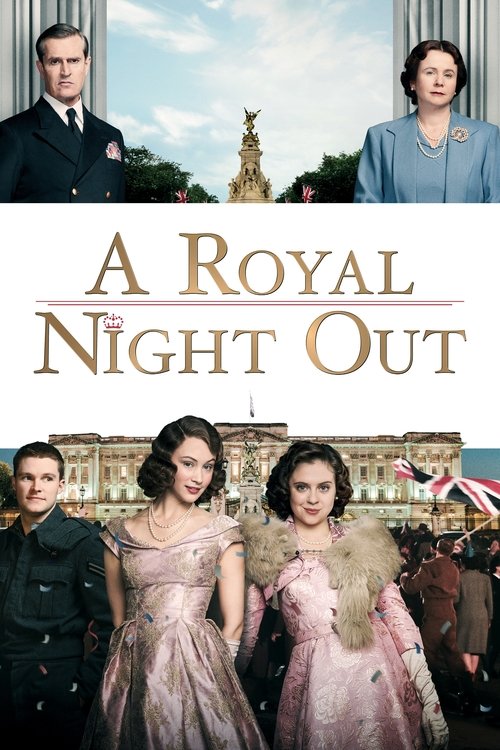
A Royal Night Out
The re-imagining of VE Day in 1945, when Princess Elizabeth and her sister, Margaret were allowed out from Buckingham Palace for the night to join in the celebrations, and encounter romance and danger.
The film earned $5.1M at the global box office.
1 win & 3 nominations


Plot Structure
Story beats plotted across runtime


Narrative Arc
Emotional journey through the story's key moments
Story Circle
Blueprint 15-beat structure
Arcplot Score Breakdown
Weighted: Precision (70%) + Arc (15%) + Theme (15%)
A Royal Night Out (2015) exemplifies carefully calibrated plot construction, characteristic of Julian Jarrold's storytelling approach. This structural analysis examines how the film's 15-point plot structure maps to proven narrative frameworks across 1 hour and 37 minutes. With an Arcplot score of 7.1, the film balances conventional beats with creative variation.
Characters
Cast & narrative archetypes

Princess Elizabeth
Princess Margaret
Jack
King George VI
Queen Elizabeth
Lieutenant Burridge
Grosvenor
Main Cast & Characters
Princess Elizabeth
Played by Sarah Gadon
The future Queen Elizabeth II, eager to experience one night of freedom on VE Day before her royal duties consume her life.
Princess Margaret
Played by Bel Powley
Elizabeth's younger sister, rebellious and spontaneous, who drags her sister into an adventure through London's streets.
Jack
Played by Jack Reynor
A disillusioned airman who has gone AWOL, searching for his brother in the chaos of VE Day celebrations.
King George VI
Played by Rupert Everett
The stammering king who reluctantly allows his daughters one night of supervised freedom to celebrate the war's end.
Queen Elizabeth
Played by Emily Watson
The protective Queen Mother who worries about her daughters' safety but understands their desire for normalcy.
Lieutenant Burridge
Played by Jack Gordon
The earnest and by-the-book officer assigned to chaperone the princesses during their night out.
Grosvenor
Played by Jack Brady
A smooth-talking, opportunistic man who takes advantage of Margaret's naivety during the night's festivities.
Structural Analysis
The Status Quo at 1 minutes (1% through the runtime) establishes Princess Elizabeth practices her VE Day speech in the palace, constrained by royal protocol and her father's expectations. She is dutiful but clearly yearning for authentic connection beyond palace walls.. Notably, this early placement immediately immerses viewers in the story world.
The inciting incident occurs at 11 minutes when The King surprisingly agrees to let Elizabeth and Margaret join the VE Day celebrations incognito, with strict conditions and chaperones. This unprecedented permission disrupts their cloistered existence.. At 12% through the film, this Disruption aligns precisely with traditional story structure. This beat shifts the emotional landscape, launching the protagonist into the central conflict.
The First Threshold at 24 minutes marks the transition into Act II, occurring at 24% of the runtime. This indicates the protagonist's commitment to Elizabeth actively chooses to slip away from their chaperones at the Ritz to find Margaret, who has already escaped. This decision launches her into the real world alone, crossing the threshold from protected princess to independent woman., moving from reaction to action.
At 50 minutes, the Midpoint arrives at 51% of the runtime—precisely centered, creating perfect narrative symmetry. Notably, this crucial beat False victory: Elizabeth and Jack share an intimate moment of connection at a street party. She believes she's successfully experiencing real life and forming a genuine relationship, but she's still hiding her true identity - the deception will catch up to her., fundamentally raising what's at risk. The emotional intensity shifts, dividing the narrative into clear before-and-after phases.
The Collapse moment at 71 minutes (73% through) represents the emotional nadir. Here, Elizabeth finds Margaret in a dangerous situation at a brothel. The illusion of carefree freedom dies - she realizes the night has spiraled out of control, she's failed her duty, endangered her sister, and her connection with Jack is built on a lie., demonstrates the protagonist at their lowest point. This beat's placement in the final quarter sets up the climactic reversal.
The Second Threshold at 77 minutes initiates the final act resolution at 80% of the runtime. Jack discovers Elizabeth's true identity when she appears on the palace balcony. Elizabeth realizes she must synthesize both worlds - she cannot abandon duty, but she can bring the authenticity and connection she learned into her royal role., demonstrating the transformation achieved throughout the journey.
Emotional Journey
A Royal Night Out's emotional architecture traces a deliberate progression across 15 carefully calibrated beats.
Narrative Framework
This structural analysis employs structural analysis methodology used to understand storytelling architecture. By mapping A Royal Night Out against these established plot points, we can identify how Julian Jarrold utilizes or subverts traditional narrative conventions. The plot point approach reveals not only adherence to structural principles but also creative choices that distinguish A Royal Night Out within the comedy genre.
Julian Jarrold's Structural Approach
Among the 4 Julian Jarrold films analyzed on Arcplot, the average structural score is 6.7, demonstrating varied approaches to story architecture. A Royal Night Out represents one of the director's most structurally precise works. For comparative analysis, explore the complete Julian Jarrold filmography.
Comparative Analysis
Additional comedy films include The Bad Guys, Ella Enchanted and The Evening Star. For more Julian Jarrold analyses, see Brideshead Revisited, Becoming Jane and Kinky Boots.
Plot Points by Act
Act I
SetupStatus Quo
Princess Elizabeth practices her VE Day speech in the palace, constrained by royal protocol and her father's expectations. She is dutiful but clearly yearning for authentic connection beyond palace walls.
Theme
Margaret tells Elizabeth, "We don't know anything about real life" - establishing the thematic question about privilege creating isolation from authentic human experience.
Worldbuilding
Establishment of palace life on VE Day: Elizabeth's rigid routine, Margaret's rebelliousness, parental dynamics, the massive celebrations happening outside that the princesses can only observe from windows. The contrast between duty and desire.
Disruption
The King surprisingly agrees to let Elizabeth and Margaret join the VE Day celebrations incognito, with strict conditions and chaperones. This unprecedented permission disrupts their cloistered existence.
Resistance
The princesses prepare for their night out with military officers as chaperones. Elizabeth debates the risks and responsibilities. Instructions are given about staying safe, staying together, and returning by 1 AM. Margaret schemes to break free.
Act II
ConfrontationFirst Threshold
Elizabeth actively chooses to slip away from their chaperones at the Ritz to find Margaret, who has already escaped. This decision launches her into the real world alone, crossing the threshold from protected princess to independent woman.
Mirror World
Elizabeth meets Jack, an AWOL airman who doesn't recognize her. He represents the authentic, unfiltered common life she's never experienced - treating her as an equal, challenging her assumptions, embodying the theme of genuine human connection.
Premise
The "promise of the premise" - Elizabeth experiences London nightlife: pubs, dancing, singing, interacting with ordinary people celebrating victory. She learns about real struggles, real joy, real relationships. Meanwhile, Margaret pursues her own reckless adventures.
Midpoint
False victory: Elizabeth and Jack share an intimate moment of connection at a street party. She believes she's successfully experiencing real life and forming a genuine relationship, but she's still hiding her true identity - the deception will catch up to her.
Opposition
The night grows darker: Margaret gets into serious trouble in a brothel; Elizabeth's deception weighs on her; Jack begins to suspect something; palace security desperately searches; the clock ticks toward the 1 AM deadline and her father's speech where she must appear.
Collapse
Elizabeth finds Margaret in a dangerous situation at a brothel. The illusion of carefree freedom dies - she realizes the night has spiraled out of control, she's failed her duty, endangered her sister, and her connection with Jack is built on a lie.
Crisis
Elizabeth faces the consequences: racing against time to get Margaret to safety and return to the palace, processing her guilt about the deception with Jack, questioning whether this freedom was worth the cost, fearing her father's reaction.
Act III
ResolutionSecond Threshold
Jack discovers Elizabeth's true identity when she appears on the palace balcony. Elizabeth realizes she must synthesize both worlds - she cannot abandon duty, but she can bring the authenticity and connection she learned into her royal role.
Synthesis
Resolution: Elizabeth appears on the balcony with her family, forever changed. She delivers her speech with new authenticity born from real experience. The King understands she's grown. Margaret is chastened. Jack watches from the crowd, their connection transcendent despite impossibility.
Transformation
Final image mirrors the opening: Elizabeth on the palace balcony, but transformed. She now waves to the crowd with genuine warmth and understanding, having bridged the gap between privilege and people. She carries the common touch that will define her future reign.