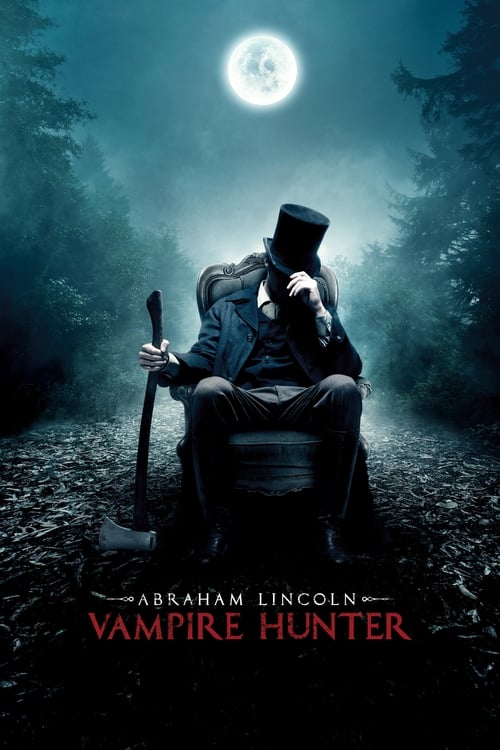
Abraham Lincoln: Vampire Hunter
President Lincoln's mother is killed by a supernatural creature, which fuels his passion to crush vampires and their slave-owning helpers.
Working with a moderate budget of $69.0M, the film achieved a steady performer with $116.5M in global revenue (+69% profit margin).


Plot Structure
Story beats plotted across runtime


Narrative Arc
Emotional journey through the story's key moments
Story Circle
Blueprint 15-beat structure
Arcplot Score Breakdown
Weighted: Precision (70%) + Arc (15%) + Theme (15%)
Abraham Lincoln: Vampire Hunter (2012) showcases deliberately positioned narrative architecture, characteristic of Timur Bekmambetov's storytelling approach. This structural analysis examines how the film's 15-point plot structure maps to proven narrative frameworks across 1 hour and 45 minutes. With an Arcplot score of 6.9, the film balances conventional beats with creative variation.
Characters
Cast & narrative archetypes

Abraham Lincoln
Henry Sturgess
Mary Todd Lincoln
Adam
William Johnson
Vadoma
Joshua Speed
Main Cast & Characters
Abraham Lincoln
Played by Benjamin Walker
The 16th President of the United States who leads a secret life as a vampire hunter, seeking vengeance for his mother's death while fighting to preserve the Union.
Henry Sturgess
Played by Dominic Cooper
A charismatic vampire hunter who recruits and trains young Lincoln, teaching him combat skills while harboring his own dark secrets about his immortal nature.
Mary Todd Lincoln
Played by Mary Elizabeth Winstead
Lincoln's strong-willed wife who discovers his secret vampire-hunting life and becomes a crucial ally in his fight against the undead.
Adam
Played by Rufus Sewell
An ancient and powerful vampire who leads the Confederate vampires, seeking to create a nation where vampires can feed on humans freely through the institution of slavery.
William Johnson
Played by Anthony Mackie
Lincoln's loyal childhood friend and confidant who assists him in his vampire-hunting mission and later works as his valet in the White House.
Vadoma
Played by Erin Wasson
Adam's sister and a fierce vampire warrior who serves as his enforcer and plays a key role in the Confederate vampire army.
Joshua Speed
Played by Jimmi Simpson
Lincoln's business partner and close friend who initially supports his political career before discovering his secret vampire-hunting activities.
Structural Analysis
The Status Quo at 1 minutes (1% through the runtime) establishes Young Abe Lincoln witnesses his mother's death at the hands of a mysterious plantation owner, Jack Barts, setting up his world of injustice and powerlessness in 1818 Indiana.. Structural examination shows that this early placement immediately immerses viewers in the story world.
The inciting incident occurs at 12 minutes when Lincoln is saved from death by the mysterious Henry Sturgess, who reveals the truth: vampires are real, and they killed Lincoln's mother. The supernatural world erupts into Lincoln's reality.. At 12% through the film, this Disruption aligns precisely with traditional story structure. This beat shifts the emotional landscape, launching the protagonist into the central conflict.
The First Threshold at 26 minutes marks the transition into Act II, occurring at 25% of the runtime. This demonstrates the protagonist's commitment to Lincoln chooses to become a vampire hunter and moves to Springfield, Illinois to begin his secret mission. He actively commits to this double life, accepting Henry's terms and his new identity., moving from reaction to action.
At 51 minutes, the Midpoint arrives at 49% of the runtime—precisely centered, creating perfect narrative symmetry. Structural examination shows that this crucial beat Lincoln discovers the vampire conspiracy goes to the top: Adam, the master vampire, is funding the Confederacy to create a nation where vampires can feed freely on enslaved people. The stakes escalate from personal revenge to national survival., fundamentally raising what's at risk. The emotional intensity shifts, dividing the narrative into clear before-and-after phases.
The Collapse moment at 77 minutes (74% through) represents the emotional nadir. Here, Lincoln's son Willie dies (literal death). The Union suffers devastating losses at the Battle of Gettysburg as vampire confederates slaughter soldiers. Lincoln's dual mission—preserve the Union and defeat the vampires—seems impossible., reveals the protagonist at their lowest point. This beat's placement in the final quarter sets up the climactic reversal.
The Second Threshold at 83 minutes initiates the final act resolution at 79% of the runtime. Lincoln devises a plan: silver weapons mass-produced and delivered to the Union army at Gettysburg via a train running through Confederate territory. He chooses to trust Henry again and merges his secret war with his public one., demonstrating the transformation achieved throughout the journey.
Emotional Journey
Abraham Lincoln: Vampire Hunter's emotional architecture traces a deliberate progression across 15 carefully calibrated beats.
Narrative Framework
This structural analysis employs structural analysis methodology used to understand storytelling architecture. By mapping Abraham Lincoln: Vampire Hunter against these established plot points, we can identify how Timur Bekmambetov utilizes or subverts traditional narrative conventions. The plot point approach reveals not only adherence to structural principles but also creative choices that distinguish Abraham Lincoln: Vampire Hunter within the action genre.
Timur Bekmambetov's Structural Approach
Among the 5 Timur Bekmambetov films analyzed on Arcplot, the average structural score is 7.0, demonstrating varied approaches to story architecture. Abraham Lincoln: Vampire Hunter takes a more unconventional approach compared to the director's typical style. For comparative analysis, explore the complete Timur Bekmambetov filmography.
Comparative Analysis
Additional action films include The Bad Guys, Puss in Boots and Venom: The Last Dance. For more Timur Bekmambetov analyses, see Wanted, Night Watch and Day Watch.
Plot Points by Act
Act I
SetupStatus Quo
Young Abe Lincoln witnesses his mother's death at the hands of a mysterious plantation owner, Jack Barts, setting up his world of injustice and powerlessness in 1818 Indiana.
Theme
Lincoln's father tells him: "A man's actions are decided by his character. Some men aren't meant to kill." Theme of destiny, moral choice, and whether vengeance or justice defines a man.
Worldbuilding
Nine years pass. Adult Lincoln works on riverboats, witnesses slave trade atrocities, and attempts to attack Jack Barts in a drunken rage, only to be beaten nearly to death when he discovers Barts is a vampire.
Disruption
Lincoln is saved from death by the mysterious Henry Sturgess, who reveals the truth: vampires are real, and they killed Lincoln's mother. The supernatural world erupts into Lincoln's reality.
Resistance
Henry trains Lincoln in vampire hunting over months of brutal preparation. Lincoln learns combat, receives a silver-coated axe, and is taught that to hunt vampires, he must give up any chance at a normal life, love, or family.
Act II
ConfrontationFirst Threshold
Lincoln chooses to become a vampire hunter and moves to Springfield, Illinois to begin his secret mission. He actively commits to this double life, accepting Henry's terms and his new identity.
Mirror World
Lincoln meets Mary Todd at a social gathering and begins courting her. She represents the normal life he's sacrificed—love, family, political ambition—and will challenge his secret isolation.
Premise
Lincoln hunts vampires by night while building a law practice and political career by day. He kills Jack Barts, avenging his mother. He marries Mary, makes allies (Speed, William Johnson), and rises in politics while secretly serving Henry's mission.
Midpoint
Lincoln discovers the vampire conspiracy goes to the top: Adam, the master vampire, is funding the Confederacy to create a nation where vampires can feed freely on enslaved people. The stakes escalate from personal revenge to national survival.
Opposition
Lincoln becomes President and faces the Civil War. Adam's vampires infiltrate the Confederate army. Lincoln's friend William is killed. Henry reveals he is also a vampire, destroying Lincoln's trust. Mary discovers the truth about Lincoln's secret war.
Collapse
Lincoln's son Willie dies (literal death). The Union suffers devastating losses at the Battle of Gettysburg as vampire confederates slaughter soldiers. Lincoln's dual mission—preserve the Union and defeat the vampires—seems impossible.
Crisis
Lincoln mourns Willie and contemplates surrender. He realizes his methods have failed—he cannot fight this war alone in the shadows. He must synthesize his two identities: vampire hunter and President.
Act III
ResolutionSecond Threshold
Lincoln devises a plan: silver weapons mass-produced and delivered to the Union army at Gettysburg via a train running through Confederate territory. He chooses to trust Henry again and merges his secret war with his public one.
Synthesis
Lincoln, Henry, Mary, and Speed fight vampires on a train carrying silver weapons. Lincoln confronts and defeats Adam, the vampire who orchestrated everything. The silver reaches Gettysburg, turning the tide of battle. The Emancipation Proclamation is signed.
Transformation
Ford's Theatre, 1865. Lincoln, having united the nation and destroyed the vampire threat, sits with Mary. Henry watches from the shadows. Lincoln has transformed from vengeful boy to the man who saved the nation—but his destiny ends in assassination, the final sacrifice.