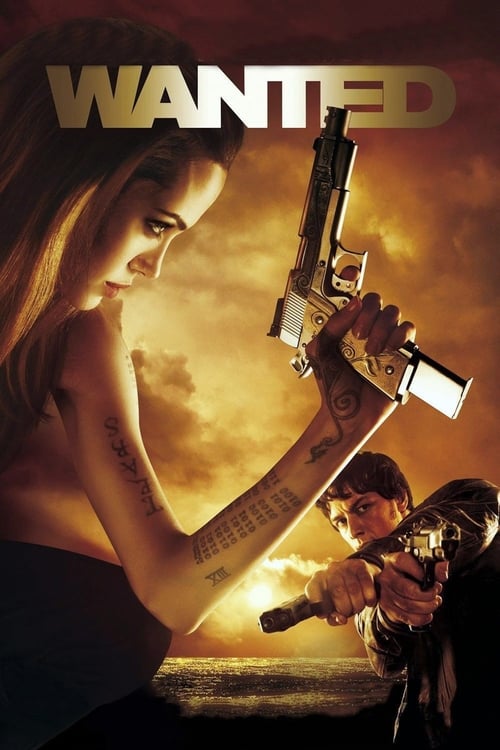
Wanted
Doormat Wesley Gibson is an office worker whose life is going nowhere. He meets an attractive woman named Fox and discovers that his recently murdered father - whom Wesley never knew - belonged to the Fraternity, a secret society of assassins which takes its orders from Fate itself. Fox and Sloan, the Fraternity's leader, teach Wesley, through intense training, to tap into dormant powers and hone his innate killing skills. Though he enjoys his newfound abilities, he begins to suspect that there is more to the Fraternity than meets the eye.
Despite a substantial budget of $75.0M, Wanted became a commercial success, earning $342.5M worldwide—a 357% return.
Nominated for 2 Oscars. 4 wins & 28 nominations


Plot Structure
Story beats plotted across runtime


Narrative Arc
Emotional journey through the story's key moments
Story Circle
Blueprint 15-beat structure
Arcplot Score Breakdown
Weighted: Precision (70%) + Arc (15%) + Theme (15%)
Wanted (2008) exhibits precise plot construction, characteristic of Timur Bekmambetov's storytelling approach. This structural analysis examines how the film's 15-point plot structure maps to proven narrative frameworks across 1 hour and 50 minutes. With an Arcplot score of 7.1, the film balances conventional beats with creative variation.
Structural Analysis
The Status Quo at 1 minutes (1% through the runtime) establishes Wesley Gibson's miserable existence: panic attacks at his office cubicle, abusive boss, cheating girlfriend with his best friend, no control over his pathetic life. Opening voiceover: "What the fuck have you done lately?".. Significantly, this early placement immediately immerses viewers in the story world.
The inciting incident occurs at 13 minutes when Fox appears at the pharmacy and tells Wesley "Your father was one of the greatest assassins who ever lived. The man who killed him is behind you." Cross (the killer) opens fire, initiating a spectacular shootout.. At 12% through the film, this Disruption aligns precisely with traditional story structure. This beat shifts the emotional landscape, launching the protagonist into the central conflict.
The First Threshold at 27 minutes marks the transition into Act II, occurring at 24% of the runtime. This shows the protagonist's commitment to Wesley makes the active choice: "I'm sorry, I can't... I can't do this." Then sees his former best friend with his ex-girlfriend and smashes keyboard into his boss's face, walks out declaring "I'm out." He chooses the assassin world., moving from reaction to action.
At 56 minutes, the Midpoint arrives at 50% of the runtime—precisely centered, creating perfect narrative symmetry. Notably, this crucial beat Wesley completes his first solo assassination on the train - a spectacular action sequence where he proves himself capable. False victory: he believes he's becoming the hero of his own story, avenging his father., fundamentally raising what's at risk. The emotional intensity shifts, dividing the narrative into clear before-and-after phases.
The Collapse moment at 82 minutes (75% through) represents the emotional nadir. Here, Cross reveals the truth: "You're my son" and sacrifices himself to save Wesley, taking a bullet meant for him. Wesley's entire worldview dies - everything he believed was a lie. His father didn't abandon him; he was protecting him., illustrates the protagonist at their lowest point. This beat's placement in the final quarter sets up the climactic reversal.
The Second Threshold at 87 minutes initiates the final act resolution at 79% of the runtime. Wesley synthesizes his training with his new truth: "This is me taking control of my life." He chooses to attack the Fraternity, using their own methods against them. He becomes the master of his own destiny., demonstrating the transformation achieved throughout the journey.
Emotional Journey
Wanted's emotional architecture traces a deliberate progression across 15 carefully calibrated beats.
Narrative Framework
This structural analysis employs proven narrative structure principles that track dramatic progression. By mapping Wanted against these established plot points, we can identify how Timur Bekmambetov utilizes or subverts traditional narrative conventions. The plot point approach reveals not only adherence to structural principles but also creative choices that distinguish Wanted within the action genre.
Timur Bekmambetov's Structural Approach
Among the 5 Timur Bekmambetov films analyzed on Arcplot, the average structural score is 7.0, demonstrating varied approaches to story architecture. Wanted represents one of the director's most structurally precise works. For comparative analysis, explore the complete Timur Bekmambetov filmography.
Comparative Analysis
Additional action films include The Bad Guys, Puss in Boots and Venom: The Last Dance. For more Timur Bekmambetov analyses, see Abraham Lincoln: Vampire Hunter, Night Watch and Day Watch.
Plot Points by Act
Act I
SetupStatus Quo
Wesley Gibson's miserable existence: panic attacks at his office cubicle, abusive boss, cheating girlfriend with his best friend, no control over his pathetic life. Opening voiceover: "What the fuck have you done lately?"
Theme
Fox tells Wesley: "You're a sheep. Your father was a wolf." The theme of hidden potential and choosing your destiny versus accepting victimhood is established.
Worldbuilding
Wesley's pathetic routine: humiliation at work, medication addiction, discovering his girlfriend's affair, zero self-respect. Establishes him as the ultimate victim of his own inaction.
Disruption
Fox appears at the pharmacy and tells Wesley "Your father was one of the greatest assassins who ever lived. The man who killed him is behind you." Cross (the killer) opens fire, initiating a spectacular shootout.
Resistance
Wesley resists the call: tries to return to normal life, gets fired, discovers his superhuman abilities (curved bullet), meets Sloan who explains the Fraternity, sees his father's body. Debate between staying a "nobody" or becoming an assassin.
Act II
ConfrontationFirst Threshold
Wesley makes the active choice: "I'm sorry, I can't... I can't do this." Then sees his former best friend with his ex-girlfriend and smashes keyboard into his boss's face, walks out declaring "I'm out." He chooses the assassin world.
Mirror World
Fox becomes Wesley's primary relationship and thematic guide. She represents the life of choosing action over victimhood, training him brutally. She embodies the assassin's code he must learn.
Premise
Training montage and assassin education: getting beaten up, learning to curve bullets, the Loom of Fate reveals targets, recovery baths, knife fighting, trust exercises. Wesley transforms from victim to weapon. The "fun" of becoming a superhuman killer.
Midpoint
Wesley completes his first solo assassination on the train - a spectacular action sequence where he proves himself capable. False victory: he believes he's becoming the hero of his own story, avenging his father.
Opposition
Wesley becomes a full Fraternity member, continues assassinations, gets closer to Cross. The Fraternity hunts Cross aggressively. Wesley's confidence grows but Cross stays ahead. Stakes escalate toward final confrontation.
Collapse
Cross reveals the truth: "You're my son" and sacrifices himself to save Wesley, taking a bullet meant for him. Wesley's entire worldview dies - everything he believed was a lie. His father didn't abandon him; he was protecting him.
Crisis
Wesley processes the betrayal, examines the evidence Cross left him. Dark night of realization: the Loom decreed his own father's death, and Sloan manipulated everything. The Fraternity is corrupt.
Act III
ResolutionSecond Threshold
Wesley synthesizes his training with his new truth: "This is me taking control of my life." He chooses to attack the Fraternity, using their own methods against them. He becomes the master of his own destiny.
Synthesis
The Fraternity assault: Wesley storms the textile mill, kills assassins using spectacular curved bullet techniques. Confronts Sloan. Fox and other assassins learn their own names were called by the Loom - they choose death over corruption. Sloan escapes.
Transformation
Wesley breaks the fourth wall: "What the fuck have you done lately?" Mirrors the opening but now he's in control, having chosen his own path. Wesley kills Sloan from miles away. He's transformed from victim to master of his fate.