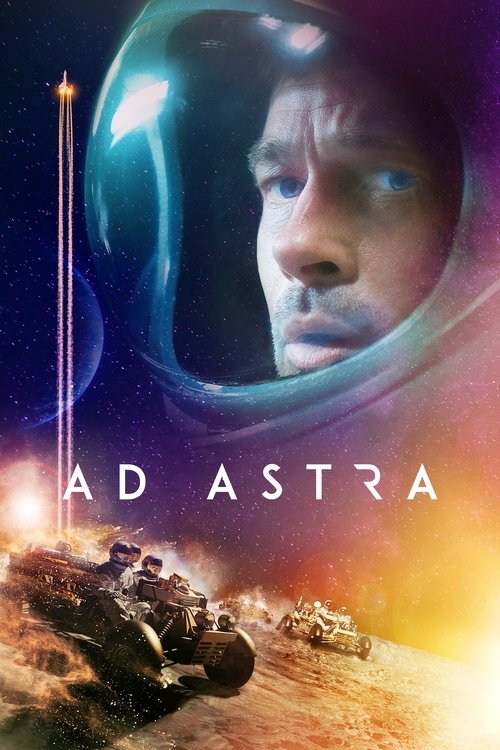
Ad Astra
The near future, a time when both hope and hardships drive humanity to look to the stars and beyond. While a mysterious phenomenon menaces to destroy life on planet Earth, astronaut Roy McBride undertakes a mission across the immensity of space and its many perils to uncover the truth about a lost expedition that decades before boldly faced emptiness and silence in search of the unknown.
Working with a considerable budget of $87.5M, the film achieved a steady performer with $127.5M in global revenue (+46% profit margin).
Nominated for 1 Oscar. 10 wins & 75 nominations


Plot Structure
Story beats plotted across runtime


Narrative Arc
Emotional journey through the story's key moments
Story Circle
Blueprint 15-beat structure
Arcplot Score Breakdown
Weighted: Precision (70%) + Arc (15%) + Theme (15%)
Ad Astra (2019) exhibits precise story structure, characteristic of James Gray's storytelling approach. This structural analysis examines how the film's 15-point plot structure maps to proven narrative frameworks across 2 hours and 3 minutes. With an Arcplot score of 7.1, the film balances conventional beats with creative variation.
Characters
Cast & narrative archetypes

Roy McBride
H. Clifford McBride
Helen Lantos
Thomas Pruitt
Eve McBride
Main Cast & Characters
Roy McBride
Played by Brad Pitt
An emotionally detached astronaut on a mission to find his father in deep space and confront his legacy.
H. Clifford McBride
Played by Tommy Lee Jones
Roy's father, a legendary astronaut who disappeared decades ago on a mission to Neptune searching for intelligent life.
Helen Lantos
Played by Ruth Negga
A Space Command officer who assists Roy on his journey and challenges his emotional detachment.
Thomas Pruitt
Played by Donald Sutherland
Roy's commanding officer who briefs him on the mission to contact his father.
Eve McBride
Played by Liv Tyler
Roy's estranged wife who represents the emotional connection he struggles to maintain.
Structural Analysis
The Status Quo at 1 minutes (1% through the runtime) establishes Roy McBride, astronaut and the son of legendary space explorer Clifford McBride, works on a space antenna high above Earth. His voiceover reveals his hyper-controlled, emotionally detached personality and perfect psychological evaluations.. Structural examination shows that this early placement immediately immerses viewers in the story world.
The inciting incident occurs at 14 minutes when Roy is informed that the deadly power surges threatening Earth are coming from the Lima Project near Neptune—his father's mission. Clifford McBride, presumed dead for 16 years, may still be alive and responsible for the catastrophe.. At 11% through the film, this Disruption aligns precisely with traditional story structure. This beat shifts the emotional landscape, launching the protagonist into the central conflict.
The First Threshold at 30 minutes marks the transition into Act II, occurring at 25% of the runtime. This demonstrates the protagonist's commitment to Roy survives a violent pirate attack on the lunar surface. He makes the active choice to continue the mission to Mars despite the danger, committing fully to finding his father rather than turning back to Earth., moving from reaction to action.
At 62 minutes, the Midpoint arrives at 50% of the runtime—precisely centered, creating perfect narrative symmetry. Structural examination shows that this crucial beat Roy receives no response from his father to his messages. SpaceCom deems the mission a failure and orders Roy to return to Earth. This false defeat forces Roy to realize he must take matters into his own hands—the institutional path has failed., fundamentally raising what's at risk. The emotional intensity shifts, dividing the narrative into clear before-and-after phases.
The Collapse moment at 90 minutes (74% through) represents the emotional nadir. Here, Roy finds his father Clifford alive on the Lima Project station near Neptune. Instead of a reunion, Roy discovers his father is a broken, obsessive man who chose his search for alien life over everything—his crew, his family, humanity. Clifford dismisses Roy coldly, revealing the "hero" was always a selfish abandoner., demonstrates the protagonist at their lowest point. This beat's placement in the final quarter sets up the climactic reversal.
The Second Threshold at 98 minutes initiates the final act resolution at 79% of the runtime. Roy chooses life and connection over his father's nihilistic obsession. He tells Clifford: "I'm going home." This synthesis of his journey—accepting his father's flaws, rejecting his path, and embracing human connection—enables Roy to move forward., demonstrating the transformation achieved throughout the journey.
Emotional Journey
Ad Astra's emotional architecture traces a deliberate progression across 15 carefully calibrated beats.
Narrative Framework
This structural analysis employs proven narrative structure principles that track dramatic progression. By mapping Ad Astra against these established plot points, we can identify how James Gray utilizes or subverts traditional narrative conventions. The plot point approach reveals not only adherence to structural principles but also creative choices that distinguish Ad Astra within the science fiction genre.
James Gray's Structural Approach
Among the 5 James Gray films analyzed on Arcplot, the average structural score is 7.1, reflecting strong command of classical structure. Ad Astra represents one of the director's most structurally precise works. For comparative analysis, explore the complete James Gray filmography.
Comparative Analysis
Additional science fiction films include The Postman, Mad Max 2 and AVP: Alien vs. Predator. For more James Gray analyses, see We Own the Night, Armageddon Time and The Immigrant.
Plot Points by Act
Act I
SetupStatus Quo
Roy McBride, astronaut and the son of legendary space explorer Clifford McBride, works on a space antenna high above Earth. His voiceover reveals his hyper-controlled, emotionally detached personality and perfect psychological evaluations.
Theme
Roy is told by his superior: "We're counting on you to be calm in the face of adversity." The theme of emotional control versus human connection is established—whether suppressing emotions makes one stronger or merely isolated.
Worldbuilding
Establishment of near-future where space travel is commercialized. Roy's world: emotionally repressed, defined by duty and his father's legacy. His marriage to Eve has failed due to his emotional unavailability. The surge that caused the antenna accident threatens Earth.
Disruption
Roy is informed that the deadly power surges threatening Earth are coming from the Lima Project near Neptune—his father's mission. Clifford McBride, presumed dead for 16 years, may still be alive and responsible for the catastrophe.
Resistance
SpaceCom recruits Roy to travel to Mars to send a message to his father. Roy resists internally, questioning whether his father is alive and whether he can face this legacy. He travels to the Moon, experiencing the commercialized lunar base and existential emptiness of space colonization.
Act II
ConfrontationFirst Threshold
Roy survives a violent pirate attack on the lunar surface. He makes the active choice to continue the mission to Mars despite the danger, committing fully to finding his father rather than turning back to Earth.
Mirror World
Roy arrives on Mars and meets Helen Lantos, who worked with his father on the Lima Project. She represents an alternative path—someone who questions authority and admits emotional truth. She hints that the official story about Clifford may be incomplete.
Premise
Roy's journey into deep space—the promise of a contemplative sci-fi film exploring isolation and father-son relationships. He records messages to his father from Mars, revealing emotional cracks in his controlled facade. The bureaucratic obstacles and psychological evaluations intensify.
Midpoint
Roy receives no response from his father to his messages. SpaceCom deems the mission a failure and orders Roy to return to Earth. This false defeat forces Roy to realize he must take matters into his own hands—the institutional path has failed.
Opposition
Roy defies orders and infiltrates the Cepheus spacecraft headed to Neptune to destroy the Lima Project. His actions result in the death of the crew during a struggle. Roy travels alone through the outer solar system, confronting his father's obsession and his own capacity for ruthlessness.
Collapse
Roy finds his father Clifford alive on the Lima Project station near Neptune. Instead of a reunion, Roy discovers his father is a broken, obsessive man who chose his search for alien life over everything—his crew, his family, humanity. Clifford dismisses Roy coldly, revealing the "hero" was always a selfish abandoner.
Crisis
Roy processes the devastating truth about his father while preparing to destroy the Lima Project to save Earth. He grapples with whether he will become like his father—isolated, obsessed, emotionally dead—or choose a different path.
Act III
ResolutionSecond Threshold
Roy chooses life and connection over his father's nihilistic obsession. He tells Clifford: "I'm going home." This synthesis of his journey—accepting his father's flaws, rejecting his path, and embracing human connection—enables Roy to move forward.
Synthesis
Roy destroys the Lima Project. Clifford refuses rescue and drifts into space to die. Roy makes the harrowing journey back to Earth alone using the nuclear blast propulsion. He survives the impossible return trip through his newfound will to live and reconnect.
Transformation
Roy returns to Earth transformed. His voiceover reveals he now embraces human connection and vulnerability. He reconciles with his wife Eve, choosing relationship over isolation. Where the opening showed a man defined by control and detachment, the closing shows a man defined by acceptance and connection.