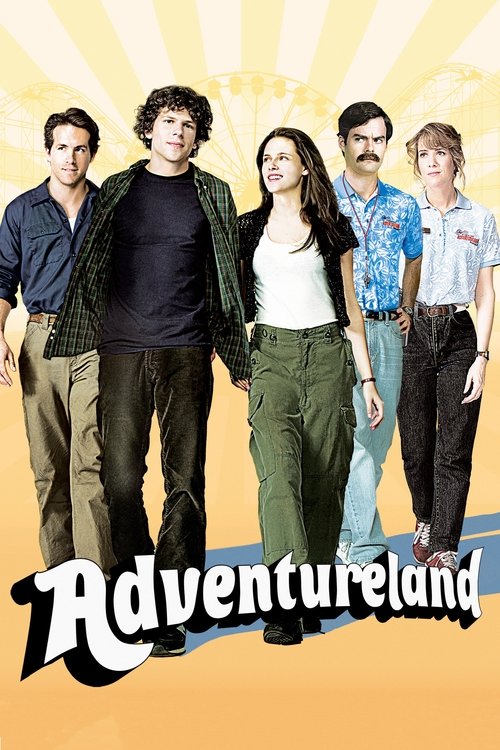
Adventureland
In the summer of 1987, a college graduate takes a 'nowhere' job at his local amusement park, only to find it's the perfect course to get him prepared for the real world.
Working with a modest budget of $9.8M, the film achieved a respectable showing with $17.2M in global revenue (+76% profit margin).
1 win & 4 nominations


Plot Structure
Story beats plotted across runtime


Narrative Arc
Emotional journey through the story's key moments
Story Circle
Blueprint 15-beat structure
Arcplot Score Breakdown
Weighted: Precision (70%) + Arc (15%) + Theme (15%)
Adventureland (2009) exhibits precise narrative design, characteristic of Greg Mottola's storytelling approach. This structural analysis examines how the film's 15-point plot structure maps to proven narrative frameworks across 1 hour and 47 minutes. With an Arcplot score of 7.6, the film showcases strong structural fundamentals.
Characters
Cast & narrative archetypes

James Brennan
Em Lewin
Joel Schiffman
Connell
Lisa P.
Frigo
Bobby
Paulette
Main Cast & Characters
James Brennan
Played by Jesse Eisenberg
Recent college graduate forced to take summer job at amusement park to fund grad school. Introverted, inexperienced, idealistic writer seeking connection and growth.
Em Lewin
Played by Kristen Stewart
Enigmatic, troubled college student working at Adventureland. Guarded and self-destructive, hiding an affair with married coworker while developing genuine connection with James.
Joel Schiffman
Played by Martin Starr
James's best friend and fellow Adventureland employee. Enthusiastic, loyal, virginal sidekick providing comic relief and unwavering support.
Connell
Played by Ryan Reynolds
Maintenance man at Adventureland who presents himself as cool musician. Married but having affair with Em, represents disillusionment and false sophistication.
Lisa P.
Played by Margarita Levieva
Attractive, outgoing Adventureland employee who pursues James. Represents conventional romance and social ease that contrasts with Em's complexity.
Frigo
Played by Matt Bush
Obnoxious Adventureland employee known for punching people in the groin. Crude, aggressive comic relief character embodying blue-collar aggression.
Bobby
Played by Bill Hader
Assistant manager at Adventureland. Petty authority figure who enforces arbitrary rules with misplaced pride in his position.
Paulette
Played by Kristen Wiig
Co-manager at Adventureland, Bobby's wife. Cheerfully enforces park rules while maintaining upbeat demeanor despite dead-end job.
Structural Analysis
The Status Quo at 1 minutes (1% through the runtime) establishes James graduates college in 1987, celebrating with friends. He's intellectually accomplished but sexually inexperienced, heading to his perfect summer in Europe before grad school at Columbia.. Structural examination shows that this early placement immediately immerses viewers in the story world.
The inciting incident occurs at 12 minutes when James discovers no one will hire him due to lack of experience and his over-qualification. His only option is a humiliating minimum-wage job at Adventureland amusement park - the opposite of his European summer dream.. At 12% through the film, this Disruption aligns precisely with traditional story structure. This beat shifts the emotional landscape, launching the protagonist into the central conflict.
The First Threshold at 26 minutes marks the transition into Act II, occurring at 24% of the runtime. This reveals the protagonist's commitment to James meets Em Lewin for the first time and is immediately attracted. He chooses to embrace this summer job world, actively engaging with his coworkers and this new environment rather than just enduring it., moving from reaction to action.
At 52 minutes, the Midpoint arrives at 49% of the runtime—precisely centered, creating perfect narrative symmetry. Structural examination shows that this crucial beat False victory: James and Em kiss for the first time and spend the night together (though they don't have sex). James feels he's found something real. Stakes raise as we learn Em is secretly having an affair with married maintenance man Mike Connell., fundamentally raising what's at risk. The emotional intensity shifts, dividing the narrative into clear before-and-after phases.
The Collapse moment at 78 minutes (73% through) represents the emotional nadir. Here, James discovers Em in Mike Connell's car, learning about their affair. His idealized romance is shattered. Em tries to explain but James is devastated - his one real connection this summer revealed as a lie. Metaphorical death of innocence and trust., indicates the protagonist at their lowest point. This beat's placement in the final quarter sets up the climactic reversal.
The Second Threshold at 85 minutes initiates the final act resolution at 80% of the runtime. Joel tells James that Em came by looking for him, explaining she really cares. James realizes that messiness and mistakes don't negate real connection - Em's imperfection is what makes her real, not a disqualification. New understanding allows him to act., demonstrating the transformation achieved throughout the journey.
Emotional Journey
Adventureland's emotional architecture traces a deliberate progression across 15 carefully calibrated beats.
Narrative Framework
This structural analysis employs proven narrative structure principles that track dramatic progression. By mapping Adventureland against these established plot points, we can identify how Greg Mottola utilizes or subverts traditional narrative conventions. The plot point approach reveals not only adherence to structural principles but also creative choices that distinguish Adventureland within the comedy genre.
Greg Mottola's Structural Approach
Among the 4 Greg Mottola films analyzed on Arcplot, the average structural score is 7.2, reflecting strong command of classical structure. Adventureland represents one of the director's most structurally precise works. For comparative analysis, explore the complete Greg Mottola filmography.
Comparative Analysis
Additional comedy films include The Bad Guys, Ella Enchanted and The Evening Star. For more Greg Mottola analyses, see Paul, Keeping Up with the Joneses and Superbad.
Plot Points by Act
Act I
SetupStatus Quo
James graduates college in 1987, celebrating with friends. He's intellectually accomplished but sexually inexperienced, heading to his perfect summer in Europe before grad school at Columbia.
Theme
James's father tells him plans have changed due to financial troubles: "Sometimes life throws you curveballs." The central theme - life doesn't follow your plans - is stated.
Worldbuilding
Setup of James's world: privileged but naive, virgin, intellectual snob. His parents reveal financial crisis - no Europe trip, must get a job. He's forced from his academic bubble into the real world.
Disruption
James discovers no one will hire him due to lack of experience and his over-qualification. His only option is a humiliating minimum-wage job at Adventureland amusement park - the opposite of his European summer dream.
Resistance
James debates taking the job, resists this new reality. He's introduced to Adventureland's eccentric staff. Meets Joel, gets oriented to the degrading games division. He's out of his element but has no choice.
Act II
ConfrontationFirst Threshold
James meets Em Lewin for the first time and is immediately attracted. He chooses to embrace this summer job world, actively engaging with his coworkers and this new environment rather than just enduring it.
Mirror World
James and Em have their first real conversation in the parking lot. She represents everything opposite to his planned life - spontaneous, damaged, real. Their relationship begins, carrying the film's theme about authenticity vs. pretension.
Premise
The "promise of the premise" - summer at an amusement park. James navigates eccentric coworkers, deals with obnoxious customers, gets high, attends parties, bonds with Joel. His relationship with Em deepens through conversations and shared experiences.
Midpoint
False victory: James and Em kiss for the first time and spend the night together (though they don't have sex). James feels he's found something real. Stakes raise as we learn Em is secretly having an affair with married maintenance man Mike Connell.
Opposition
Pressure mounts: James's insecurity about Lisa P's attraction to him, Em's continued secret meetings with Connell, Joel's advice to lose his virginity. James and Em grow closer but her lies and guilt intensify. His pretensions are challenged.
Collapse
James discovers Em in Mike Connell's car, learning about their affair. His idealized romance is shattered. Em tries to explain but James is devastated - his one real connection this summer revealed as a lie. Metaphorical death of innocence and trust.
Crisis
James processes the betrayal in darkness. He gets drunk, sleeps with Lisa P (losing his virginity joylessly), gets in a fight with Mike Connell, and quits Adventureland. He retreats into bitterness and cynicism.
Act III
ResolutionSecond Threshold
Joel tells James that Em came by looking for him, explaining she really cares. James realizes that messiness and mistakes don't negate real connection - Em's imperfection is what makes her real, not a disqualification. New understanding allows him to act.
Synthesis
James goes to New York to find Em. He navigates the city, tracks her down at her apartment. They have an honest conversation about their mistakes and feelings. James chooses authentic connection over his pride and perfect plans.
Transformation
James and Em reconcile and kiss in her New York apartment. Mirror to opening: he started with perfect plans and no real experience; he ends with uncertain future but authentic connection. He's chosen messy reality over idealized fantasy.