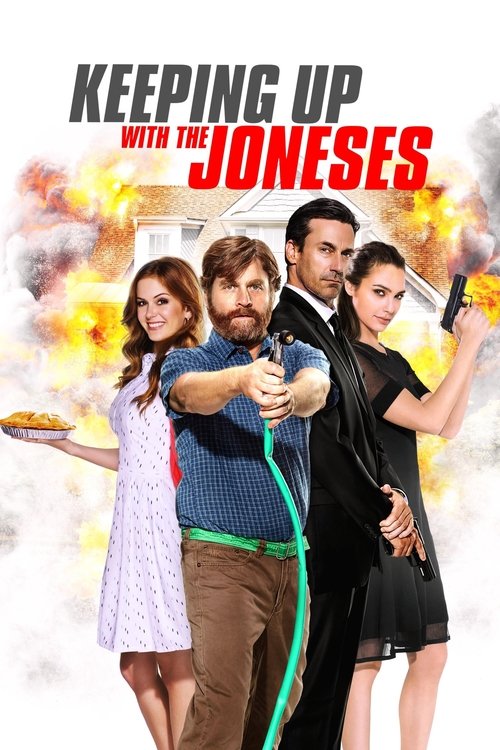
Keeping Up with the Joneses
An ordinary suburban couple finds it’s not easy keeping up with the Joneses – their impossibly gorgeous and ultra-sophisticated new neighbors – especially when they discover that Mr. and Mrs. “Jones” are covert operatives.
The film struggled financially against its respectable budget of $40.0M, earning $29.9M globally (-25% loss). While initial box office returns were modest, the film has gained appreciation for its fresh perspective within the action genre.


Plot Structure
Story beats plotted across runtime


Narrative Arc
Emotional journey through the story's key moments
Story Circle
Blueprint 15-beat structure
Arcplot Score Breakdown
Weighted: Precision (70%) + Arc (15%) + Theme (15%)
Keeping Up with the Joneses (2016) exemplifies deliberately positioned dramatic framework, characteristic of Greg Mottola's storytelling approach. This structural analysis examines how the film's 15-point plot structure maps to proven narrative frameworks across 1 hour and 45 minutes. With an Arcplot score of 6.8, the film balances conventional beats with creative variation.
Characters
Cast & narrative archetypes

Jeff Gaffney
Karen Gaffney
Tim Jones
Natalie Jones
Dan Craverston
Scorpion
Main Cast & Characters
Jeff Gaffney
Played by Zach Galifianakis
An ordinary suburban HR manager who discovers his glamorous new neighbors are spies and gets drawn into their dangerous world.
Karen Gaffney
Played by Isla Fisher
Jeff's interior designer wife who befriends their mysterious new neighbor and becomes entangled in espionage.
Tim Jones
Played by Jon Hamm
A suave undercover spy posing as a travel writer who moves into the Gaffneys' neighborhood on a covert mission.
Natalie Jones
Played by Gal Gadot
Tim's sophisticated spy partner and wife, posing as a socialite blogger while conducting espionage operations.
Dan Craverston
Played by Patton Oswalt
A villainous arms dealer who becomes the target of the Joneses' investigation and threatens the Gaffneys.
Scorpion
Played by Maribeth Monroe
A deadly assassin hired to eliminate the spies and anyone who gets in the way.
Structural Analysis
The Status Quo at 1 minutes (1% through the runtime) establishes Jeff and Karen Gaffney drop their kids off at summer camp, revealing their mundane suburban life. Jeff works in HR, Karen is a stay-at-home mom. They're comfortable but bored, stuck in a rut of predictable routine.. Significantly, this early placement immediately immerses viewers in the story world.
The inciting incident occurs at 13 minutes when The impossibly glamorous Joneses—Tim and Natalie—move in next door. They're sophisticated, exciting, and mysterious. Their arrival disrupts the neighborhood's monotony and immediately captivates the Gaffneys.. At 12% through the film, this Disruption aligns precisely with traditional story structure. This beat shifts the emotional landscape, launching the protagonist into the central conflict.
The First Threshold at 26 minutes marks the transition into Act II, occurring at 25% of the runtime. This reveals the protagonist's commitment to The Gaffneys actively choose to pursue a friendship with the Joneses, accepting an invitation or making one. They commit to leaving their comfort zone and entering the Joneses' exciting world, despite their insecurities., moving from reaction to action.
At 53 minutes, the Midpoint arrives at 50% of the runtime—precisely centered, creating perfect narrative symmetry. Structural examination shows that this crucial beat The Gaffneys discover the truth: the Joneses ARE spies. False defeat—this revelation is dangerous and terrifying. What seemed like exciting new friends is actually deadly serious. The stakes raise dramatically; they're in over their heads., fundamentally raising what's at risk. The emotional intensity shifts, dividing the narrative into clear before-and-after phases.
The Collapse moment at 79 minutes (75% through) represents the emotional nadir. Here, All is lost: the Gaffneys are captured by the villains, or the Joneses are compromised/betrayed, or Jeff and Karen have a major fight blaming each other for the danger. A "whiff of death"—they might actually die, or their marriage might be over. Lowest point., indicates the protagonist at their lowest point. This beat's placement in the final quarter sets up the climactic reversal.
The Second Threshold at 84 minutes initiates the final act resolution at 80% of the runtime. Synthesis/breakthrough: Jeff and Karen realize they don't need to BE the Joneses—they need to be themselves, together. Their "ordinary" skills (HR negotiation, interior design, suburban resourcefulness) combined with newfound courage are exactly what's needed. They choose to fight back as a team., demonstrating the transformation achieved throughout the journey.
Emotional Journey
Keeping Up with the Joneses's emotional architecture traces a deliberate progression across 15 carefully calibrated beats.
Narrative Framework
This structural analysis employs a 15-point narrative structure framework that maps key story moments. By mapping Keeping Up with the Joneses against these established plot points, we can identify how Greg Mottola utilizes or subverts traditional narrative conventions. The plot point approach reveals not only adherence to structural principles but also creative choices that distinguish Keeping Up with the Joneses within the action genre.
Greg Mottola's Structural Approach
Among the 4 Greg Mottola films analyzed on Arcplot, the average structural score is 7.2, reflecting strong command of classical structure. Keeping Up with the Joneses takes a more unconventional approach compared to the director's typical style. For comparative analysis, explore the complete Greg Mottola filmography.
Comparative Analysis
Additional action films include The Bad Guys, Puss in Boots and Venom: The Last Dance. For more Greg Mottola analyses, see Paul, Adventureland and Superbad.
Plot Points by Act
Act I
SetupStatus Quo
Jeff and Karen Gaffney drop their kids off at summer camp, revealing their mundane suburban life. Jeff works in HR, Karen is a stay-at-home mom. They're comfortable but bored, stuck in a rut of predictable routine.
Theme
A friend or neighbor comments that the Gaffneys should "live a little" or "take some risks" while the kids are away, hinting at the theme: stepping outside your comfort zone to rediscover excitement and partnership.
Worldbuilding
Establishes the Gaffneys' cul-de-sac world: neighborhood dynamics, Jeff's boring HR job, Karen's interior design aspirations, their safe but passionless marriage. Shows what they're missing: adventure, spontaneity, romance.
Disruption
The impossibly glamorous Joneses—Tim and Natalie—move in next door. They're sophisticated, exciting, and mysterious. Their arrival disrupts the neighborhood's monotony and immediately captivates the Gaffneys.
Resistance
The Gaffneys debate whether to befriend the intimidatingly perfect Joneses. Karen is curious and drawn to them; Jeff is insecure. They oscillate between wanting to impress them and feeling inadequate. Strange behaviors from the Joneses start to raise questions.
Act II
ConfrontationFirst Threshold
The Gaffneys actively choose to pursue a friendship with the Joneses, accepting an invitation or making one. They commit to leaving their comfort zone and entering the Joneses' exciting world, despite their insecurities.
Mirror World
The Joneses become the mirror characters who will teach the Gaffneys what they need. Tim and Natalie embody confidence, adventure, and passion—qualities the Gaffneys have lost. Their relationship will help Jeff and Karen rediscover theirs.
Premise
The fun of the premise: the Gaffneys getting pulled into increasingly wild adventures with the Joneses. Karen suspects they're spies; Jeff is oblivious. Comedy from fish-out-of-water scenarios as ordinary suburbanites encounter espionage. Growing chemistry between the couples.
Midpoint
The Gaffneys discover the truth: the Joneses ARE spies. False defeat—this revelation is dangerous and terrifying. What seemed like exciting new friends is actually deadly serious. The stakes raise dramatically; they're in over their heads.
Opposition
The Gaffneys are pulled deeper into the espionage plot. Bad guys close in. Jeff and Karen's attempts to help backfire. Their insecurities resurface—they're not cut out for this. The danger intensifies. Trust issues emerge: can they trust the Joneses? Each other?
Collapse
All is lost: the Gaffneys are captured by the villains, or the Joneses are compromised/betrayed, or Jeff and Karen have a major fight blaming each other for the danger. A "whiff of death"—they might actually die, or their marriage might be over. Lowest point.
Crisis
Dark night of the soul. The Gaffneys face their failures and fears. They realize they've been living half a life, playing it safe, not trusting each other. The external spy crisis reflects their internal marriage crisis. Moment of vulnerability and honesty.
Act III
ResolutionSecond Threshold
Synthesis/breakthrough: Jeff and Karen realize they don't need to BE the Joneses—they need to be themselves, together. Their "ordinary" skills (HR negotiation, interior design, suburban resourcefulness) combined with newfound courage are exactly what's needed. They choose to fight back as a team.
Synthesis
Finale: The Gaffneys use their unique skills and partnership to help defeat the villains alongside the Joneses. They're brave, resourceful, and reconnected. The action climax interweaves with the emotional climax of their renewed marriage. They save the day by being themselves.
Transformation
Final image mirrors the opening but shows transformation: Jeff and Karen back in their suburban life, but now they're engaged, playful, adventurous together. They've brought the excitement home. Perhaps they have a knowing smile about their wild secret, or they're planning their own adventure.