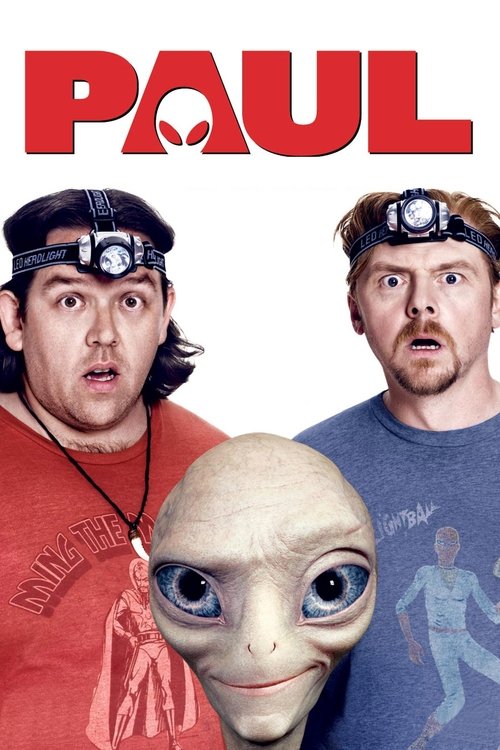
Paul
For the past 60 years, a space-traveling smart-ass named Paul has been locked up in a top-secret military base, advising world leaders about his kind. But when he worries he’s outlived his usefulness and the dissection table is drawing uncomfortably close, Paul escapes on the first RV that passes by his compound in Area 51. Fortunately, it contains the two earthlings who are most likely to rescue and harbor an alien on the run.
Despite a moderate budget of $40.0M, Paul became a financial success, earning $98.0M worldwide—a 145% return.
2 wins & 9 nominations


Plot Structure
Story beats plotted across runtime


Narrative Arc
Emotional journey through the story's key moments
Story Circle
Blueprint 15-beat structure
Arcplot Score Breakdown
Weighted: Precision (70%) + Arc (15%) + Theme (15%)
Paul (2011) exemplifies deliberately positioned narrative architecture, characteristic of Greg Mottola's storytelling approach. This structural analysis examines how the film's 15-point plot structure maps to proven narrative frameworks across 1 hour and 44 minutes. With an Arcplot score of 7.3, the film balances conventional beats with creative variation.
Characters
Cast & narrative archetypes

Graeme Willy
Clive Gollings
Paul
Ruth Buggs
Special Agent Lorenzo Zoil
The Big Guy
Moses Buggs
Agent Haggard
Agent O'Reilly
Main Cast & Characters
Graeme Willy
Played by Simon Pegg
A British comic book artist on a sci-fi pilgrimage across America who becomes Paul's unlikely protector and advocate.
Clive Gollings
Played by Nick Frost
A British sci-fi novelist and Graeme's best friend who is initially terrified of Paul but grows to accept the alien.
Paul
Played by Seth Rogen
A wisecracking, pot-smoking alien who escaped Area 51 after 60 years and needs help reaching his mothership.
Ruth Buggs
Played by Kristen Wiig
A sheltered, deeply religious trailer park resident whose worldview is shattered when she meets Paul.
Special Agent Lorenzo Zoil
Played by Jason Bateman
A federal agent tasked with recapturing Paul who ultimately reveals his true allegiance.
The Big Guy
Played by Sigourney Weaver
The mysterious high-ranking government official who has been exploiting Paul for decades.
Moses Buggs
Played by John Carroll Lynch
Ruth's overprotective father who runs the RV park and pursues the group with religious fervor.
Agent Haggard
Played by Bill Hader
An overeager and incompetent federal agent assisting Zoil in the pursuit of Paul.
Agent O'Reilly
Played by Joe Lo Truglio
A clumsy federal agent partnered with Haggard who blindly follows orders.
Structural Analysis
The Status Quo at 1 minutes (1% through the runtime) establishes Graeme and Clive, two British sci-fi geeks, arrive at Comic-Con in San Diego, living their dream of attending the convention and embarking on an RV road trip across America's famous UFO sites.. Notably, this early placement immediately immerses viewers in the story world.
The inciting incident occurs at 13 minutes when On a desert highway at night, Graeme and Clive witness a car crash. When they investigate, they encounter Paul—a real, wisecracking alien who needs their help to escape government agents.. At 12% through the film, this Disruption aligns precisely with traditional story structure. This beat shifts the emotional landscape, launching the protagonist into the central conflict.
The First Threshold at 26 minutes marks the transition into Act II, occurring at 25% of the runtime. This demonstrates the protagonist's commitment to Graeme and Clive actively choose to help Paul, agreeing to drive him to the coordinates where his mothership will pick him up. They commit to the adventure despite the danger., moving from reaction to action.
At 53 minutes, the Midpoint arrives at 51% of the runtime—precisely centered, creating perfect narrative symmetry. The analysis reveals that this crucial beat False defeat: The group is cornered at a gas station. Agent Zoil and Ruth's father (with his armed posse) close in. The stakes raise significantly as their pursuers coordinate and the danger becomes real. The fun road trip turns into a desperate escape., fundamentally raising what's at risk. The emotional intensity shifts, dividing the narrative into clear before-and-after phases.
The Collapse moment at 79 minutes (76% through) represents the emotional nadir. Here, Paul is captured by the "Big Guy" (revealed to be "The Big Guy"—a female operative). The friendship is broken. Graeme and Clive are separated from Paul, who will be dissected. Their mission has failed, and their friend faces death., shows the protagonist at their lowest point. This beat's placement in the final quarter sets up the climactic reversal.
The Second Threshold at 84 minutes initiates the final act resolution at 81% of the runtime. Agent Zoil reveals he's been trying to help Paul escape all along. With this new ally and information, Graeme and Clive synthesize courage with their sci-fi knowledge to mount a rescue at Devil's Tower (the rendezvous point)., demonstrating the transformation achieved throughout the journey.
Emotional Journey
Paul's emotional architecture traces a deliberate progression across 15 carefully calibrated beats.
Narrative Framework
This structural analysis employs a 15-point narrative structure framework that maps key story moments. By mapping Paul against these established plot points, we can identify how Greg Mottola utilizes or subverts traditional narrative conventions. The plot point approach reveals not only adherence to structural principles but also creative choices that distinguish Paul within the adventure genre.
Greg Mottola's Structural Approach
Among the 4 Greg Mottola films analyzed on Arcplot, the average structural score is 7.2, reflecting strong command of classical structure. Paul represents one of the director's most structurally precise works. For comparative analysis, explore the complete Greg Mottola filmography.
Comparative Analysis
Additional adventure films include The Black Stallion, The Bad Guys and Puss in Boots. For more Greg Mottola analyses, see Adventureland, Keeping Up with the Joneses and Superbad.
Plot Points by Act
Act I
SetupStatus Quo
Graeme and Clive, two British sci-fi geeks, arrive at Comic-Con in San Diego, living their dream of attending the convention and embarking on an RV road trip across America's famous UFO sites.
Theme
At Comic-Con, a conversation about stepping outside your comfort zone and experiencing the real world versus living in fantasy foreshadows the journey ahead.
Worldbuilding
Graeme and Clive are established as timid, sheltered fans who live vicariously through sci-fi. They pick up their RV and begin their tour of UFO hotspots, visiting places like Area 51. Their dynamic shows Clive as the more anxious, controlling one while Graeme is slightly braver.
Disruption
On a desert highway at night, Graeme and Clive witness a car crash. When they investigate, they encounter Paul—a real, wisecracking alien who needs their help to escape government agents.
Resistance
Graeme and Clive debate whether to help Paul. Clive faints from shock. Paul explains he's been held by the government for 60 years and needs to get home. The duo are terrified but intrigued, wrestling with whether to believe him and risk helping him escape.
Act II
ConfrontationFirst Threshold
Graeme and Clive actively choose to help Paul, agreeing to drive him to the coordinates where his mothership will pick him up. They commit to the adventure despite the danger.
Mirror World
The group accidentally kidnaps Ruth Buggs, a fundamentalist Christian woman from an RV park. Paul's existence and his matter-of-fact explanations about evolution begin to challenge Ruth's rigid belief system, mirroring the theme of questioning what you've been told to believe.
Premise
The fun of the premise: a road trip with a real alien. Paul bonds with Graeme and Clive, sharing stories and demonstrating his powers. Ruth undergoes a comedic transformation from Bible-thumper to foul-mouthed rebel. They evade Agent Zoil and other pursuers while bonding as a found family.
Midpoint
False defeat: The group is cornered at a gas station. Agent Zoil and Ruth's father (with his armed posse) close in. The stakes raise significantly as their pursuers coordinate and the danger becomes real. The fun road trip turns into a desperate escape.
Opposition
The pressure intensifies. Multiple parties pursue them: Agent Zoil, Ruth's father, and the mysterious "Big Guy" orchestrating the hunt. Tensions rise within the group as Clive feels jealous of Graeme's bond with Paul. The pursuers get closer, forcing increasingly dangerous escapes.
Collapse
Paul is captured by the "Big Guy" (revealed to be "The Big Guy"—a female operative). The friendship is broken. Graeme and Clive are separated from Paul, who will be dissected. Their mission has failed, and their friend faces death.
Crisis
Graeme and Clive experience despair, feeling they've failed Paul. They process the loss and their own cowardice. But they find resolve—they've changed through knowing Paul and must save him.
Act III
ResolutionSecond Threshold
Agent Zoil reveals he's been trying to help Paul escape all along. With this new ally and information, Graeme and Clive synthesize courage with their sci-fi knowledge to mount a rescue at Devil's Tower (the rendezvous point).
Synthesis
The finale at Devil's Tower. The group confronts the Big Guy and rescues Paul. A showdown occurs where Graeme and Clive finally stand up for themselves and their friend. The mothership arrives. Paul must say goodbye to his human friends who helped him find freedom.
Transformation
Graeme and Clive return to Comic-Con the following year, now confident and transformed. They've published a book about their adventure with Paul. They're no longer timid geeks living in fantasy—they've had a real adventure and found courage. Ruth joins them, having found freedom from dogma.