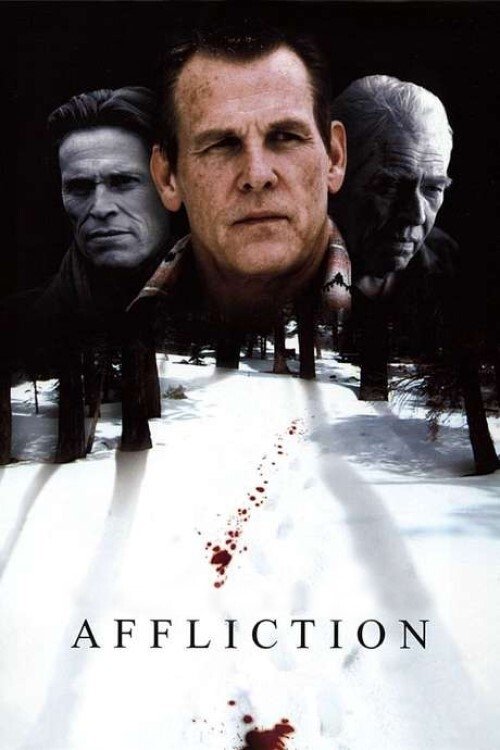
Affliction
A small town policeman must investigate a suspicious hunting accident. The investigation and other events result in him slowly disintegrating mentally.
Working with a limited budget of $6.0M, the film achieved a modest success with $6.3M in global revenue (+6% profit margin).
1 Oscar. 8 wins & 19 nominations


Plot Structure
Story beats plotted across runtime


Narrative Arc
Emotional journey through the story's key moments
Story Circle
Blueprint 15-beat structure
Arcplot Score Breakdown
Weighted: Precision (70%) + Arc (15%) + Theme (15%)
Affliction (1998) demonstrates strategically placed narrative design, characteristic of Paul Schrader's storytelling approach. This structural analysis examines how the film's 15-point plot structure maps to proven narrative frameworks across 1 hour and 54 minutes. With an Arcplot score of 7.4, the film balances conventional beats with creative variation.
Characters
Cast & narrative archetypes

Wade Whitehouse
Glen Whitehouse
Rolfe Whitehouse
Margie Fogg
Lillian Whitehouse
Jack Hewitt
Main Cast & Characters
Wade Whitehouse
Played by Nick Nolte
A small-town New Hampshire cop trapped in a cycle of violence inherited from his abusive father, unraveling as he investigates a hunting accident.
Glen Whitehouse
Played by James Coburn
Wade's brutal, alcoholic father whose lifetime of cruelty has poisoned his family and shaped his son's descent.
Rolfe Whitehouse
Played by Willem Dafoe
Wade's younger brother, a Boston professor who escaped the family dysfunction and narrates the tragic story.
Margie Fogg
Played by Sissy Spacek
Wade's girlfriend, a waitress who loves him but becomes increasingly frightened by his deteriorating mental state.
Lillian Whitehouse
Played by Mary Beth Hurt
Wade and Rolfe's mother, worn down by years of abuse, representing the silent suffering of the family.
Jack Hewitt
Played by Jim True-Frost
A local friend of Wade who becomes entangled in the suspicious hunting accident that fuels Wade's paranoid investigation.
Structural Analysis
The Status Quo at 1 minutes (1% through the runtime) establishes Wade Whitehouse drives through a bleak New Hampshire winter landscape to pick up his daughter Jill. The opening establishes his isolation, failed marriage, and the cold, oppressive environment that mirrors his inner state.. The analysis reveals that this early placement immediately immerses viewers in the story world.
The inciting incident occurs at 13 minutes when A hunting accident occurs - wealthy businessman Evan Twombley is found dead with a rifle wound. Wade is called to the scene. What appears to be an accident becomes Wade's obsession and the catalyst for his unraveling.. At 12% through the film, this Disruption aligns precisely with traditional story structure. This beat shifts the emotional landscape, launching the protagonist into the central conflict.
The First Threshold at 29 minutes marks the transition into Act II, occurring at 25% of the runtime. This shows the protagonist's commitment to Wade actively chooses to pursue his conspiracy theory about the hunting death, convinced it was murder. He commits to investigating despite lack of evidence or authority, crossing into obsession that will cost him everything., moving from reaction to action.
At 58 minutes, the Midpoint arrives at 51% of the runtime—precisely centered, creating perfect narrative symmetry. Significantly, this crucial beat Wade has his infected tooth pulled in a brutal scene. False defeat - the physical pain mirrors his psychological breaking point. He believes removing the tooth will fix him, but it's a moment of false hope; his real sickness is inherited trauma., fundamentally raising what's at risk. The emotional intensity shifts, dividing the narrative into clear before-and-after phases.
The Collapse moment at 86 minutes (75% through) represents the emotional nadir. Here, Wade's mother has died (whiff of death). At the funeral, Wade confronts the reality of his family's dysfunction. He loses his job, loses Margie, and loses any chance of custody of Jill. Everything that mattered is gone., demonstrates the protagonist at their lowest point. This beat's placement in the final quarter sets up the climactic reversal.
The Second Threshold at 92 minutes initiates the final act resolution at 80% of the runtime. Glen taunts Wade about his failures and his mother's death. Wade realizes he can never escape his father's shadow while Glen lives. The synthesis is dark - he embraces the violence he inherited., demonstrating the transformation achieved throughout the journey.
Emotional Journey
Affliction's emotional architecture traces a deliberate progression across 15 carefully calibrated beats.
Narrative Framework
This structural analysis employs a 15-point narrative structure framework that maps key story moments. By mapping Affliction against these established plot points, we can identify how Paul Schrader utilizes or subverts traditional narrative conventions. The plot point approach reveals not only adherence to structural principles but also creative choices that distinguish Affliction within the crime genre.
Paul Schrader's Structural Approach
Among the 6 Paul Schrader films analyzed on Arcplot, the average structural score is 6.9, demonstrating varied approaches to story architecture. Affliction represents one of the director's most structurally precise works. For comparative analysis, explore the complete Paul Schrader filmography.
Comparative Analysis
Additional crime films include The Bad Guys, Rustom and The Whole Ten Yards. For more Paul Schrader analyses, see Blue Collar, Cat People and Light of Day.
Plot Points by Act
Act I
SetupStatus Quo
Wade Whitehouse drives through a bleak New Hampshire winter landscape to pick up his daughter Jill. The opening establishes his isolation, failed marriage, and the cold, oppressive environment that mirrors his inner state.
Theme
Wade's brother Rolfe (narrating) reflects on their father's violence: "The ghost of our father...was the same thing that had happened to him." Theme stated - cycles of abuse and inherited violence.
Worldbuilding
Setup of Wade's fractured world: his awkward relationship with daughter Jill, his role as small-town cop, his girlfriend Margie, his troubled toothache, and the looming presence of his abusive father Glen. Introduction to the small New Hampshire town dynamics.
Disruption
A hunting accident occurs - wealthy businessman Evan Twombley is found dead with a rifle wound. Wade is called to the scene. What appears to be an accident becomes Wade's obsession and the catalyst for his unraveling.
Resistance
Wade debates whether to investigate the hunting death as more than an accident. His toothache worsens (physical manifestation of inner decay). He struggles to maintain his relationship with Jill and Margie while suspicions about the death grow.
Act II
ConfrontationFirst Threshold
Wade actively chooses to pursue his conspiracy theory about the hunting death, convinced it was murder. He commits to investigating despite lack of evidence or authority, crossing into obsession that will cost him everything.
Mirror World
Wade's relationship with Margie deepens as she tries to be his anchor. She represents the possibility of love and normalcy - the antithesis of his father's violence - but Wade's obsession and inherited rage threaten this connection.
Premise
Wade investigates the hunting death while his life deteriorates. His toothache becomes excruciating, he loses custody time with Jill, drinks heavily, and increasingly resembles his abusive father. The investigation becomes his obsession and justification.
Midpoint
Wade has his infected tooth pulled in a brutal scene. False defeat - the physical pain mirrors his psychological breaking point. He believes removing the tooth will fix him, but it's a moment of false hope; his real sickness is inherited trauma.
Opposition
Wade spirals further. His father Glen moves in after his mother dies. The presence of his abuser intensifies Wade's rage and drinking. He becomes increasingly violent, paranoid, and erratic. Margie distances herself, recognizing he's becoming his father.
Collapse
Wade's mother has died (whiff of death). At the funeral, Wade confronts the reality of his family's dysfunction. He loses his job, loses Margie, and loses any chance of custody of Jill. Everything that mattered is gone.
Crisis
Wade sits in darkness with his father in the house. The two damaged men circle each other. Wade has fully become what he feared - a violent, alcoholic man haunted by rage, unable to escape the cycle.
Act III
ResolutionSecond Threshold
Glen taunts Wade about his failures and his mother's death. Wade realizes he can never escape his father's shadow while Glen lives. The synthesis is dark - he embraces the violence he inherited.
Synthesis
Wade kills his father Glen in a violent confrontation. He burns down the family home with his father's body inside, destroys all evidence, and flees. The finale is Wade's complete transformation into violence and his disappearance.
Transformation
Rolfe narrates the aftermath: Wade has vanished, likely dead in the wilderness. The closing image shows the burned house and empty landscape. Wade has completed his transformation into his father - consumed by the cycle of violence he could not escape.