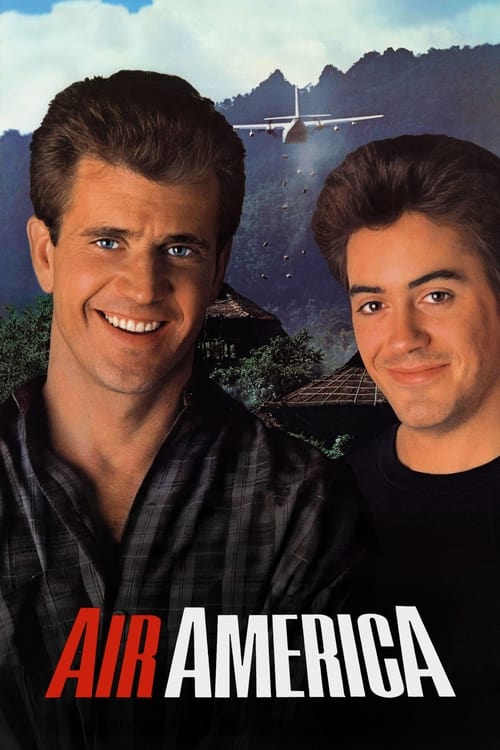
Air America
Air America was the CIA's private airline operating in Laos during the Vietnam War, running anything and everything from soldiers to foodstuffs for local villagers. After losing his pilot's license, Billy Covington is recruited, and ends up in the middle of a bunch of lunatic pilots, gun-running by his friend Gene Ryack, and opium smuggling by his own superiors.
Working with a moderate budget of $35.0M, the film achieved a steady performer with $57.7M in global revenue (+65% profit margin).


Plot Structure
Story beats plotted across runtime


Narrative Arc
Emotional journey through the story's key moments
Story Circle
Blueprint 15-beat structure
Arcplot Score Breakdown
Weighted: Precision (70%) + Arc (15%) + Theme (15%)
Air America (1990) reveals meticulously timed narrative architecture, characteristic of Roger Spottiswoode's storytelling approach. This structural analysis examines how the film's 15-point plot structure maps to proven narrative frameworks across 1 hour and 52 minutes. With an Arcplot score of 6.5, the film balances conventional beats with creative variation.
Characters
Cast & narrative archetypes

Gene Ryack
Billy Covington
Major Donald Lemond
Rob Diehl
Saunders
Corinne Landreaux
Main Cast & Characters
Gene Ryack
Played by Mel Gibson
A cynical, experienced Air America pilot who mentors the idealistic newcomer while running side operations in Laos.
Billy Covington
Played by Robert Downey Jr.
An idealistic young helicopter pilot recruited to Air America who gradually discovers the moral complexities of the CIA operation.
Major Donald Lemond
Played by David Marshall Grant
The corrupt Air America station chief who exploits the covert operation for personal profit.
Rob Diehl
Played by Ken Jenkins
A veteran Air America pilot and friend to Gene who participates in the dangerous missions.
Saunders
Played by Lane Smith
A U.S. Senator investigating Air America operations who threatens to expose the corruption.
Corinne Landreaux
Played by Nancy Travis
A French-Laotian woman involved with Gene Ryack who represents local connections in the region.
Structural Analysis
The Status Quo at 1 minutes (1% through the runtime) establishes Billy Covington is a reckless helicopter traffic reporter in Los Angeles, carefree and living for thrills without concern for consequences.. The analysis reveals that this early placement immediately immerses viewers in the story world.
The inciting incident occurs at 14 minutes when Billy loses his helicopter pilot job after a dangerous stunt goes wrong, leaving him unemployed and desperate, making him vulnerable to recruitment.. At 13% through the film, this Disruption is delayed, allowing extended setup of the story world. This beat shifts the emotional landscape, launching the protagonist into the central conflict.
The First Threshold at 28 minutes marks the transition into Act II, occurring at 25% of the runtime. This reveals the protagonist's commitment to Billy arrives in Laos and commits to working for Air America, stepping into the dangerous world of covert operations and leaving his old life behind., moving from reaction to action.
At 56 minutes, the Midpoint arrives at 50% of the runtime—precisely centered, creating perfect narrative symmetry. The analysis reveals that this crucial beat Billy discovers that Air America is secretly smuggling opium for corrupt Laotian generals and the CIA, realizing the operation is far more morally compromised than he thought. False victory becomes false defeat., fundamentally raising what's at risk. The emotional intensity shifts, dividing the narrative into clear before-and-after phases.
The Collapse moment at 84 minutes (75% through) represents the emotional nadir. Here, A major character dies or the operation reaches its darkest point as Billy faces the full weight of the corruption and his powerlessness to stop it. The moral collapse is complete., reveals the protagonist at their lowest point. This beat's placement in the final quarter sets up the climactic reversal.
The Second Threshold at 90 minutes initiates the final act resolution at 80% of the runtime. Billy and Gene decide to sabotage the drug operation and expose the truth, choosing conscience over safety and combining Billy's idealism with Gene's insider knowledge., demonstrating the transformation achieved throughout the journey.
Emotional Journey
Air America's emotional architecture traces a deliberate progression across 15 carefully calibrated beats.
Narrative Framework
This structural analysis employs systematic plot point analysis that identifies crucial turning points. By mapping Air America against these established plot points, we can identify how Roger Spottiswoode utilizes or subverts traditional narrative conventions. The plot point approach reveals not only adherence to structural principles but also creative choices that distinguish Air America within the action genre.
Roger Spottiswoode's Structural Approach
Among the 8 Roger Spottiswoode films analyzed on Arcplot, the average structural score is 7.2, reflecting strong command of classical structure. Air America takes a more unconventional approach compared to the director's typical style. For comparative analysis, explore the complete Roger Spottiswoode filmography.
Comparative Analysis
Additional action films include The Bad Guys, Puss in Boots and Venom: The Last Dance. For more Roger Spottiswoode analyses, see Tomorrow Never Dies, Shoot to Kill and The 6th Day.
Plot Points by Act
Act I
SetupStatus Quo
Billy Covington is a reckless helicopter traffic reporter in Los Angeles, carefree and living for thrills without concern for consequences.
Theme
Gene Ryack warns Billy about the real nature of Air America operations: "There's no such thing as a free ride." The film's exploration of idealism versus corruption in covert operations.
Worldbuilding
Establishment of Billy's reckless lifestyle in LA, his firing, recruitment by Air America, and introduction to the covert world of CIA operations in Laos during the Vietnam War era.
Disruption
Billy loses his helicopter pilot job after a dangerous stunt goes wrong, leaving him unemployed and desperate, making him vulnerable to recruitment.
Resistance
Billy is recruited by Air America with promises of adventure and good pay. He debates whether to accept this mysterious job in Laos, ultimately deciding to go.
Act II
ConfrontationFirst Threshold
Billy arrives in Laos and commits to working for Air America, stepping into the dangerous world of covert operations and leaving his old life behind.
Mirror World
Billy bonds with Gene Ryack and the other Air America pilots, forming relationships that will challenge his naive view of their operations and teach him about moral compromise.
Premise
Billy learns the ropes of flying dangerous missions in Laos, experiencing the excitement and chaos of Air America operations, initially enjoying the adventure while remaining ignorant of the deeper corruption.
Midpoint
Billy discovers that Air America is secretly smuggling opium for corrupt Laotian generals and the CIA, realizing the operation is far more morally compromised than he thought. False victory becomes false defeat.
Opposition
Billy attempts to expose the drug smuggling while facing threats from corrupt officials. Gene tries to keep him quiet. The dangerous missions intensify as Billy becomes a liability to the operation.
Collapse
A major character dies or the operation reaches its darkest point as Billy faces the full weight of the corruption and his powerlessness to stop it. The moral collapse is complete.
Crisis
Billy and Gene wrestle with their complicity and the realization that they've been used. They must decide whether to remain complicit or take action despite the risks.
Act III
ResolutionSecond Threshold
Billy and Gene decide to sabotage the drug operation and expose the truth, choosing conscience over safety and combining Billy's idealism with Gene's insider knowledge.
Synthesis
Billy and Gene execute their plan to destroy the opium stockpile and escape, facing off against corrupt officials and the CIA in a climactic action sequence that resolves the central conflict.
Transformation
Billy, no longer the naive thrill-seeker, has become a man of conscience who took a stand. The closing image shows him having chosen principle over self-interest, transformed by his experience.