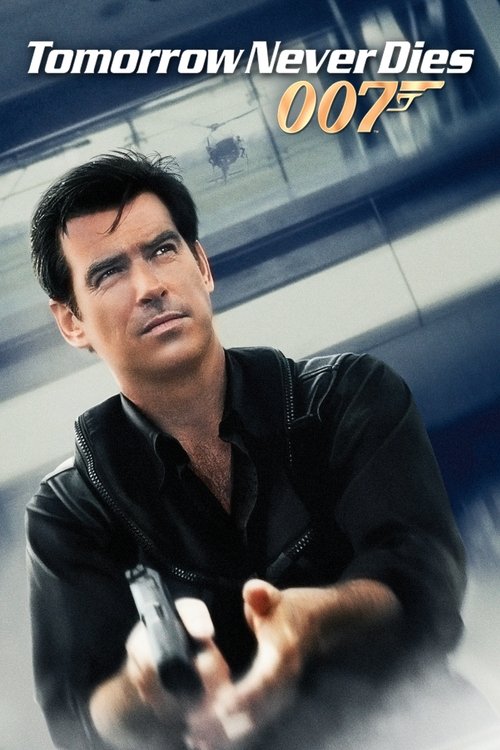
Tomorrow Never Dies
A deranged media mogul is staging international incidents to pit the world's superpowers against each other. Now James Bond must take on this evil mastermind in an adrenaline-charged battle to end his reign of terror and prevent global pandemonium.
Despite a substantial budget of $110.0M, Tomorrow Never Dies became a box office success, earning $333.0M worldwide—a 203% return.
6 wins & 10 nominations


Plot Structure
Story beats plotted across runtime


Narrative Arc
Emotional journey through the story's key moments
Story Circle
Blueprint 15-beat structure
Arcplot Score Breakdown
Weighted: Precision (70%) + Arc (15%) + Theme (15%)
Tomorrow Never Dies (1997) exemplifies precise narrative architecture, characteristic of Roger Spottiswoode's storytelling approach. This structural analysis examines how the film's 15-point plot structure maps to proven narrative frameworks across 1 hour and 59 minutes. With an Arcplot score of 6.8, the film balances conventional beats with creative variation.
Characters
Cast & narrative archetypes

James Bond
Elliot Carver
Wai Lin
Paris Carver
Stamper
M
Q
Main Cast & Characters
James Bond
Played by Pierce Brosnan
MI6's top agent investigating a media mogul's plot to start a war between China and the UK for ratings and profit.
Elliot Carver
Played by Jonathan Pryce
Ruthless media baron who orchestrates international crises to boost his news empire and gain broadcasting rights in China.
Wai Lin
Played by Michelle Yeoh
Chinese intelligence agent who partners with Bond to stop Carver's plan and prevent war between their nations.
Paris Carver
Played by Teri Hatcher
Elliot Carver's wife and Bond's former lover who reluctantly helps Bond infiltrate her husband's organization.
Stamper
Played by Götz Otto
Carver's sadistic right-hand man and chief enforcer who takes pleasure in torture and violence.
M
Played by Judi Dench
Head of MI6 who sends Bond to investigate the sinking of a British warship and potential media manipulation.
Q
Played by Desmond Llewelyn
MI6's quartermaster who equips Bond with gadgets including a remote-control car for his mission.
Structural Analysis
The Status Quo at 1 minutes (1% through the runtime) establishes Bond infiltrates a terrorist arms bazaar on the Russian border, establishing his role as MI6's top field agent conducting dangerous solo operations.. Of particular interest, this early placement immediately immerses viewers in the story world.
The inciting incident occurs at 14 minutes when The HMS Devonshire is sunk by Carver's stealth ship, killing all crew. Britain and China move toward war, disrupting global stability and forcing MI6 into action.. At 12% through the film, this Disruption aligns precisely with traditional story structure. This beat shifts the emotional landscape, launching the protagonist into the central conflict.
The First Threshold at 29 minutes marks the transition into Act II, occurring at 24% of the runtime. This shows the protagonist's commitment to Bond chooses to actively break into Carver's media headquarters to steal the GPS encoder, fully committing to the investigation despite the personal complications with Paris., moving from reaction to action.
At 59 minutes, the Midpoint arrives at 50% of the runtime—precisely centered, creating perfect narrative symmetry. Significantly, this crucial beat Bond and Wai Lin are captured by Carver's men in Saigon. What seemed like a successful investigation turns into captivity, raising stakes as Carver reveals his full plan to start a war for media ratings and broadcast monopoly in China., fundamentally raising what's at risk. The emotional intensity shifts, dividing the narrative into clear before-and-after phases.
The Collapse moment at 88 minutes (74% through) represents the emotional nadir. Here, Bond and Wai Lin are captured again aboard the stealth ship. Carver prepares to execute them and launch the nuclear missile at Beijing. Time is running out, the British fleet is minutes from Chinese waters, and all seems lost., illustrates the protagonist at their lowest point. This beat's placement in the final quarter sets up the climactic reversal.
The Second Threshold at 94 minutes initiates the final act resolution at 79% of the runtime. Bond breaks free using Q's gadgets and splits up with Wai Lin - she'll stop the missile, he'll confront Carver. Bond synthesizes his lone-wolf training with collaborative trust in his partner, a growth moment., demonstrating the transformation achieved throughout the journey.
Emotional Journey
Tomorrow Never Dies's emotional architecture traces a deliberate progression across 15 carefully calibrated beats.
Narrative Framework
This structural analysis employs systematic plot point analysis that identifies crucial turning points. By mapping Tomorrow Never Dies against these established plot points, we can identify how Roger Spottiswoode utilizes or subverts traditional narrative conventions. The plot point approach reveals not only adherence to structural principles but also creative choices that distinguish Tomorrow Never Dies within the adventure genre.
Roger Spottiswoode's Structural Approach
Among the 8 Roger Spottiswoode films analyzed on Arcplot, the average structural score is 7.2, reflecting strong command of classical structure. Tomorrow Never Dies takes a more unconventional approach compared to the director's typical style. For comparative analysis, explore the complete Roger Spottiswoode filmography.
Comparative Analysis
Additional adventure films include The Black Stallion, The Bad Guys and Puss in Boots. For more Roger Spottiswoode analyses, see Shoot to Kill, The 6th Day and A Street Cat Named Bob.
Plot Points by Act
Act I
SetupStatus Quo
Bond infiltrates a terrorist arms bazaar on the Russian border, establishing his role as MI6's top field agent conducting dangerous solo operations.
Theme
M warns Admiral Roebuck about acting without sufficient intelligence: "You can't win a war without information." The theme of media manipulation versus truth is established.
Worldbuilding
Bond completes the arms bazaar mission and returns to London. We meet media mogul Elliot Carver hosting a party for his new satellite network. Bond is introduced to the mission involving the British warship HMS Devonshire in Chinese waters.
Disruption
The HMS Devonshire is sunk by Carver's stealth ship, killing all crew. Britain and China move toward war, disrupting global stability and forcing MI6 into action.
Resistance
Bond is briefed on Elliot Carver as the suspect. He attends Carver's party in Hamburg to investigate, reunites with his ex-lover Paris (Carver's wife), and Q provides gadgets. Bond debates whether he can trust Paris and how to approach Carver.
Act II
ConfrontationFirst Threshold
Bond chooses to actively break into Carver's media headquarters to steal the GPS encoder, fully committing to the investigation despite the personal complications with Paris.
Mirror World
Bond reconnects intimately with Paris, who tells him she waited for him and reveals emotional vulnerability. She represents the life and love Bond sacrifices for duty, embodying the personal cost of his choices.
Premise
Classic Bond action: the Hamburg break-in, rooftop motorcycle chase, surviving Stamper's assassination attempt, Paris's murder, and partnering with Chinese agent Wai Lin. Bond and Wai Lin investigate the sunken Devonshire, discovering the missile and confirming Carver's plot.
Midpoint
Bond and Wai Lin are captured by Carver's men in Saigon. What seemed like a successful investigation turns into captivity, raising stakes as Carver reveals his full plan to start a war for media ratings and broadcast monopoly in China.
Opposition
Bond and Wai Lin escape Carver's building handcuffed together, motorcycle chase through Saigon, develop partnership and trust, track down Carver's stealth ship, and work to stop the impending missile launch as the British fleet approaches Chinese waters.
Collapse
Bond and Wai Lin are captured again aboard the stealth ship. Carver prepares to execute them and launch the nuclear missile at Beijing. Time is running out, the British fleet is minutes from Chinese waters, and all seems lost.
Crisis
Bond and Wai Lin face execution. Bond processes Paris's death and his isolation, confronts his pattern of losing those he cares about, but finds renewed resolve through his partnership with Wai Lin.
Act III
ResolutionSecond Threshold
Bond breaks free using Q's gadgets and splits up with Wai Lin - she'll stop the missile, he'll confront Carver. Bond synthesizes his lone-wolf training with collaborative trust in his partner, a growth moment.
Synthesis
Final battle aboard the stealth ship. Wai Lin reprograms the missile to destroy the ship. Bond fights through Carver's men, battles Stamper, and kills Carver with his own sea drill. Bond and Wai Lin escape as the ship explodes, preventing war.
Transformation
Bond and Wai Lin embrace in the wreckage, sharing a romantic moment. Unlike the opening where Bond worked alone, he's now partnered with an equal, showing growth toward genuine connection despite the loss of Paris.