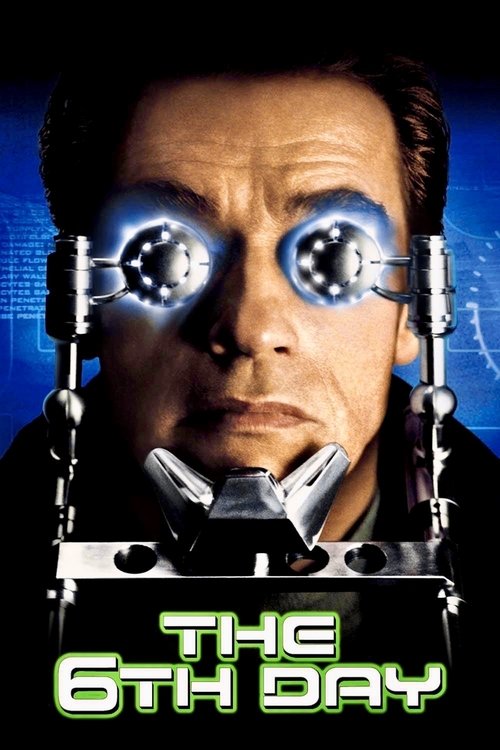
The 6th Day
A world of the very near future in which cattle, fish, and even the family pet can be cloned. But cloning humans is illegal - that is until family man Adam Gibson comes home from work one day to find a clone has replaced him. Taken from his family and plunged into a sinister world he doesn't understand, Gibson must not only save himself from the assassins who must destroy him to protect their secret, but uncover who and what is behind the horrible things happening to him.
Working with a significant budget of $82.0M, the film achieved a modest success with $96.1M in global revenue (+17% profit margin).


Plot Structure
Story beats plotted across runtime


Narrative Arc
Emotional journey through the story's key moments
Story Circle
Blueprint 15-beat structure
Arcplot Score Breakdown
Weighted: Precision (70%) + Arc (15%) + Theme (15%)
The 6th Day (2000) exemplifies meticulously timed plot construction, characteristic of Roger Spottiswoode's storytelling approach. This structural analysis examines how the film's 15-point plot structure maps to proven narrative frameworks across 2 hours and 3 minutes. With an Arcplot score of 7.1, the film balances conventional beats with creative variation.
Characters
Cast & narrative archetypes

Adam Gibson
Michael Drucker
Dr. Griffin Weir
Natalie Gibson
Hank Morgan
Robert Marshall
Talia Elsworth
Main Cast & Characters
Adam Gibson
Played by Arnold Schwarzenegger
A family-oriented helicopter pilot who discovers he's been illegally cloned and must fight to reclaim his life.
Michael Drucker
Played by Tony Goldwyn
The ruthless CEO of Replacement Technologies who will do anything to protect his cloning empire.
Dr. Griffin Weir
Played by Robert Duvall
The brilliant but morally conflicted scientist who created the cloning technology.
Natalie Gibson
Played by Wendy Crewson
Adam's loving wife who becomes caught in the cloning conspiracy.
Hank Morgan
Played by Michael Rapaport
Adam's business partner and best friend who operates the charter helicopter service.
Robert Marshall
Played by Michael Rooker
Drucker's cold and efficient security chief who leads the team hunting Adam.
Talia Elsworth
Played by Sarah Wynter
A tough mercenary in Marshall's team who questions her role in the conspiracy.
Structural Analysis
The Status Quo at 1 minutes (1% through the runtime) establishes Adam Gibson celebrates his birthday with his family in a near-future world where cloning animals is common but human cloning is illegal. He's a helicopter pilot living a normal, happy life with his wife and daughter.. Of particular interest, this early placement immediately immerses viewers in the story world.
The inciting incident occurs at 15 minutes when Adam returns home to find himself already there - a clone of himself is inside his house celebrating his birthday with his family. His entire reality is shattered as he realizes someone has illegally cloned him.. At 13% through the film, this Disruption is delayed, allowing extended setup of the story world. This beat shifts the emotional landscape, launching the protagonist into the central conflict.
The First Threshold at 31 minutes marks the transition into Act II, occurring at 25% of the runtime. This demonstrates the protagonist's commitment to Adam chooses to actively investigate Drucker and the conspiracy rather than hide. He breaks into a facility to gather evidence and discover who cloned him and why, committing to exposing the truth., moving from reaction to action.
At 62 minutes, the Midpoint arrives at 50% of the runtime—precisely centered, creating perfect narrative symmetry. Notably, this crucial beat Adam discovers the full scope of the conspiracy: Drucker has been cloning himself to achieve immortality and accidentally cloned Adam to cover up a murder. The stakes raise as Adam realizes powerful forces will do anything to protect this secret., fundamentally raising what's at risk. The emotional intensity shifts, dividing the narrative into clear before-and-after phases.
The Collapse moment at 92 minutes (75% through) represents the emotional nadir. Here, Adam is captured and faces being killed and replaced permanently. His family believes the clone is the real Adam. He confronts the possibility that he himself might be the clone, experiencing an existential death of identity and self., illustrates the protagonist at their lowest point. This beat's placement in the final quarter sets up the climactic reversal.
The Second Threshold at 99 minutes initiates the final act resolution at 80% of the runtime. Adam realizes both he and his clone are equally real and human. He accepts his identity and forms an alliance to stop Drucker, synthesizing his skills as a pilot with the truth about the conspiracy to make his final move., demonstrating the transformation achieved throughout the journey.
Emotional Journey
The 6th Day's emotional architecture traces a deliberate progression across 15 carefully calibrated beats.
Narrative Framework
This structural analysis employs a 15-point narrative structure framework that maps key story moments. By mapping The 6th Day against these established plot points, we can identify how Roger Spottiswoode utilizes or subverts traditional narrative conventions. The plot point approach reveals not only adherence to structural principles but also creative choices that distinguish The 6th Day within the science fiction genre.
Roger Spottiswoode's Structural Approach
Among the 8 Roger Spottiswoode films analyzed on Arcplot, the average structural score is 7.2, reflecting strong command of classical structure. The 6th Day takes a more unconventional approach compared to the director's typical style. For comparative analysis, explore the complete Roger Spottiswoode filmography.
Comparative Analysis
Additional science fiction films include The Postman, Mad Max 2 and AVP: Alien vs. Predator. For more Roger Spottiswoode analyses, see Tomorrow Never Dies, Shoot to Kill and A Street Cat Named Bob.
Plot Points by Act
Act I
SetupStatus Quo
Adam Gibson celebrates his birthday with his family in a near-future world where cloning animals is common but human cloning is illegal. He's a helicopter pilot living a normal, happy life with his wife and daughter.
Theme
Discussion about the "6th Day" laws and whether cloning humans violates the sanctity of life. A character states that cloning pets is one thing, but humans cross a moral line - "You can't play God."
Worldbuilding
Introduction to the futuristic world with RePet stores, SimPal dolls, and anti-cloning laws. Adam works as a pilot with his partner Hank, considering selling their business to wealthy tycoon Michael Drucker. His daughter wants her dog Oliver cloned after it dies.
Disruption
Adam returns home to find himself already there - a clone of himself is inside his house celebrating his birthday with his family. His entire reality is shattered as he realizes someone has illegally cloned him.
Resistance
Adam is attacked by assassins trying to kill him and goes on the run. He struggles to understand what happened and why someone would clone him. He debates whether to contact authorities or his family, ultimately realizing he must find answers himself to survive.
Act II
ConfrontationFirst Threshold
Adam chooses to actively investigate Drucker and the conspiracy rather than hide. He breaks into a facility to gather evidence and discover who cloned him and why, committing to exposing the truth.
Mirror World
Adam encounters the assassins who keep getting re-cloned after he kills them, forcing him to confront the implications of human cloning technology. They represent what happens when humanity is reduced to a replaceable commodity.
Premise
Adam navigates the world as a fugitive, fighting cloned assassins, uncovering Drucker's illegal cloning operation, and trying to understand his own identity. The "fun and games" of a man fighting his own replacement while battling repeatedly-cloned killers.
Midpoint
Adam discovers the full scope of the conspiracy: Drucker has been cloning himself to achieve immortality and accidentally cloned Adam to cover up a murder. The stakes raise as Adam realizes powerful forces will do anything to protect this secret.
Opposition
Drucker intensifies efforts to eliminate Adam while protecting his cloning empire. Adam's family is endangered as they become leverage. The philosophical questions deepen as Adam questions his own identity and humanity while the net closes around him.
Collapse
Adam is captured and faces being killed and replaced permanently. His family believes the clone is the real Adam. He confronts the possibility that he himself might be the clone, experiencing an existential death of identity and self.
Crisis
In his darkest moment, Adam grapples with what makes him human and real. He processes the horror of the cloning conspiracy and what it means for humanity, finding resolve in his memories and love for his family.
Act III
ResolutionSecond Threshold
Adam realizes both he and his clone are equally real and human. He accepts his identity and forms an alliance to stop Drucker, synthesizing his skills as a pilot with the truth about the conspiracy to make his final move.
Synthesis
Adam confronts Drucker and destroys the cloning facility. He exposes the conspiracy and fights to ensure his family's safety. The finale resolves both the action plot and the philosophical questions about identity and the sanctity of human life.
Transformation
Adam and his clone reach an understanding - both are real. One stays with the family while the other starts a new life, showing Adam has transformed from a man who took his identity for granted to one who understands that humanity is defined by consciousness and choice, not DNA.