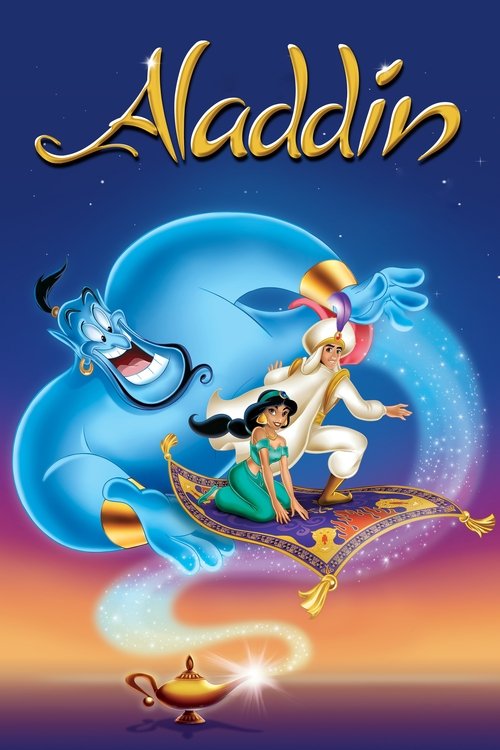
Aladdin
A kind-hearted street urchin and a power-hungry Grand Vizier vie for a magic lamp that has the power to make their deepest wishes come true.
Despite a moderate budget of $28.0M, Aladdin became a commercial juggernaut, earning $504.1M worldwide—a remarkable 1700% return.
2 Oscars. 36 wins & 22 nominations


Plot Structure
Story beats plotted across runtime


Narrative Arc
Emotional journey through the story's key moments
Story Circle
Blueprint 15-beat structure
Characters
Cast & narrative archetypes

Aladdin
Jasmine
Genie
Jafar
Abu
Iago
Main Cast & Characters
Aladdin
Played by Scott Weinger
A street-smart thief who dreams of a better life and falls in love with Princess Jasmine.
Jasmine
Played by Linda Larkin
A rebellious princess who yearns for freedom beyond the palace walls.
Genie
Played by Robin Williams
A magical, larger-than-life being trapped in a lamp who becomes Aladdin's mentor and friend.
Jafar
Played by Jonathan Freeman
The power-hungry royal vizier who seeks to control Agrabah through dark magic.
Abu
Played by Frank Welker
Aladdin's loyal kleptomaniac monkey companion.
Iago
Played by Gilbert Gottfried
Jafar's sarcastic and scheming parrot sidekick.
Structural Analysis
The Status Quo at 1 minutes (1% through the runtime) establishes Aladdin is a "street rat" thief in Agrabah, stealing bread to survive with his monkey Abu. He's poor, homeless, but dreams of something more while looking at the palace from his rooftop hideout.. Structural examination shows that this early placement immediately immerses viewers in the story world.
The inciting incident occurs at 11 minutes when Aladdin meets Jasmine in the marketplace (she's disguised, having run away from the palace). He saves her from having her hand cut off for stealing an apple. This chance encounter disrupts both their worlds.. At 11% through the film, this Disruption aligns precisely with traditional story structure. This beat shifts the emotional landscape, launching the protagonist into the central conflict.
The First Threshold at 22 minutes marks the transition into Act II, occurring at 24% of the runtime. This shows the protagonist's commitment to Aladdin chooses to enter the Cave of Wonders, crossing into a magical world he's never experienced. The cave entrance rises from the desert as a giant tiger head, warning only the "diamond in the rough" may enter., moving from reaction to action.
At 45 minutes, the Midpoint arrives at 49% of the runtime—precisely centered, creating perfect narrative symmetry. Significantly, this crucial beat False victory: After the magic carpet ride, Jasmine recognizes Aladdin as the boy from the market. They nearly kiss, and she seems to be falling for him. But Aladdin lies, claiming he sometimes dresses as a commoner, deepening his deception. Stakes raised: the lie is now more complicated., fundamentally raising what's at risk. The emotional intensity shifts, dividing the narrative into clear before-and-after phases.
The Collapse moment at 67 minutes (72% through) represents the emotional nadir. Here, Jafar obtains the lamp and becomes the most powerful sorcerer in the world. He exposes Aladdin as a fraud before Jasmine and her father, reduces him back to a street rat, and banishes him to a frozen wasteland. Everything Aladdin gained is lost. Death imagery: freezing, powerless, alone., shows the protagonist at their lowest point. This beat's placement in the final quarter sets up the climactic reversal.
The Second Threshold at 72 minutes initiates the final act resolution at 78% of the runtime. Aladdin returns to the palace as himself - not Prince Ali, just Aladdin. He synthesizes his street smarts (Act 1 skills) with what he learned about honesty and self-worth (from Genie/Jasmine in Act 2). He chooses to fight Jafar with his wits and truth, not false power., demonstrating the transformation achieved throughout the journey.
Emotional Journey
Aladdin's emotional architecture traces a deliberate progression across 15 carefully calibrated beats.
Narrative Framework
This structural analysis employs proven narrative structure principles that track dramatic progression. By mapping Aladdin against these established plot points, we can identify how Ron Clements utilizes or subverts traditional narrative conventions. The plot point approach reveals not only adherence to structural principles but also creative choices that distinguish Aladdin within the animation genre.
Ron Clements's Structural Approach
Among the 6 Ron Clements films analyzed on Arcplot, the average structural score is 7.2, reflecting strong command of classical structure. Aladdin exemplifies the director's characteristic narrative technique. For comparative analysis, explore the complete Ron Clements filmography.
Comparative Analysis
Additional animation films include The Bad Guys, Puss in Boots and Violet Evergarden: Eternity and the Auto Memory Doll. For more Ron Clements analyses, see The Princess and the Frog, Hercules and Moana.
Plot Points by Act
Act I
SetupStatus Quo
Aladdin is a "street rat" thief in Agrabah, stealing bread to survive with his monkey Abu. He's poor, homeless, but dreams of something more while looking at the palace from his rooftop hideout.
Theme
Jasmine tells her father, "I am not a prize to be won!" establishing the theme of authenticity vs. facade - being valued for who you truly are, not what you pretend to be or what others see on the surface.
Worldbuilding
Establishes Agrabah's world: Jafar seeks a "diamond in the rough" for the Cave of Wonders; Jasmine is a princess trapped by law to marry a prince; Aladdin survives through wit and theft; the palace guards chase "criminals" like Aladdin.
Disruption
Aladdin meets Jasmine in the marketplace (she's disguised, having run away from the palace). He saves her from having her hand cut off for stealing an apple. This chance encounter disrupts both their worlds.
Resistance
Aladdin is arrested and taken to the palace dungeon. Jafar (disguised as an old prisoner) convinces Aladdin he can escape and win riches to be worthy of the girl he met - if he retrieves the lamp from the Cave of Wonders. Aladdin debates whether to trust this stranger.
Act II
ConfrontationFirst Threshold
Aladdin chooses to enter the Cave of Wonders, crossing into a magical world he's never experienced. The cave entrance rises from the desert as a giant tiger head, warning only the "diamond in the rough" may enter.
Mirror World
Aladdin releases the Genie from the lamp. The Genie represents freedom, authenticity, and friendship - the thematic mirror to Aladdin's journey. Both are trapped (Genie in the lamp, Aladdin in poverty/identity) and yearn to be free to be themselves.
Premise
The "promise of the premise" - a magical genie, three wishes, transformation into Prince Ali. Aladdin explores his new princely identity with an elaborate parade into Agrabah, attempts to woo Jasmine, and takes her on a magic carpet ride ("A Whole New World").
Midpoint
False victory: After the magic carpet ride, Jasmine recognizes Aladdin as the boy from the market. They nearly kiss, and she seems to be falling for him. But Aladdin lies, claiming he sometimes dresses as a commoner, deepening his deception. Stakes raised: the lie is now more complicated.
Opposition
Jafar discovers Prince Ali is the street rat. He has Aladdin bound and thrown into the ocean to drown. After using his second wish to escape, Aladdin returns but continues the Prince Ali charade. Jafar becomes the Sultan's advisor through hypnosis, and pressures mount as the wedding approaches while Aladdin's trapped in his lie.
Collapse
Jafar obtains the lamp and becomes the most powerful sorcerer in the world. He exposes Aladdin as a fraud before Jasmine and her father, reduces him back to a street rat, and banishes him to a frozen wasteland. Everything Aladdin gained is lost. Death imagery: freezing, powerless, alone.
Crisis
Aladdin's dark moment of realization. Carpet rescues him from freezing, but Aladdin recognizes his mistakes - the lies, the facade, the betrayal of his true self. He processes that he must face Jafar without the Genie's power and without the Prince Ali disguise.
Act III
ResolutionSecond Threshold
Aladdin returns to the palace as himself - not Prince Ali, just Aladdin. He synthesizes his street smarts (Act 1 skills) with what he learned about honesty and self-worth (from Genie/Jasmine in Act 2). He chooses to fight Jafar with his wits and truth, not false power.
Synthesis
The finale: Aladdin uses cleverness to trick Jafar into wishing to become a genie - trapping him in his own lamp. Aladdin uses his third wish to free the Genie (keeping his promise, showing growth). The Sultan changes the law so Jasmine can marry whom she chooses. Aladdin and Jasmine unite as their authentic selves.
Transformation
Aladdin and Jasmine kiss on the palace balcony as the Genie flies off to see the world, free at last. Mirrors the opening: Aladdin is still on a balcony overlooking Agrabah, but now he belongs, loved for who he truly is. He's no longer a "street rat" or fake prince - just Aladdin, and that's enough.