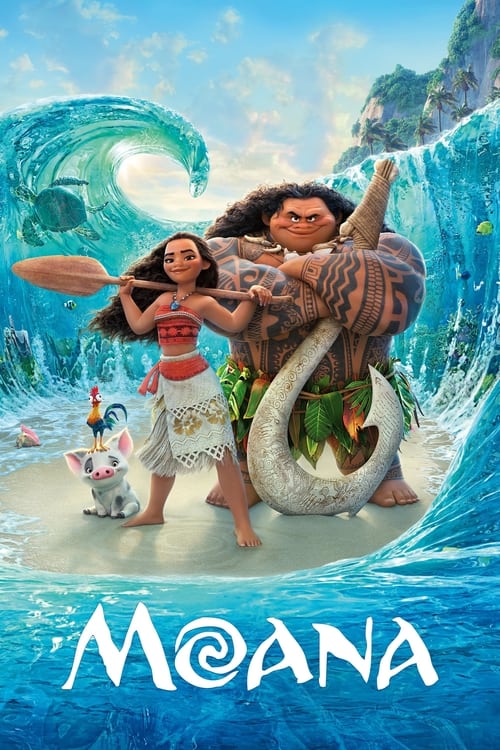
Moana
In ancient Polynesia, when a terrible curse incurred by the demigod Maui reaches Moana's island, she answers the Ocean's call to seek out Maui to set things right.
Despite a enormous budget of $150.0M, Moana became a financial success, earning $690.9M worldwide—a 361% return. This commercial performance validated the ambitious narrative scope, illustrating how audiences embrace fresh perspective even at blockbuster scale.
Nominated for 2 Oscars. 22 wins & 90 nominations


Plot Structure
Story beats plotted across runtime


Narrative Arc
Emotional journey through the story's key moments
Story Circle
Blueprint 15-beat structure
Characters
Cast & narrative archetypes

Moana
Maui
Gramma Tala
Chief Tui
Sina
Tamatoa
Main Cast & Characters
Moana
Played by Auli'i Cravalho
A spirited teenage daughter of a Polynesian village chief who is chosen by the ocean to reunite a mystical relic with the goddess Te Fiti.
Maui
Played by Dwayne Johnson
A legendary shapeshifting demigod who once stole the heart of Te Fiti, now reluctantly joins Moana on her quest for redemption.
Gramma Tala
Played by Rachel House
Moana's wise and eccentric grandmother who encourages her to follow her heart and reveals the truth about their people's voyaging past.
Chief Tui
Played by Temuera Morrison
Moana's father and village chief who forbids anyone from going beyond the reef, driven by fear from his own traumatic experience at sea.
Sina
Played by Nicole Scherzinger
Moana's supportive and understanding mother who quietly encourages her daughter's spirit while respecting her husband's rules.
Tamatoa
Played by Jemaine Clement
A giant, narcissistic coconut crab who lives in Lalotai and collects shiny treasures, including Maui's magical fishhook.
Structural Analysis
The Status Quo at 2 minutes (2% through the runtime) establishes Baby Moana is drawn to the ocean, which chooses her by giving her the heart of Te Fiti. She is captivated by the sea, showing her innate connection to voyaging despite her island-bound culture.. Of particular interest, this early placement immediately immerses viewers in the story world.
The inciting incident occurs at 12 minutes when The fish disappear from the lagoon and the coconuts turn black with blight. The island's resources are dying. Moana suggests voyaging beyond the reef to find more fish, but her father angrily refuses, revealing his trauma from losing his best friend to the ocean.. At 12% through the film, this Disruption aligns precisely with traditional story structure. This beat shifts the emotional landscape, launching the protagonist into the central conflict.
The First Threshold at 26 minutes marks the transition into Act II, occurring at 24% of the runtime. This reveals the protagonist's commitment to After Gramma Tala dies, Moana makes the active choice to defy her father, take a voyaging canoe, and sail beyond the reef to find Maui and save her island. She crosses the reef at night, leaving her old life behind., moving from reaction to action.
At 53 minutes, the Midpoint arrives at 50% of the runtime—precisely centered, creating perfect narrative symmetry. Structural examination shows that this crucial beat Moana and Maui attempt to pass Te Ka (the lava monster) to reach Te Fiti, but fail catastrophically. Maui's hook is badly damaged, and he fears losing his powers entirely. This false defeat raises the stakes - they got what they wanted (the hook) but can't accomplish the mission., fundamentally raising what's at risk. The emotional intensity shifts, dividing the narrative into clear before-and-after phases.
The Collapse moment at 77 minutes (72% through) represents the emotional nadir. Here, Moana gives up and tells the ocean to choose someone else. She returns the heart of Te Fiti to the ocean, abandoning her quest. This is her "all is lost" moment - she believes she has failed her island, her grandmother, and herself. The death here is metaphorical: the death of her identity as the chosen one., reveals the protagonist at their lowest point. This beat's placement in the final quarter sets up the climactic reversal.
The Second Threshold at 83 minutes initiates the final act resolution at 78% of the runtime. Moana has a revelation: "I am Moana of Motunui. You will board my boat, sail across the sea, and restore the heart of Te Fiti." She reclaims the heart from the ocean floor and chooses her identity for herself. She now understands that her worth comes from within, not from external validation., demonstrating the transformation achieved throughout the journey.
Emotional Journey
Moana's emotional architecture traces a deliberate progression across 15 carefully calibrated beats.
Narrative Framework
This structural analysis employs structural analysis methodology used to understand storytelling architecture. By mapping Moana against these established plot points, we can identify how Ron Clements utilizes or subverts traditional narrative conventions. The plot point approach reveals not only adherence to structural principles but also creative choices that distinguish Moana within the animation genre.
Ron Clements's Structural Approach
Among the 6 Ron Clements films analyzed on Arcplot, the average structural score is 7.2, reflecting strong command of classical structure. Moana exemplifies the director's characteristic narrative technique. For comparative analysis, explore the complete Ron Clements filmography.
Comparative Analysis
Additional animation films include The Bad Guys, Puss in Boots and Violet Evergarden: Eternity and the Auto Memory Doll. For more Ron Clements analyses, see Aladdin, The Princess and the Frog and Hercules.
Plot Points by Act
Act I
SetupStatus Quo
Baby Moana is drawn to the ocean, which chooses her by giving her the heart of Te Fiti. She is captivated by the sea, showing her innate connection to voyaging despite her island-bound culture.
Theme
Gramma Tala tells young Moana the story of Te Fiti and Maui, explaining how the world was created and how darkness spread when the heart was stolen. She emphasizes: "The ocean connects us all" and hints that someone will journey beyond the reef.
Worldbuilding
Teenage Moana is being groomed as the next chief of Motunui. Her father Tui teaches her responsibility to the island and forbids anyone from going beyond the reef. Moana feels torn between duty and her unexplained pull to the ocean.
Disruption
The fish disappear from the lagoon and the coconuts turn black with blight. The island's resources are dying. Moana suggests voyaging beyond the reef to find more fish, but her father angrily refuses, revealing his trauma from losing his best friend to the ocean.
Resistance
Gramma Tala shows Moana the secret cave containing the ancient voyaging canoes of their ancestors, revealing that their people were once voyagers. Tala gives Moana the heart of Te Fiti and tells her she must find Maui and restore it. Tala becomes ill, and on her deathbed, urges Moana to go.
Act II
ConfrontationFirst Threshold
After Gramma Tala dies, Moana makes the active choice to defy her father, take a voyaging canoe, and sail beyond the reef to find Maui and save her island. She crosses the reef at night, leaving her old life behind.
Mirror World
Moana finds Maui trapped on an island. He is arrogant, self-centered, and initially refuses to help. Maui represents the opposite of Moana's selfless duty - he is defined by his need for validation from humans. Their relationship will teach both characters what they need to learn.
Premise
Moana and Maui train together (she learns to sail, he tries to regain his confidence), retrieve Maui's magical fishhook from Tamatoa's lair, and journey toward Te Fiti. This is the "fun and games" promised by the premise - ocean adventures, demigod magic, and bonding.
Midpoint
Moana and Maui attempt to pass Te Ka (the lava monster) to reach Te Fiti, but fail catastrophically. Maui's hook is badly damaged, and he fears losing his powers entirely. This false defeat raises the stakes - they got what they wanted (the hook) but can't accomplish the mission.
Opposition
Maui blames Moana for the damage to his hook and abandons her, flying away on his own. Moana is left alone, doubting herself and her mission. The ocean itself seems to reject her. Her internal flaws (self-doubt, need for external validation) surface as obstacles close in.
Collapse
Moana gives up and tells the ocean to choose someone else. She returns the heart of Te Fiti to the ocean, abandoning her quest. This is her "all is lost" moment - she believes she has failed her island, her grandmother, and herself. The death here is metaphorical: the death of her identity as the chosen one.
Crisis
In the darkness, the spirit of Gramma Tala appears as a manta ray. She reminds Moana of her identity and helps her remember who she truly is - not defined by being "chosen," but by her own inner strength and love for her people.
Act III
ResolutionSecond Threshold
Moana has a revelation: "I am Moana of Motunui. You will board my boat, sail across the sea, and restore the heart of Te Fiti." She reclaims the heart from the ocean floor and chooses her identity for herself. She now understands that her worth comes from within, not from external validation.
Synthesis
Moana sails to Te Fiti alone. Maui returns to help fight Te Ka. Moana realizes that Te Ka IS Te Fiti - the lava monster is what became of the goddess after her heart was stolen. Moana uses compassion instead of force, singing to Te Ka and restoring the heart. Te Fiti is healed, the world is restored, and Maui apologizes and regains his full powers.
Transformation
Moana returns home as a confident wayfinder and chief. She leads her people back to their voyaging roots, combining tradition with exploration. The final image shows Moana commanding a fleet of voyaging canoes, embracing both her duty to her island and her love of the ocean - no longer torn between two worlds.