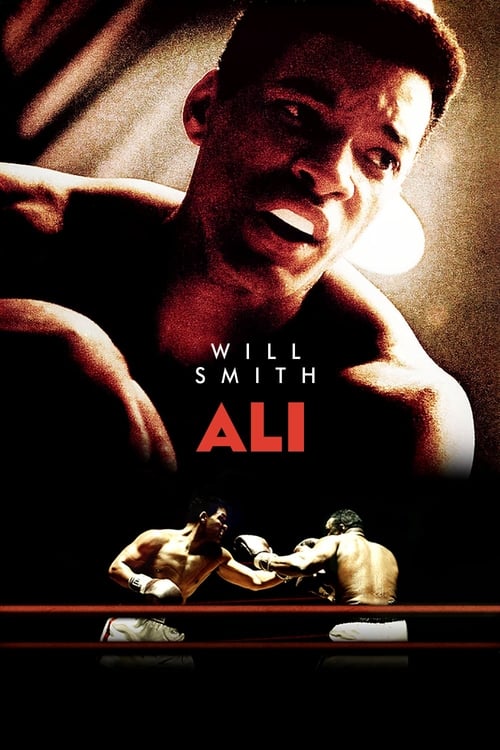
Ali
In 1964, a brash, new pro boxer, fresh from his Olympic gold medal victory, explodes onto the scene: Cassius Clay. Bold and outspoken, he cuts an entirely new image for African Americans in sport with his proud public self-confidence and his unapologetic belief that he is the greatest boxer of all time. Yet at the top of his game, both Ali's personal and professional lives face the ultimate test.
The film struggled financially against its substantial budget of $107.0M, earning $87.8M globally (-18% loss).
Nominated for 2 Oscars. 10 wins & 27 nominations


Plot Structure
Story beats plotted across runtime


Narrative Arc
Emotional journey through the story's key moments
Story Circle
Blueprint 15-beat structure
Arcplot Score Breakdown
Weighted: Precision (70%) + Arc (15%) + Theme (15%)
Ali (2001) demonstrates deliberately positioned story structure, characteristic of Michael Mann's storytelling approach. This structural analysis examines how the film's 15-point plot structure maps to proven narrative frameworks across 2 hours and 37 minutes. With an Arcplot score of 7.1, the film balances conventional beats with creative variation.
Characters
Cast & narrative archetypes

Muhammad Ali
Drew "Bundini" Brown
Howard Bingham
Angelo Dundee
Sonji Clay
Belinda Ali
Howard Cosell
Malcolm X
Main Cast & Characters
Muhammad Ali
Played by Will Smith
The legendary boxer who rises to become heavyweight champion while fighting for civil rights and religious freedom
Drew "Bundini" Brown
Played by Jamie Foxx
Ali's cornerman and spiritual advisor, providing motivation and friendship throughout his career
Howard Bingham
Played by Jeffrey Wright
Ali's personal photographer and loyal lifelong friend who documents his journey
Angelo Dundee
Played by Ron Silver
Ali's legendary boxing trainer who guides his technical development in the ring
Sonji Clay
Played by Jada Pinkett Smith
Ali's first wife whose relationship with him is strained by religious and lifestyle differences
Belinda Ali
Played by Nona Gaye
Ali's second wife who embraces the Nation of Islam and supports his spiritual transformation
Howard Cosell
Played by Jon Voight
The sports broadcaster who develops a complex friendship with Ali through controversial interviews
Malcolm X
Played by Mario Van Peebles
The civil rights leader and Nation of Islam minister who influences Ali's political awakening
Structural Analysis
The Status Quo at 1 minutes (1% through the runtime) establishes Young Cassius Clay wins Olympic gold in 1960 Rome, returning to Louisville as a champion. The opening establishes him as confident, talented, and beloved - the world at his feet before the struggles to come.. Of particular interest, this early placement immediately immerses viewers in the story world.
The inciting incident occurs at 19 minutes when Clay gets his shot at Sonny Liston for the heavyweight championship. The opportunity that will change everything - the catalyst that transforms him from talented prospect to world stage figure with a platform.. At 12% through the film, this Disruption aligns precisely with traditional story structure. This beat shifts the emotional landscape, launching the protagonist into the central conflict.
The First Threshold at 39 minutes marks the transition into Act II, occurring at 25% of the runtime. This shows the protagonist's commitment to Clay defeats Liston to become heavyweight champion, then immediately announces his conversion to Islam and name change to Muhammad Ali. His active choice to use his platform for identity and principle, knowing the cost. No turning back., moving from reaction to action.
At 79 minutes, the Midpoint arrives at 50% of the runtime—precisely centered, creating perfect narrative symmetry. Notably, this crucial beat Ali refuses induction into the U.S. Army citing religious beliefs: "I ain't got no quarrel with them Viet Cong." False defeat - he's stripped of his title, barred from boxing, faces prison. Everything he built seems lost, but this is actually his greatest stand., fundamentally raising what's at risk. The emotional intensity shifts, dividing the narrative into clear before-and-after phases.
The Collapse moment at 117 minutes (75% through) represents the emotional nadir. Here, Joe Frazier defeats Ali in the "Fight of the Century" (1971). Ali's first professional loss - his invincibility dies. The comeback narrative crumbles. He's no longer the untouchable champion, just a man who gave up his prime years and may never reclaim what he lost., illustrates the protagonist at their lowest point. This beat's placement in the final quarter sets up the climactic reversal.
The Second Threshold at 126 minutes initiates the final act resolution at 80% of the runtime. Don King arranges the "Rumble in the Jungle" against George Foreman in Zaire. Ali synthesizes everything: the showmanship from his youth, the resilience from exile, the wisdom from defeat. He sees how to win - not through speed, but through strategy and spirit. Africa welcomes him as a hero., demonstrating the transformation achieved throughout the journey.
Emotional Journey
Ali's emotional architecture traces a deliberate progression across 15 carefully calibrated beats.
Narrative Framework
This structural analysis employs proven narrative structure principles that track dramatic progression. By mapping Ali against these established plot points, we can identify how Michael Mann utilizes or subverts traditional narrative conventions. The plot point approach reveals not only adherence to structural principles but also creative choices that distinguish Ali within the drama genre.
Michael Mann's Structural Approach
Among the 10 Michael Mann films analyzed on Arcplot, the average structural score is 6.5, demonstrating varied approaches to story architecture. Ali represents one of the director's most structurally precise works. For comparative analysis, explore the complete Michael Mann filmography.
Comparative Analysis
Additional drama films include After Thomas, South Pacific and Dirty Dancing: Havana Nights. For more Michael Mann analyses, see Collateral, Ferrari and The Insider.
Plot Points by Act
Act I
SetupStatus Quo
Young Cassius Clay wins Olympic gold in 1960 Rome, returning to Louisville as a champion. The opening establishes him as confident, talented, and beloved - the world at his feet before the struggles to come.
Theme
Malcolm X tells Clay: "You're not just a fighter. You're a symbol." The theme of identity, freedom, and what it means to be truly free is introduced - foreshadowing Ali's journey from Cassius Clay to Muhammad Ali.
Worldbuilding
Louisville to Miami, 1960-1964. Clay trains with Angelo Dundee, experiences racism in the segregated South, meets Malcolm X and the Nation of Islam, begins his transformation. The setup establishes the contradictions of being a Black champion in America.
Disruption
Clay gets his shot at Sonny Liston for the heavyweight championship. The opportunity that will change everything - the catalyst that transforms him from talented prospect to world stage figure with a platform.
Resistance
Clay prepares for Liston with his team while deepening his involvement with the Nation of Islam. Malcolm X serves as spiritual mentor. The debate: should he publicly embrace Islam before the fight or wait? The world isn't ready for what he's about to do.
Act II
ConfrontationFirst Threshold
Clay defeats Liston to become heavyweight champion, then immediately announces his conversion to Islam and name change to Muhammad Ali. His active choice to use his platform for identity and principle, knowing the cost. No turning back.
Mirror World
Ali deepens his relationship with Sonji Roi, who represents the tension between personal love and religious conviction. She won't conform to Nation of Islam expectations, creating the subplot that explores the cost of Ali's choices on intimate relationships.
Premise
Ali at his peak: defending the title, becoming a global icon, navigating fame and the Nation of Islam. The "fun and games" of being the most famous athlete on earth - the spectacle, the poetry, the confidence. But cracks appear: marriage dissolves, Malcolm X splits from the Nation.
Midpoint
Ali refuses induction into the U.S. Army citing religious beliefs: "I ain't got no quarrel with them Viet Cong." False defeat - he's stripped of his title, barred from boxing, faces prison. Everything he built seems lost, but this is actually his greatest stand.
Opposition
Exile from boxing, 1967-1970. Ali becomes a pariah, loses income, faces legal battles. His marriages strain under pressure. The establishment closes in - sponsors drop him, venues ban him, public opinion turns hostile. The price of principle mounts as years pass without fighting.
Collapse
Joe Frazier defeats Ali in the "Fight of the Century" (1971). Ali's first professional loss - his invincibility dies. The comeback narrative crumbles. He's no longer the untouchable champion, just a man who gave up his prime years and may never reclaim what he lost.
Crisis
Ali processes defeat and fading relevance. His body is older, slower. New champions have risen. The dark night: what if the sacrifice was for nothing? What if he can't reclaim the title? The struggle to find meaning in loss and aging.
Act III
ResolutionSecond Threshold
Don King arranges the "Rumble in the Jungle" against George Foreman in Zaire. Ali synthesizes everything: the showmanship from his youth, the resilience from exile, the wisdom from defeat. He sees how to win - not through speed, but through strategy and spirit. Africa welcomes him as a hero.
Synthesis
The rope-a-dope strategy. Ali absorbs Foreman's power, lets the champion exhaust himself, then strikes. The finale is both physical (the fight) and spiritual (proving that principle, sacrifice, and intelligence triumph over brute force). He reclaims the championship.
Transformation
Ali stands victorious in Zaire, champion again - but transformed. No longer the brash kid from Louisville. Now a symbol of resistance, resilience, and the power of conviction. The closing mirrors the opening gold medal, but he's no longer Cassius Clay seeking approval. He's Muhammad Ali, defining himself.