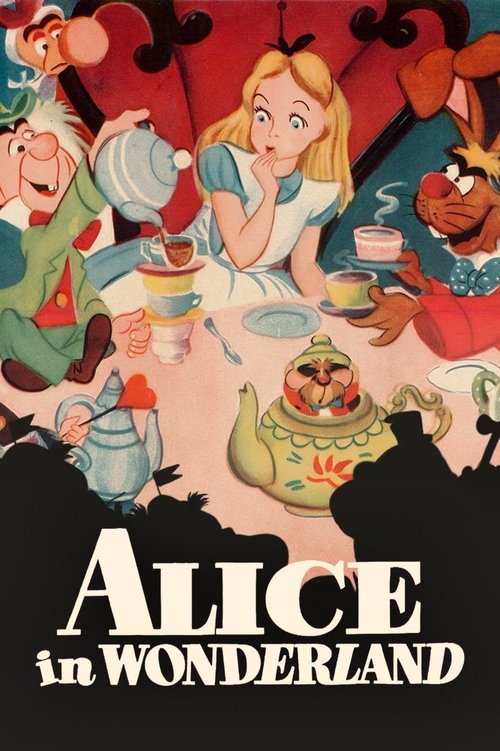
Alice in Wonderland
On a golden afternoon, wildly curious young Alice tumbles into the burrow and enters the merry, madcap world of Wonderland full of whimsical escapades.
Despite its modest budget of $3.0M, Alice in Wonderland became a massive hit, earning $57.2M worldwide—a remarkable 1807% return. The film's unique voice engaged audiences, proving that strong storytelling can transcend budget limitations.
Nominated for 1 Oscar. 2 wins & 2 nominations


Plot Structure
Story beats plotted across runtime


Narrative Arc
Emotional journey through the story's key moments
Story Circle
Blueprint 15-beat structure
Arcplot Score Breakdown
Weighted: Precision (70%) + Arc (15%) + Theme (15%)
Alice in Wonderland (1951) reveals meticulously timed narrative architecture, characteristic of Clyde Geronimi's storytelling approach. This structural analysis examines how the film's 15-point plot structure maps to proven narrative frameworks across 1 hour and 15 minutes. With an Arcplot score of 5.8, the film takes an unconventional approach to traditional narrative frameworks.
Characters
Cast & narrative archetypes

Alice
The Queen of Hearts
The Mad Hatter
The Cheshire Cat
The White Rabbit
The Caterpillar
The March Hare
Main Cast & Characters
Alice
Played by Kathryn Beaumont
A curious young girl who falls down a rabbit hole into a nonsensical wonderland where she encounters bizarre creatures and illogical situations.
The Queen of Hearts
Played by Verna Felton
A tyrannical, short-tempered monarch who rules Wonderland through fear and her obsession with beheading anyone who displeases her.
The Mad Hatter
Played by Ed Wynn
An eccentric hat maker stuck in perpetual tea time, speaking in riddles and nonsense with manic energy.
The Cheshire Cat
Played by Sterling Holloway
A mysterious, grinning feline who appears and disappears at will, offering cryptic advice and philosophical observations.
The White Rabbit
Played by Bill Thompson
A nervous, perpetually late rabbit whose frantic rushing initially lures Alice into Wonderland.
The Caterpillar
Played by Richard Haydn
A condescending, hookah-smoking insect who challenges Alice's sense of identity with philosophical questions.
The March Hare
Played by Jerry Colonna
The Mad Hatter's equally mad companion at the never-ending tea party, impulsive and illogical.
Structural Analysis
The Status Quo at 1 minutes (1% through the runtime) establishes Alice sits by the riverbank, bored with her sister's history lesson, daydreaming about a world of her own where nothing would be what it is. This establishes her as a curious, imaginative child constrained by the rules and dullness of Victorian society.. Of particular interest, this early placement immediately immerses viewers in the story world.
The inciting incident occurs at 5 minutes when The White Rabbit rushes past, checking his pocket watch and exclaiming he's late. Alice's curiosity is immediately piqued by this impossible talking rabbit in a waistcoat - her wish for a nonsensical world appears to be answered.. At 7% through the film, this Disruption arrives earlier than typical, accelerating the narrative momentum. This beat shifts the emotional landscape, launching the protagonist into the central conflict.
The First Threshold at 11 minutes marks the transition into Act II, occurring at 15% of the runtime. This shows the protagonist's commitment to Alice drinks from the bottle and shrinks small enough to fit through the tiny door, actively choosing to enter Wonderland despite not knowing what lies ahead. She passes through the door into the garden, leaving the normal world behind., moving from reaction to action.
At 37 minutes, the Midpoint arrives at 49% of the runtime—precisely centered, creating perfect narrative symmetry. Significantly, this crucial beat The Mad Tea Party reaches its climax of frustration. The Mad Hatter and March Hare celebrate their "unbirthday" with complete nonsense. Alice declares she's had enough of their rudeness and storms away, rejecting the very nonsense she thought she wanted. False defeat: her dream world is a nightmare., fundamentally raising what's at risk. The emotional intensity shifts, dividing the narrative into clear before-and-after phases.
The Collapse moment at 53 minutes (71% through) represents the emotional nadir. Here, Alice breaks down crying in the Tulgey Wood, completely lost and alone. She admits she took bad advice, made poor choices, and wishes she'd listened to her lessons. This is her lowest point - the death of her fantasy of a nonsensical world where she makes the rules., demonstrates the protagonist at their lowest point. This beat's placement in the final quarter sets up the climactic reversal.
The Second Threshold at 57 minutes initiates the final act resolution at 76% of the runtime. Alice enters the Queen's garden and witnesses the card soldiers painting white roses red. She realizes the Queen's world has rules too - arbitrary, tyrannical rules enforced by fear. She understands that complete chaos and totalitarian order are both wrong., demonstrating the transformation achieved throughout the journey.
Emotional Journey
Alice in Wonderland's emotional architecture traces a deliberate progression across 15 carefully calibrated beats.
Narrative Framework
This structural analysis employs a 15-point narrative structure framework that maps key story moments. By mapping Alice in Wonderland against these established plot points, we can identify how Clyde Geronimi utilizes or subverts traditional narrative conventions. The plot point approach reveals not only adherence to structural principles but also creative choices that distinguish Alice in Wonderland within the animation genre.
Clyde Geronimi's Structural Approach
Among the 5 Clyde Geronimi films analyzed on Arcplot, the average structural score is 6.7, demonstrating varied approaches to story architecture. Alice in Wonderland takes a more unconventional approach compared to the director's typical style. For comparative analysis, explore the complete Clyde Geronimi filmography.
Comparative Analysis
Additional animation films include The Bad Guys, Puss in Boots and Violet Evergarden: Eternity and the Auto Memory Doll. For more Clyde Geronimi analyses, see Melody Time, Sleeping Beauty and Peter Pan.
Plot Points by Act
Act I
SetupStatus Quo
Alice sits by the riverbank, bored with her sister's history lesson, daydreaming about a world of her own where nothing would be what it is. This establishes her as a curious, imaginative child constrained by the rules and dullness of Victorian society.
Theme
Alice sings "In My World" expressing her desire for a world where things would be nonsensical and she could make her own rules. The theme: the tension between childhood curiosity/imagination and imposed adult logic/order.
Worldbuilding
Alice is established as a daydreamer who doesn't fit into her sister's orderly world. She longs for adventure and nonsense, feeling constrained by lessons and proper behavior.
Disruption
The White Rabbit rushes past, checking his pocket watch and exclaiming he's late. Alice's curiosity is immediately piqued by this impossible talking rabbit in a waistcoat - her wish for a nonsensical world appears to be answered.
Resistance
Alice debates whether to follow the rabbit, ultimately choosing curiosity over propriety. She falls down the rabbit hole, tries various potions and cakes that change her size, demonstrating the consequences of rash decisions in this new world.
Act II
ConfrontationFirst Threshold
Alice drinks from the bottle and shrinks small enough to fit through the tiny door, actively choosing to enter Wonderland despite not knowing what lies ahead. She passes through the door into the garden, leaving the normal world behind.
Mirror World
Alice encounters the Dodo and various creatures at the Caucus Race - her first real interaction with Wonderland's inhabitants. They represent the absurdist logic she claimed to want, but she's already finding it frustrating rather than delightful.
Premise
Alice explores Wonderland, encountering the promise of the premise: Tweedledee and Tweedledum, the White Rabbit's house (where she grows giant), the Caterpillar, the Cheshire Cat, and the Mad Tea Party. Each encounter shows her that a world without rules is confusing and frustrating.
Midpoint
The Mad Tea Party reaches its climax of frustration. The Mad Hatter and March Hare celebrate their "unbirthday" with complete nonsense. Alice declares she's had enough of their rudeness and storms away, rejecting the very nonsense she thought she wanted. False defeat: her dream world is a nightmare.
Opposition
Alice wanders lost and confused through the Tulgey Wood, encountering increasingly bizarre and unhelpful creatures. The Cheshire Cat appears and disappears, offering cryptic advice. She's losing her sense of self and purpose, growing increasingly desperate to find her way.
Collapse
Alice breaks down crying in the Tulgey Wood, completely lost and alone. She admits she took bad advice, made poor choices, and wishes she'd listened to her lessons. This is her lowest point - the death of her fantasy of a nonsensical world where she makes the rules.
Crisis
The Cheshire Cat reappears and directs Alice to the Queen of Hearts, suggesting all paths lead there. Alice, broken and defeated, accepts this guidance, having learned that she needs help and direction even in a nonsensical world.
Act III
ResolutionSecond Threshold
Alice enters the Queen's garden and witnesses the card soldiers painting white roses red. She realizes the Queen's world has rules too - arbitrary, tyrannical rules enforced by fear. She understands that complete chaos and totalitarian order are both wrong.
Synthesis
Alice navigates the croquet game, witnesses the Queen's tyranny, and is put on trial for absurd charges. When sentenced to beheading, she finally stands up for herself, calling them "a pack of cards" and refusing to be intimidated. The cards attack, Wonderland collapses.
Transformation
Alice wakes up by the riverbank with her sister, realizing it was all a dream. She recounts her "curious dream" with newfound appreciation for both imagination and reality. She's learned balance - neither rejecting lessons entirely nor losing her sense of wonder.