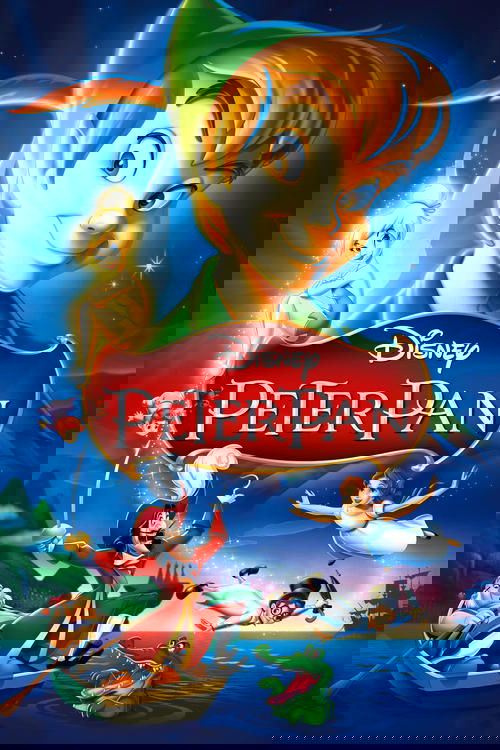
Peter Pan
Leaving the safety of their nursery behind, Wendy, Michael and John follow Peter Pan to a magical world where childhood lasts forever. But while in Neverland, the kids must face Captain Hook and foil his attempts to get rid of Peter for good.
Despite its modest budget of $4.0M, Peter Pan became a massive hit, earning $87.4M worldwide—a remarkable 2085% return. The film's unique voice found its audience, illustrating how strong storytelling can transcend budget limitations.
2 wins & 2 nominations


Plot Structure
Story beats plotted across runtime


Narrative Arc
Emotional journey through the story's key moments
Story Circle
Blueprint 15-beat structure
Arcplot Score Breakdown
Weighted: Precision (70%) + Arc (15%) + Theme (15%)
Peter Pan (1953) exemplifies strategically placed dramatic framework, characteristic of Clyde Geronimi's storytelling approach. This structural analysis examines how the film's 15-point plot structure maps to proven narrative frameworks across 1 hour and 17 minutes. With an Arcplot score of 7.2, the film balances conventional beats with creative variation.
Characters
Cast & narrative archetypes

Peter Pan
Wendy Darling
Captain Hook
Tinker Bell
Mr. Smee
John Darling
Michael Darling
George Darling
Main Cast & Characters
Peter Pan
Played by Bobby Driscoll
The eternally youthful boy who refuses to grow up, leading the Darling children to Neverland for adventures while battling Captain Hook.
Wendy Darling
Played by Kathryn Beaumont
The eldest Darling child who serves as a mother figure to the Lost Boys and develops feelings for Peter Pan.
Captain Hook
Played by Hans Conried
The villainous pirate captain obsessed with revenge against Peter Pan, who cut off his hand and fed it to a crocodile.
Tinker Bell
Played by Mae Questel
Peter Pan's jealous and fiercely loyal fairy companion who communicates through bell-like sounds and glowing light.
Mr. Smee
Played by Bill Thompson
Captain Hook's bumbling but loyal first mate who often inadvertently undermines his captain's evil plans.
John Darling
Played by Paul Collins
The middle Darling child, an imaginative boy who idolizes pirates and wears a top hat.
Michael Darling
Played by Tommy Luske
The youngest Darling child who carries a teddy bear and eagerly joins the adventures in Neverland.
George Darling
Played by Hans Conried
The strict, practical father of the Darling children who initially dismisses their fantasies about Peter Pan.
Structural Analysis
The Status Quo at 1 minutes (1% through the runtime) establishes The Darling children's nursery in Edwardian London. Wendy tells stories of Peter Pan while her practical father George insists she must grow up and leave the nursery. The children live in imaginative play but face the pressure of impending adulthood.. Significantly, this early placement immediately immerses viewers in the story world.
The inciting incident occurs at 8 minutes when Peter Pan arrives in the nursery searching for his shadow. The legendary boy Wendy has been telling stories about suddenly appears as real, disrupting the boundary between fantasy and reality. The children's ordinary world is invaded by magic.. At 11% through the film, this Disruption aligns precisely with traditional story structure. This beat shifts the emotional landscape, launching the protagonist into the central conflict.
The First Threshold at 17 minutes marks the transition into Act II, occurring at 22% of the runtime. This reveals the protagonist's commitment to The children take flight and soar out the nursery window toward Neverland. Wendy actively chooses to leave ("I'm so glad I came!"), crossing from the mundane world of London into the magical realm. The journey over London and toward the second star to the right marks their commitment., moving from reaction to action.
At 38 minutes, the Midpoint arrives at 49% of the runtime—precisely centered, creating perfect narrative symmetry. Of particular interest, this crucial beat At Skull Rock, Hook captures Tiger Lily and nearly kills Peter Pan. The stakes raise dramatically as Peter faces mortality for the first time. Though Peter wins this battle, Hook vows revenge ("I'll get you for this, Pan, if it's the last thing I do!"). The fun and games turn dangerous; consequences become real., fundamentally raising what's at risk. The emotional intensity shifts, dividing the narrative into clear before-and-after phases.
The Collapse moment at 55 minutes (71% through) represents the emotional nadir. Here, Hook captures Wendy, John, Michael, and the Lost Boys. They are tied up on Hook's ship, walking the plank toward death. Peter Pan is trapped in his hideout with a bomb, apparently killed in the explosion. The whiff of death is literal - both Peter and the children face execution. All hope seems lost., shows the protagonist at their lowest point. This beat's placement in the final quarter sets up the climactic reversal.
The Second Threshold at 59 minutes initiates the final act resolution at 77% of the runtime. Peter Pan arrives to save the children, having learned the value of caring for others through nearly losing Tinker Bell. He combines his magical abilities with new emotional maturity, calling out Hook with "This time you've gone too far!" The final battle begins with Peter fighting not just for fun, but to protect those he cares about., demonstrating the transformation achieved throughout the journey.
Emotional Journey
Peter Pan's emotional architecture traces a deliberate progression across 15 carefully calibrated beats.
Narrative Framework
This structural analysis employs structural analysis methodology used to understand storytelling architecture. By mapping Peter Pan against these established plot points, we can identify how Clyde Geronimi utilizes or subverts traditional narrative conventions. The plot point approach reveals not only adherence to structural principles but also creative choices that distinguish Peter Pan within the animation genre.
Clyde Geronimi's Structural Approach
Among the 5 Clyde Geronimi films analyzed on Arcplot, the average structural score is 6.7, demonstrating varied approaches to story architecture. Peter Pan represents one of the director's most structurally precise works. For comparative analysis, explore the complete Clyde Geronimi filmography.
Comparative Analysis
Additional animation films include The Bad Guys, Puss in Boots and Violet Evergarden: Eternity and the Auto Memory Doll. For more Clyde Geronimi analyses, see Melody Time, Sleeping Beauty and Alice in Wonderland.
Plot Points by Act
Act I
SetupStatus Quo
The Darling children's nursery in Edwardian London. Wendy tells stories of Peter Pan while her practical father George insists she must grow up and leave the nursery. The children live in imaginative play but face the pressure of impending adulthood.
Theme
Mr. Darling scolds Wendy: "It's time to grow up" and announces this is her last night in the nursery. The theme of childhood versus adulthood, responsibility versus freedom, is established through his declaration that she must leave childish things behind.
Worldbuilding
Introduction to the Darling family dynamics, the children's belief in Peter Pan, Nana the dog-nurse, and the parents' preparations for an evening out. George Darling represents the adult world of responsibility; the children represent imagination and belief. Tension between these worlds is established.
Disruption
Peter Pan arrives in the nursery searching for his shadow. The legendary boy Wendy has been telling stories about suddenly appears as real, disrupting the boundary between fantasy and reality. The children's ordinary world is invaded by magic.
Resistance
Peter Pan teaches the children about Neverland and promises to take them there. Wendy hesitates about leaving, Tinker Bell shows jealousy, and Peter must convince them they can fly. He sprinkles pixie dust and teaches them. The children debate this enormous decision to leave home.
Act II
ConfrontationFirst Threshold
The children take flight and soar out the nursery window toward Neverland. Wendy actively chooses to leave ("I'm so glad I came!"), crossing from the mundane world of London into the magical realm. The journey over London and toward the second star to the right marks their commitment.
Mirror World
Arrival at Neverland and introduction to the Lost Boys, who immediately want Wendy to be their mother. This subplot represents the thematic heart: the children playing at adult roles (Wendy as mother, Lost Boys as her children) while avoiding real responsibility. Wendy begins her journey of understanding what "growing up" really means.
Premise
The promise of Neverland delivered: adventures with mermaids at Mermaid Lagoon, encounters with Tiger Lily and the Indians, battles with Captain Hook and the pirates, flying and playing without rules. The children experience the freedom of never growing up. Wendy plays mother to the Lost Boys while enjoying magical adventures.
Midpoint
At Skull Rock, Hook captures Tiger Lily and nearly kills Peter Pan. The stakes raise dramatically as Peter faces mortality for the first time. Though Peter wins this battle, Hook vows revenge ("I'll get you for this, Pan, if it's the last thing I do!"). The fun and games turn dangerous; consequences become real.
Opposition
Tensions escalate on multiple fronts: Tinker Bell's jealousy intensifies, the Lost Boys' desire for a real mother creates conflict, Wendy realizes she misses home and her real parents, and Hook plots his revenge. Wendy announces she's taking her brothers home, forcing Peter to confront potential abandonment. The reality of responsibilities catches up.
Collapse
Hook captures Wendy, John, Michael, and the Lost Boys. They are tied up on Hook's ship, walking the plank toward death. Peter Pan is trapped in his hideout with a bomb, apparently killed in the explosion. The whiff of death is literal - both Peter and the children face execution. All hope seems lost.
Crisis
Tinker Bell sacrifices herself to save Peter from the bomb, nearly dying from the poison. Peter must rally belief in fairies to save her life. This dark moment forces Peter to recognize the value of others and genuine connection. The children face their mortality on the plank while waiting for rescue that may never come.
Act III
ResolutionSecond Threshold
Peter Pan arrives to save the children, having learned the value of caring for others through nearly losing Tinker Bell. He combines his magical abilities with new emotional maturity, calling out Hook with "This time you've gone too far!" The final battle begins with Peter fighting not just for fun, but to protect those he cares about.
Synthesis
Peter defeats Hook in the final confrontation (Hook chased away by the crocodile). The children are freed and Peter agrees to take them home, even offering to take the Lost Boys too. Peter pilots Hook's ship through the sky back to London. The children reunite with their parents just in time, resolving both the adventure and family storylines.
Transformation
Wendy sees Peter Pan's ship sailing past the moon and realizes she's ready to grow up - but on her own terms, keeping the spirit of imagination alive. Mr. Darling looks at the ship and remembers seeing it as a child, suggesting growing up doesn't mean losing wonder. The nursery is no longer a prison but a treasure to be remembered.