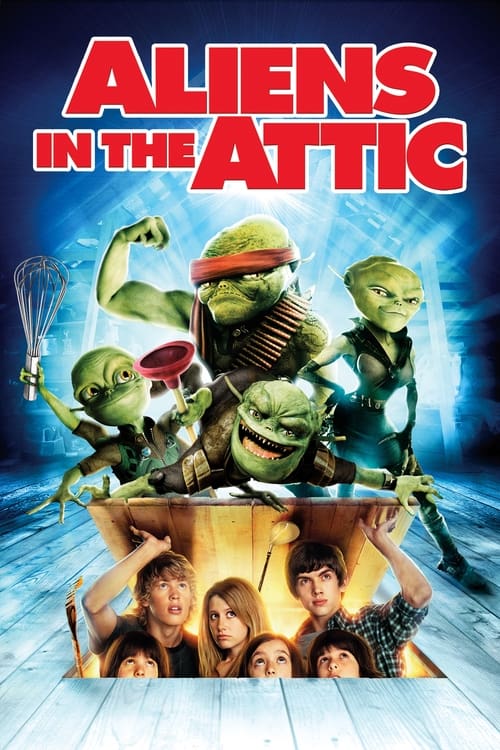
Aliens in the Attic
A group of kids must protect their vacation home from invading aliens.
Working with a respectable budget of $45.0M, the film achieved a modest success with $57.9M in global revenue (+29% profit margin).


Plot Structure
Story beats plotted across runtime


Narrative Arc
Emotional journey through the story's key moments
Story Circle
Blueprint 15-beat structure
Arcplot Score Breakdown
Weighted: Precision (70%) + Arc (15%) + Theme (15%)
Aliens in the Attic (2009) exhibits carefully calibrated plot construction, characteristic of John Schultz's storytelling approach. This structural analysis examines how the film's 15-point plot structure maps to proven narrative frameworks across 1 hour and 26 minutes. With an Arcplot score of 7.0, the film balances conventional beats with creative variation.
Characters
Cast & narrative archetypes

Tom Pearson
Jake Pearson
Bethany Pearson
Hannah Pearson
Ricky Dillman
Skip
Tazer
Razor
Sparks
Nana Rose
Main Cast & Characters
Tom Pearson
Played by Carter Jenkins
A tech-savvy teenager who must lead his family in defending their vacation home against alien invaders.
Jake Pearson
Played by Austin Butler
Tom's younger brother, a quick-thinking kid who helps fight the aliens using his knowledge of video games.
Bethany Pearson
Played by Ashley Tisdale
The older teenage cousin who initially cares only about her boyfriend but grows to help the family.
Hannah Pearson
Played by Ashley Boettcher
Jake's twin sister, a brave and resourceful girl who takes an active role in fighting the aliens.
Ricky Dillman
Played by Robert Hoffman
Bethany's manipulative boyfriend who gets mind-controlled by the aliens and becomes a puppet antagonist.
Skip
Played by J.K. Simmons
The aggressive and hostile alien commander determined to conquer Earth, serving as the primary antagonist.
Tazer
Played by Thomas Haden Church
Skip's tough and loyal second-in-command alien enforcer who follows orders without question.
Razor
Played by Kari Wahlgren
A female alien warrior who is fierce and skilled in combat, loyal to Skip's mission.
Sparks
Played by Josh Peck
The alien engineer responsible for technical operations and weaponry, intelligent but cowardly.
Nana Rose
Played by Doris Roberts
The tough grandmother who has a military background and becomes a key ally in fighting the aliens.
Structural Analysis
The Status Quo at 1 minutes (1% through the runtime) establishes Tom Pearson is introduced as a smart but underachieving teen who deliberately failed a test to appear cool. His family prepares for a vacation to a remote lake house, establishing Tom's conflict between his intelligence and desire to fit in.. Notably, this early placement immediately immerses viewers in the story world.
The inciting incident occurs at 10 minutes when A small alien spacecraft crashes through the attic of the vacation house. The Zirkonian aliens arrive, immediately disrupting what was supposed to be a peaceful family vacation.. At 12% through the film, this Disruption aligns precisely with traditional story structure. This beat shifts the emotional landscape, launching the protagonist into the central conflict.
The First Threshold at 22 minutes marks the transition into Act II, occurring at 25% of the runtime. This indicates the protagonist's commitment to Tom makes the decision to lead the kids in fighting the aliens themselves, rather than risk the adults being mind-controlled. He actively chooses to embrace his intelligence and take charge of defending the family., moving from reaction to action.
At 43 minutes, the Midpoint arrives at 50% of the runtime—precisely centered, creating perfect narrative symmetry. The analysis reveals that this crucial beat The kids achieve a false victory, seemingly defeating the alien threat and capturing some aliens. Tom feels validated in his leadership role. However, they don't realize the alien commander has called for reinforcements and a larger invasion is coming., fundamentally raising what's at risk. The emotional intensity shifts, dividing the narrative into clear before-and-after phases.
The Collapse moment at 65 minutes (75% through) represents the emotional nadir. Here, The aliens successfully mind-control the parents and seem to have won. Tom's plans fail, and the family appears lost. Sparks, the alien who had been helping them, sacrifices himself. The kids face their darkest moment with all hope seemingly lost., indicates the protagonist at their lowest point. This beat's placement in the final quarter sets up the climactic reversal.
The Second Threshold at 69 minutes initiates the final act resolution at 80% of the runtime. Tom realizes he can use the alien technology against them by reprogramming their devices. He fully embraces his intelligence without shame, synthesizing everything he's learned. The kids unite with a final plan to defeat the invasion., demonstrating the transformation achieved throughout the journey.
Emotional Journey
Aliens in the Attic's emotional architecture traces a deliberate progression across 15 carefully calibrated beats.
Narrative Framework
This structural analysis employs systematic plot point analysis that identifies crucial turning points. By mapping Aliens in the Attic against these established plot points, we can identify how John Schultz utilizes or subverts traditional narrative conventions. The plot point approach reveals not only adherence to structural principles but also creative choices that distinguish Aliens in the Attic within the adventure genre.
John Schultz's Structural Approach
Among the 5 John Schultz films analyzed on Arcplot, the average structural score is 7.3, reflecting strong command of classical structure. Aliens in the Attic takes a more unconventional approach compared to the director's typical style. For comparative analysis, explore the complete John Schultz filmography.
Comparative Analysis
Additional adventure films include The Black Stallion, The Bad Guys and Puss in Boots. For more John Schultz analyses, see Judy Moody and the Not Bummer Summer, Like Mike and Drive Me Crazy.
Plot Points by Act
Act I
SetupStatus Quo
Tom Pearson is introduced as a smart but underachieving teen who deliberately failed a test to appear cool. His family prepares for a vacation to a remote lake house, establishing Tom's conflict between his intelligence and desire to fit in.
Theme
Tom's father Stuart confronts him about deliberately failing his test, telling him that hiding his intelligence is wasting his potential. The theme is stated: being smart isn't something to hide—it's a gift to embrace.
Worldbuilding
The Pearson family dynamics are established: Tom hiding his smarts, older sister Bethany obsessed with her boyfriend Ricky, younger cousins Jake and Hannah, and the extended family gathering at the vacation house. The remote lake setting is introduced.
Disruption
A small alien spacecraft crashes through the attic of the vacation house. The Zirkonian aliens arrive, immediately disrupting what was supposed to be a peaceful family vacation.
Resistance
Tom and the kids discover the aliens in the attic. They learn the aliens have mind-control devices that work on adults but not children. The kids debate whether to tell the adults or handle it themselves, while discovering the aliens' plan to conquer Earth.
Act II
ConfrontationFirst Threshold
Tom makes the decision to lead the kids in fighting the aliens themselves, rather than risk the adults being mind-controlled. He actively chooses to embrace his intelligence and take charge of defending the family.
Mirror World
Bethany is forced to join the fight when her boyfriend Ricky gets mind-controlled by the aliens. She must put aside her superficial concerns and work alongside her younger siblings, representing the thematic subplot of family unity.
Premise
The kids wage guerrilla warfare against the tiny aliens using household items as weapons. Tom uses his technical genius to create gadgets. They use the mind-control device on Ricky to fight the aliens. Comedic battles ensue throughout the house.
Midpoint
The kids achieve a false victory, seemingly defeating the alien threat and capturing some aliens. Tom feels validated in his leadership role. However, they don't realize the alien commander has called for reinforcements and a larger invasion is coming.
Opposition
The aliens regroup and intensify their attack. They manage to mind-control more adults. The alien leader Tazer reveals their full plan to use Earth's resources. Internal conflicts emerge as the kids struggle to maintain their defense and keep the adults safe.
Collapse
The aliens successfully mind-control the parents and seem to have won. Tom's plans fail, and the family appears lost. Sparks, the alien who had been helping them, sacrifices himself. The kids face their darkest moment with all hope seemingly lost.
Crisis
The kids hide and regroup, devastated by their failure. Tom doubts himself and his ability to lead. Bethany confronts Tom, reminding him of his intelligence and capabilities. The siblings must process their loss before finding new resolve.
Act III
ResolutionSecond Threshold
Tom realizes he can use the alien technology against them by reprogramming their devices. He fully embraces his intelligence without shame, synthesizing everything he's learned. The kids unite with a final plan to defeat the invasion.
Synthesis
Tom leads the final assault using his technical skills to turn the aliens' technology against them. Bethany fights alongside her siblings. The family works together to free the mind-controlled adults and defeat the alien commander. The invasion is stopped.
Transformation
Tom is celebrated by his family for his intelligence and bravery. He no longer hides who he is. The family is closer than ever. Bethany has grown beyond her superficial concerns. The Pearsons are transformed—united and appreciating each other's strengths.