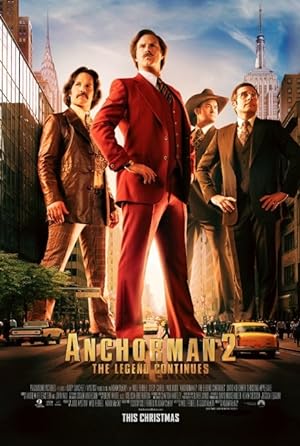
Anchorman 2: The Legend Continues
Having left San Diego for New York City, Ron Burgundy is living the high life with his wife Veronica Corningstone and son Walter Burgundy. However, when the boss decides to promote Veronica to full time lead anchor and fire Ron, everything changes. Now heading back to San Diego, Ron is washed up and working part time at Sea World. His shot at redemption though comes in the form of a man named Freddie Schapp, who's an executive producer at the Global News Network, the world's first 24 hour round the clock news channel. He hires Ron, who proceeds to reunite the news team of Champ, Brick, and Brian, and head back to New York City. While there Ron and his news team are given the graveyard shift and a challenge. Ron comes up with a radical new idea to transform the news and that puts him at the top of the game once again. But how long will Ron's newfound fame last? And will Brick finally find true love?
Despite a mid-range budget of $50.0M, Anchorman 2: The Legend Continues became a solid performer, earning $173.7M worldwide—a 247% return.
1 win & 23 nominations


Plot Structure
Story beats plotted across runtime


Narrative Arc
Emotional journey through the story's key moments
Story Circle
Blueprint 15-beat structure
Arcplot Score Breakdown
Weighted: Precision (70%) + Arc (15%) + Theme (15%)
Anchorman 2: The Legend Continues (2013) reveals precise story structure, characteristic of Adam McKay's storytelling approach. This structural analysis examines how the film's 15-point plot structure maps to proven narrative frameworks across 1 hour and 59 minutes. With an Arcplot score of 7.3, the film balances conventional beats with creative variation.
Characters
Cast & narrative archetypes

Ron Burgundy
Veronica Corningstone
Brian Fantana
Champ Kind
Brick Tamland
Linda Jackson
Jack Lime
Chani Lastnamé
Main Cast & Characters
Ron Burgundy
Played by Will Ferrell
San Diego's top-rated anchorman who transitions to 24-hour cable news in New York, struggling with ego and evolving journalistic standards.
Veronica Corningstone
Played by Christina Applegate
Ron's ambitious wife and co-anchor who prioritizes her career advancement, creating tension in their relationship.
Brian Fantana
Played by Paul Rudd
Ron's loyal field reporter and ladies man, fiercely devoted to the news team despite questionable judgment.
Champ Kind
Played by David Koechner
The sports reporter with aggressive masculine energy and unwavering loyalty to Ron and the team.
Brick Tamland
Played by Steve Carell
The mentally challenged yet sweet weatherman who finds unexpected romance while maintaining child-like innocence.
Linda Jackson
Played by Meagan Good
The African American GNN executive producer who hires Ron's team and becomes romantically involved with him.
Jack Lime
Played by James Marsden
The arrogant primetime anchor at GNN who views Ron as competition and represents establishment news hierarchy.
Chani Lastnamé
Played by Kristen Wiig
Brick's quirky love interest who shares his eccentric worldview and cognitive limitations.
Structural Analysis
The Status Quo at 1 minutes (1% through the runtime) establishes Ron and Veronica co-anchor together in New York, successful and in love. Ron is on top of the world professionally and personally.. The analysis reveals that this early placement immediately immerses viewers in the story world.
The inciting incident occurs at 13 minutes when Ron is fired and Veronica is promoted to anchor. Their relationship falls apart as Ron's ego cannot handle being subordinate to his wife.. At 11% through the film, this Disruption aligns precisely with traditional story structure. This beat shifts the emotional landscape, launching the protagonist into the central conflict.
The First Threshold at 31 minutes marks the transition into Act II, occurring at 26% of the runtime. This reveals the protagonist's commitment to Ron accepts the GNN job and decides to reunite the news team. He actively chooses to return to his old life and pursue this new opportunity., moving from reaction to action.
At 60 minutes, the Midpoint arrives at 50% of the runtime—precisely centered, creating perfect narrative symmetry. Significantly, this crucial beat Ron's ratings soar and he becomes the prime-time anchor, achieving massive success. False victory - he seems to have everything but is losing himself and his values., fundamentally raising what's at risk. The emotional intensity shifts, dividing the narrative into clear before-and-after phases.
The Collapse moment at 88 minutes (74% through) represents the emotional nadir. Here, Ron crashes his car in a drug-fueled haze and goes blind. His son is endangered because of Ron's neglect. Ron loses everything - his vision, his job, his family., demonstrates the protagonist at their lowest point. This beat's placement in the final quarter sets up the climactic reversal.
The Second Threshold at 94 minutes initiates the final act resolution at 79% of the runtime. Veronica finds Ron and tells him their son is in danger. Ron realizes what truly matters - family over fame. He chooses to fight for what's important despite his blindness., demonstrating the transformation achieved throughout the journey.
Emotional Journey
Anchorman 2: The Legend Continues's emotional architecture traces a deliberate progression across 15 carefully calibrated beats.
Narrative Framework
This structural analysis employs systematic plot point analysis that identifies crucial turning points. By mapping Anchorman 2: The Legend Continues against these established plot points, we can identify how Adam McKay utilizes or subverts traditional narrative conventions. The plot point approach reveals not only adherence to structural principles but also creative choices that distinguish Anchorman 2: The Legend Continues within the comedy genre.
Adam McKay's Structural Approach
Among the 7 Adam McKay films analyzed on Arcplot, the average structural score is 7.2, reflecting strong command of classical structure. Anchorman 2: The Legend Continues represents one of the director's most structurally precise works. For comparative analysis, explore the complete Adam McKay filmography.
Comparative Analysis
Additional comedy films include The Bad Guys, Ella Enchanted and The Evening Star. For more Adam McKay analyses, see The Big Short, Vice and Talladega Nights: The Ballad of Ricky Bobby.
Plot Points by Act
Act I
SetupStatus Quo
Ron and Veronica co-anchor together in New York, successful and in love. Ron is on top of the world professionally and personally.
Theme
At the dinner, the network executive tells Ron and Veronica about the importance of evolving with the times, hinting at the theme of adaptation vs. staying true to oneself.
Worldbuilding
Establishment of Ron and Veronica's relationship, their careers, Ron's ego and immaturity, and the 1980s news landscape.
Disruption
Ron is fired and Veronica is promoted to anchor. Their relationship falls apart as Ron's ego cannot handle being subordinate to his wife.
Resistance
Ron spirals into depression, working at SeaWorld. He debates whether to accept the offer from GNN when Freddie Shapp recruits him for the 24-hour news network.
Act II
ConfrontationFirst Threshold
Ron accepts the GNN job and decides to reunite the news team. He actively chooses to return to his old life and pursue this new opportunity.
Mirror World
Ron meets Linda Jackson, the network boss who challenges him and represents a different kind of relationship - one based on equality and mutual respect rather than ego.
Premise
The news team explores 24-hour news, creating sensational content and absurd segments. Ron invents modern cable news tactics, experiencing wild success and excess.
Midpoint
Ron's ratings soar and he becomes the prime-time anchor, achieving massive success. False victory - he seems to have everything but is losing himself and his values.
Opposition
Ron's ego spirals out of control. He alienates the team, loses Linda, and his relationship with his son deteriorates. His success breeds arrogance and isolation.
Collapse
Ron crashes his car in a drug-fueled haze and goes blind. His son is endangered because of Ron's neglect. Ron loses everything - his vision, his job, his family.
Crisis
Ron retreats to a lighthouse, living blind and alone. He confronts his failures as a father, partner, and person. Dark night of despair and self-reflection.
Act III
ResolutionSecond Threshold
Veronica finds Ron and tells him their son is in danger. Ron realizes what truly matters - family over fame. He chooses to fight for what's important despite his blindness.
Synthesis
Ron reunites the team for an epic news battle. He saves his son, his vision miraculously returns, and he exposes the corruption of sensationalist news, choosing integrity over ratings.
Transformation
Ron is shown as a humble bowling alley manager, having chosen family and authenticity over fame. He has transformed from egomaniac to present father and partner.