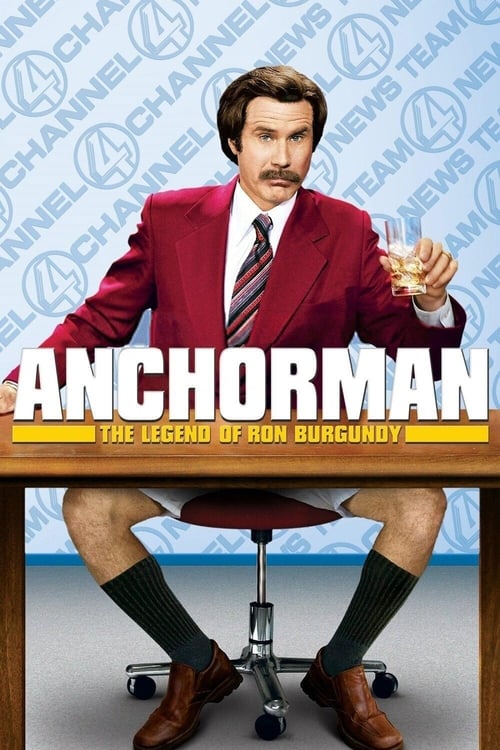
Anchorman: The Legend of Ron Burgundy
It's the 1970s and San Diego anchorman Ron Burgundy is the top dog in local TV, but that's all about to change when ambitious reporter Veronica Corningstone arrives as a new employee at his station.
Despite a mid-range budget of $26.0M, Anchorman: The Legend of Ron Burgundy became a solid performer, earning $90.6M worldwide—a 248% return.
1 win & 13 nominations


Plot Structure
Story beats plotted across runtime


Narrative Arc
Emotional journey through the story's key moments
Story Circle
Blueprint 15-beat structure
Arcplot Score Breakdown
Weighted: Precision (70%) + Arc (15%) + Theme (15%)
Anchorman: The Legend of Ron Burgundy (2004) reveals deliberately positioned narrative architecture, characteristic of Adam McKay's storytelling approach. This structural analysis examines how the film's 15-point plot structure maps to proven narrative frameworks across 1 hour and 35 minutes. With an Arcplot score of 7.4, the film balances conventional beats with creative variation.
Characters
Cast & narrative archetypes

Ron Burgundy
Veronica Corningstone
Brian Fantana
Brick Tamland
Champ Kind
Ed Harken
Main Cast & Characters
Ron Burgundy
Played by Will Ferrell
San Diego's top-rated news anchor in the 1970s, an arrogant and sexist yet charming local celebrity who faces a challenge when a woman enters his male-dominated workplace.
Veronica Corningstone
Played by Christina Applegate
An ambitious and talented reporter who becomes San Diego's first female news anchor, challenging Ron's supremacy and eventually becoming his love interest.
Brian Fantana
Played by Paul Rudd
The Channel 4 News field reporter and Ron's best friend, a sleazy ladies' man who uses cologne and cheesy pickup lines to pursue women.
Brick Tamland
Played by Steve Carell
The Channel 4 News weatherman, a sweet but incredibly dim-witted man-child who makes nonsensical statements and appears mentally challenged.
Champ Kind
Played by David Koechner
The Channel 4 News sports reporter, an aggressive and hypermasculine man who frequently makes bizarre sexual references and harbors deep loyalty to Ron.
Ed Harken
Played by Fred Willard
The news director of Channel 4 News, a weary professional trying to manage his eccentric news team while navigating changing times in broadcast journalism.
Structural Analysis
The Status Quo at 1 minutes (1% through the runtime) establishes Ron Burgundy introduces himself as San Diego's top-rated anchorman in the 1970s. He's the king of local news, beloved, confident, and living his best life with his news team brotherhood.. The analysis reveals that this early placement immediately immerses viewers in the story world.
The inciting incident occurs at 12 minutes when Veronica Corningstone arrives as the new female co-anchor. The network has mandated diversity. Ron's world of male dominance is disrupted by her presence and competence.. At 12% through the film, this Disruption aligns precisely with traditional story structure. This beat shifts the emotional landscape, launching the protagonist into the central conflict.
The First Threshold at 24 minutes marks the transition into Act II, occurring at 26% of the runtime. This reveals the protagonist's commitment to Ron chooses to pursue a relationship with Veronica. They have a successful romantic date and begin a relationship. Ron enters the "new world" of being vulnerable with a woman he respects., moving from reaction to action.
At 48 minutes, the Midpoint arrives at 50% of the runtime—precisely centered, creating perfect narrative symmetry. The analysis reveals that this crucial beat Ron is stuck in a phone booth with Baxter eaten by bears and misses the crucial newscast. Veronica fills in for him and succeeds brilliantly. False defeat: Ron appears finished, but this raises the stakes and reveals his fragility., fundamentally raising what's at risk. The emotional intensity shifts, dividing the narrative into clear before-and-after phases.
The Collapse moment at 72 minutes (76% through) represents the emotional nadir. Here, Ron is fired and falls into disgrace. His news team abandons him, he loses everything he cares about, hits rock bottom drinking heavily and disheveled. His identity as "Ron Burgundy, anchorman" dies., indicates the protagonist at their lowest point. This beat's placement in the final quarter sets up the climactic reversal.
The Second Threshold at 76 minutes initiates the final act resolution at 80% of the runtime. Ron learns that Veronica is in danger at the zoo covering a story. Despite everything, he chooses to help her. This is growth - putting someone else first and seeing her as a person worth saving, not a rival., demonstrating the transformation achieved throughout the journey.
Emotional Journey
Anchorman: The Legend of Ron Burgundy's emotional architecture traces a deliberate progression across 15 carefully calibrated beats.
Narrative Framework
This structural analysis employs systematic plot point analysis that identifies crucial turning points. By mapping Anchorman: The Legend of Ron Burgundy against these established plot points, we can identify how Adam McKay utilizes or subverts traditional narrative conventions. The plot point approach reveals not only adherence to structural principles but also creative choices that distinguish Anchorman: The Legend of Ron Burgundy within the comedy genre.
Adam McKay's Structural Approach
Among the 7 Adam McKay films analyzed on Arcplot, the average structural score is 7.2, reflecting strong command of classical structure. Anchorman: The Legend of Ron Burgundy represents one of the director's most structurally precise works. For comparative analysis, explore the complete Adam McKay filmography.
Comparative Analysis
Additional comedy films include The Bad Guys, Ella Enchanted and The Evening Star. For more Adam McKay analyses, see The Big Short, Vice and Talladega Nights: The Ballad of Ricky Bobby.
Plot Points by Act
Act I
SetupStatus Quo
Ron Burgundy introduces himself as San Diego's top-rated anchorman in the 1970s. He's the king of local news, beloved, confident, and living his best life with his news team brotherhood.
Theme
Ed Harken (the news director) mentions the changing times and hints at network pressure for diversity. The theme: adapting to change vs. clinging to outdated masculine pride.
Worldbuilding
We see Ron's world: the Channel 4 news team (Brian, Champ, Brick), their dominance of San Diego news, Ron's jazz flute hobby, his shallow dating life, and the macho culture of 1970s broadcast journalism.
Disruption
Veronica Corningstone arrives as the new female co-anchor. The network has mandated diversity. Ron's world of male dominance is disrupted by her presence and competence.
Resistance
Ron resists taking Veronica seriously as a journalist. The news team debates how to handle a woman in their ranks. Ron is attracted to her but dismissive of her career ambitions. Initial romantic courtship begins.
Act II
ConfrontationFirst Threshold
Ron chooses to pursue a relationship with Veronica. They have a successful romantic date and begin a relationship. Ron enters the "new world" of being vulnerable with a woman he respects.
Mirror World
Veronica represents the thematic counterpoint - a competent professional who wants equality, not special treatment. Their relationship will teach Ron about respecting women as equals, though he doesn't realize it yet.
Premise
Ron and Veronica's romance blossoms. We get the "fun and games" of 1970s San Diego: the news team's absurd adventures, rivalry with Wes Mantooth, jazz flute, and the comedy premise of Ron's ridiculous machismo.
Midpoint
Ron is stuck in a phone booth with Baxter eaten by bears and misses the crucial newscast. Veronica fills in for him and succeeds brilliantly. False defeat: Ron appears finished, but this raises the stakes and reveals his fragility.
Opposition
Ron's ego can't handle Veronica's success. He lashes out, their relationship crumbles, and his sexism fully emerges. Ed considers making Veronica the sole anchor. Ron sabotages her teleprompter, she says an obscenity on air, and gets fired.
Collapse
Ron is fired and falls into disgrace. His news team abandons him, he loses everything he cares about, hits rock bottom drinking heavily and disheveled. His identity as "Ron Burgundy, anchorman" dies.
Crisis
Ron wallows in despair, having lost his career, his identity, and Veronica. He must sit with the darkness of who he's become and what his pride has cost him.
Act III
ResolutionSecond Threshold
Ron learns that Veronica is in danger at the zoo covering a story. Despite everything, he chooses to help her. This is growth - putting someone else first and seeing her as a person worth saving, not a rival.
Synthesis
Ron rallies the news team for one final mission. They rescue Veronica from the bear pit in an absurd news team brawl. Ron saves her life, demonstrating real heroism beyond his shallow persona. They reconcile.
Transformation
Ron and Veronica co-anchor together as equals. Ron has learned to share the spotlight and respect her as a professional partner. The final image shows them as a team, transformed from the solo king of the opening.