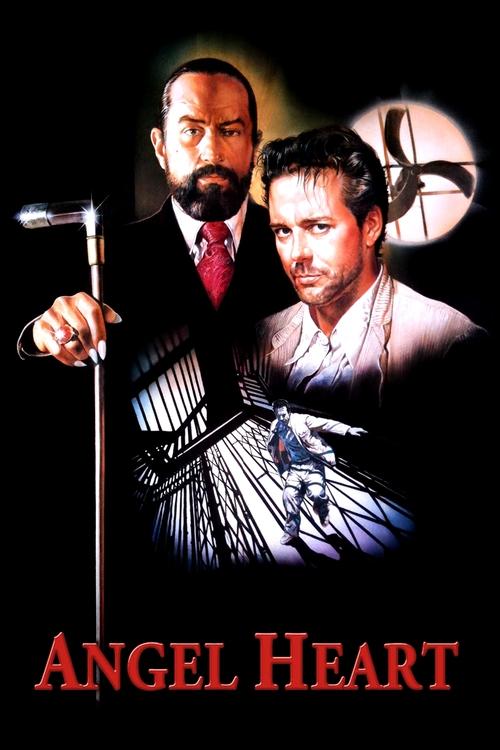
Angel Heart
A down-and-out Brooklyn detective is hired to track down a singer on an odyssey that will take him through the desperate streets of Harlem, the smoke-filled jazz clubs of New Orleans, and the swamps of Louisiana and its seedy underworld of voodoo.
Working with a mid-range budget of $17.0M, the film achieved a respectable showing with $17.2M in global revenue (+1% profit margin).
2 wins & 5 nominations


Plot Structure
Story beats plotted across runtime


Narrative Arc
Emotional journey through the story's key moments
Story Circle
Blueprint 15-beat structure
Arcplot Score Breakdown
Weighted: Precision (70%) + Arc (15%) + Theme (15%)
Angel Heart (1987) showcases carefully calibrated narrative design, characteristic of Alan Parker's storytelling approach. This structural analysis examines how the film's 15-point plot structure maps to proven narrative frameworks across 1 hour and 53 minutes. With an Arcplot score of 6.8, the film balances conventional beats with creative variation.
Characters
Cast & narrative archetypes

Harry Angel

Louis Cyphre

Epiphany Proudfoot

Margaret Krusemark
Main Cast & Characters
Harry Angel
Played by Mickey Rourke
A down-on-his-luck private investigator hired to find a missing person, drawn into a nightmarish descent through New Orleans' occult underworld.
Louis Cyphre
Played by Robert De Niro
A mysterious, wealthy client who hires Harry to locate a missing singer named Johnny Favorite, appearing increasingly sinister as the investigation progresses.
Epiphany Proudfoot
Played by Lisa Bonet
The beautiful daughter of a voodoo priestess who becomes romantically involved with Harry during his investigation.
Margaret Krusemark
Played by Charlotte Rampling
A wealthy woman connected to Johnny Favorite's past who possesses disturbing knowledge about the occult.
Structural Analysis
The Status Quo at 1 minutes (1% through the runtime) establishes Harry Angel walks through the grimy streets of 1955 Brooklyn, a world-weary private investigator scraping by on small cases. The noir cityscape establishes his existence in shadows and moral ambiguity.. Of particular interest, this early placement immediately immerses viewers in the story world.
The inciting incident occurs at 13 minutes when Cyphre reveals that Johnny Favorite sold his soul and then tried to escape the bargain. Harry accepts the case to find Favorite, unknowingly beginning the investigation that will unravel his entire existence.. At 11% through the film, this Disruption aligns precisely with traditional story structure. This beat shifts the emotional landscape, launching the protagonist into the central conflict.
The First Threshold at 26 minutes marks the transition into Act II, occurring at 23% of the runtime. This indicates the protagonist's commitment to Harry discovers Dr. Fowler has been murdered—his heart cut out. The investigation transforms from a missing persons case into something far darker. Harry chooses to continue despite the danger, crossing into a world of occult horror., moving from reaction to action.
At 56 minutes, the Midpoint arrives at 50% of the runtime—precisely centered, creating perfect narrative symmetry. Significantly, this crucial beat Harry witnesses a voodoo ceremony and begins having disturbing visions and blackouts. He discovers that Johnny Favorite performed a ritual to steal another soldier's soul and identity—a false defeat as Harry realizes the darkness runs deeper than a simple missing person., fundamentally raising what's at risk. The emotional intensity shifts, dividing the narrative into clear before-and-after phases.
The Collapse moment at 84 minutes (75% through) represents the emotional nadir. Here, Harry discovers Epiphany's mutilated body in her bed, covered in blood—killed during their lovemaking. He realizes with horror that he killed her during a blackout. The woman who represented his chance at redemption is dead by his own hands., reveals the protagonist at their lowest point. This beat's placement in the final quarter sets up the climactic reversal.
The Second Threshold at 90 minutes initiates the final act resolution at 79% of the runtime. Harry confronts Louis Cyphre in the church for the final revelation. Cyphre reveals the complete truth: Harry Angel IS Johnny Favorite. He murdered a soldier named Harry Angel and consumed his heart to steal his identity and escape his deal with the Devil., demonstrating the transformation achieved throughout the journey.
Emotional Journey
Angel Heart's emotional architecture traces a deliberate progression across 15 carefully calibrated beats.
Narrative Framework
This structural analysis employs a 15-point narrative structure framework that maps key story moments. By mapping Angel Heart against these established plot points, we can identify how Alan Parker utilizes or subverts traditional narrative conventions. The plot point approach reveals not only adherence to structural principles but also creative choices that distinguish Angel Heart within the horror genre.
Alan Parker's Structural Approach
Among the 9 Alan Parker films analyzed on Arcplot, the average structural score is 7.0, reflecting strong command of classical structure. Angel Heart takes a more unconventional approach compared to the director's typical style. For comparative analysis, explore the complete Alan Parker filmography.
Comparative Analysis
Additional horror films include Thinner, A Nightmare on Elm Street and Mary Reilly. For more Alan Parker analyses, see Fame, The Road to Wellville and The Life of David Gale.
Plot Points by Act
Act I
SetupStatus Quo
Harry Angel walks through the grimy streets of 1955 Brooklyn, a world-weary private investigator scraping by on small cases. The noir cityscape establishes his existence in shadows and moral ambiguity.
Theme
Louis Cyphre tells Harry: "The flesh is weak, Johnny. Only the soul is immortal." The theme of inescapable identity and spiritual debt is established—you cannot outrun who you truly are.
Worldbuilding
Harry's ordinary world is established: his cramped Brooklyn office, his working-class existence, and his meeting with the elegant, unsettling Louis Cyphre at a Harlem church. Cyphre hires Harry to find a missing crooner named Johnny Favorite who owes him a debt.
Disruption
Cyphre reveals that Johnny Favorite sold his soul and then tried to escape the bargain. Harry accepts the case to find Favorite, unknowingly beginning the investigation that will unravel his entire existence.
Resistance
Harry investigates Johnny Favorite's past—visiting the hospital where Favorite was supposedly confined after the war, discovering the doctor who treated him. He learns Favorite was involved in the occult and black magic before his apparent mental breakdown.
Act II
ConfrontationFirst Threshold
Harry discovers Dr. Fowler has been murdered—his heart cut out. The investigation transforms from a missing persons case into something far darker. Harry chooses to continue despite the danger, crossing into a world of occult horror.
Mirror World
Harry travels to New Orleans and meets Epiphany Proudfoot, a young voodoo priestess and daughter of a woman connected to Johnny Favorite. She represents innocence, spirituality, and the truth Harry cannot see about himself.
Premise
Harry descends into the steamy, mystical underworld of New Orleans. He investigates voodoo practitioners, blues musicians, and former associates of Johnny Favorite. Each lead brings another corpse—everyone who knew Favorite dies horribly after Harry visits them.
Midpoint
Harry witnesses a voodoo ceremony and begins having disturbing visions and blackouts. He discovers that Johnny Favorite performed a ritual to steal another soldier's soul and identity—a false defeat as Harry realizes the darkness runs deeper than a simple missing person.
Opposition
The bodies pile up and Harry becomes the prime suspect. Detective Sterne closes in on him. Harry's relationship with Epiphany deepens into a passionate affair. He continues uncovering Johnny Favorite's satanic past while his own identity fractures through nightmares and lost time.
Collapse
Harry discovers Epiphany's mutilated body in her bed, covered in blood—killed during their lovemaking. He realizes with horror that he killed her during a blackout. The woman who represented his chance at redemption is dead by his own hands.
Crisis
Harry flees in blood-soaked desperation, his mind shattering. Fragments of memory surface—the ritual, the murder of the real Harry Angel, the theft of his identity. He can no longer deny the terrible truth emerging from his subconscious.
Act III
ResolutionSecond Threshold
Harry confronts Louis Cyphre in the church for the final revelation. Cyphre reveals the complete truth: Harry Angel IS Johnny Favorite. He murdered a soldier named Harry Angel and consumed his heart to steal his identity and escape his deal with the Devil.
Synthesis
The full horror unfolds: Harry/Johnny killed everyone himself during blackouts—including Epiphany, who was his own daughter from his affair with her mother. Every murder was Johnny Favorite eliminating witnesses to his original crime. Cyphre has won; the soul debt cannot be escaped.
Transformation
Harry descends in a caged elevator—a literal descent into Hell. His face transforms momentarily into Johnny Favorite's. "I know who I am," he says. The man who began as a humble detective ends as a damned soul going to collect on his debt to Satan.