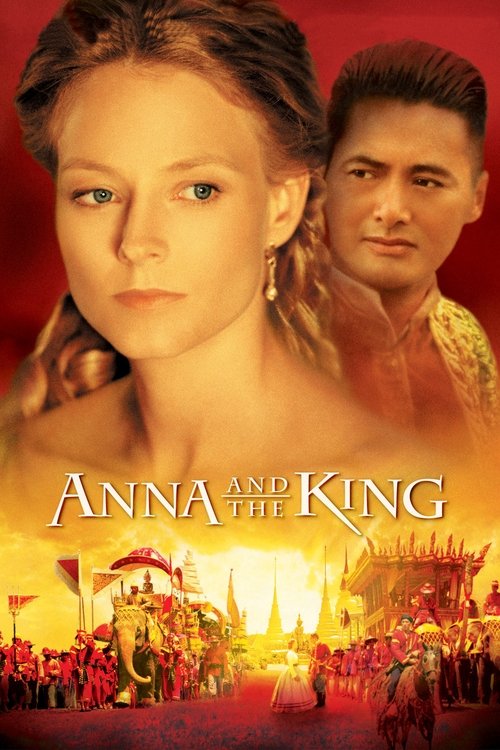
Anna and the King
The story of the romance between the King of Siam (now Thailand) and the widowed British school teacher Anna Leonowens during the 1860s. Anna teaches the children and becomes romanced by the King. She convinces him that a man can be loved by just one woman.
Working with a considerable budget of $75.0M, the film achieved a respectable showing with $114.0M in global revenue (+52% profit margin).
Nominated for 2 Oscars. 14 nominations


Plot Structure
Story beats plotted across runtime


Narrative Arc
Emotional journey through the story's key moments
Story Circle
Blueprint 15-beat structure
Arcplot Score Breakdown
Weighted: Precision (70%) + Arc (15%) + Theme (15%)
Anna and the King (1999) showcases precise narrative architecture, characteristic of Andy Tennant's storytelling approach. This structural analysis examines how the film's 15-point plot structure maps to proven narrative frameworks across 2 hours and 28 minutes. With an Arcplot score of 7.6, the film showcases strong structural fundamentals.
Characters
Cast & narrative archetypes

Anna Leonowens
King Mongkut
Tuptim
Chulalongkorn
Lady Thiang
The Kralahome
Balat
Main Cast & Characters
Anna Leonowens
Played by Jodie Foster
A strong-willed British schoolteacher hired to educate the King of Siam's children, who challenges tradition while respecting the culture.
King Mongkut
Played by Chow Yun-fat
The progressive King of Siam who seeks to modernize his kingdom while preserving its traditions and sovereignty against colonial threats.
Tuptim
Played by Bai Ling
A young woman given as a gift to the King who harbors a forbidden love for another man, representing the clash between duty and desire.
Chulalongkorn
Played by Keith Chin
The King's eldest son and crown prince, who learns from Anna and becomes influenced by Western ideas of governance and justice.
Lady Thiang
Played by Syed Alwi
The King's head wife who acts as a bridge between Anna and the palace, maintaining tradition while supporting gradual change.
The Kralahome
Played by Tom Felton
The King's prime minister and trusted advisor who is initially suspicious of Anna but comes to respect her dedication.
Balat
Played by Sean Ghazi
A Burmese monk and Tuptim's forbidden love interest, whose relationship with her leads to tragic consequences.
Structural Analysis
The Status Quo at 2 minutes (1% through the runtime) establishes Anna Leonowens arrives by ship in 1860s Siam with her son Louis, a confident British widow ready to teach the King's children. She represents Victorian certainty and Western rationalism.. The analysis reveals that this early placement immediately immerses viewers in the story world.
The inciting incident occurs at 18 minutes when The King publicly humiliates Anna during their first official meeting, refusing to honor the house contract and asserting his absolute authority. Anna realizes this will not be a simple teaching assignment - she's entered a battle of wills with an absolute monarch.. At 12% through the film, this Disruption aligns precisely with traditional story structure. This beat shifts the emotional landscape, launching the protagonist into the central conflict.
The First Threshold at 38 minutes marks the transition into Act II, occurring at 26% of the runtime. This demonstrates the protagonist's commitment to Anna chooses to stay in Siam after the King grants her the promised house and she realizes she can make a real difference. She fully commits to her role as teacher and begins to engage with the King as an intellectual equal, entering into genuine cultural exchange., moving from reaction to action.
At 75 minutes, the Midpoint arrives at 50% of the runtime—precisely centered, creating perfect narrative symmetry. Significantly, this crucial beat The grand reception for the British delegation is a triumph. Anna choreographs a Siamese version of "Uncle Tom's Cabin" that impresses the Westerners and shows the King in a progressive light. False victory: it seems cultural synthesis is working, but the stakes are about to rise dramatically., fundamentally raising what's at risk. The emotional intensity shifts, dividing the narrative into clear before-and-after phases.
The Collapse moment at 110 minutes (74% through) represents the emotional nadir. Here, Tuptim is executed despite Anna's pleas for mercy, and Anna's son Louis is nearly killed in the coup attempt. Anna confronts the King about his "barbarity" and he responds by ordering her to leave Siam. The relationship shatters. Death touches everything: literal execution, near-death of her child, death of hope for understanding., demonstrates the protagonist at their lowest point. This beat's placement in the final quarter sets up the climactic reversal.
The Second Threshold at 118 minutes initiates the final act resolution at 80% of the runtime. The King comes to Anna before she leaves and reveals he will abolish the custom of prostration - adopting the reform she advocated. He asks her to stay for the New Year celebration. Both realize they've changed each other irrevocably. Anna chooses to stay and witness the transformation they've created together., demonstrating the transformation achieved throughout the journey.
Emotional Journey
Anna and the King's emotional architecture traces a deliberate progression across 15 carefully calibrated beats.
Narrative Framework
This structural analysis employs systematic plot point analysis that identifies crucial turning points. By mapping Anna and the King against these established plot points, we can identify how Andy Tennant utilizes or subverts traditional narrative conventions. The plot point approach reveals not only adherence to structural principles but also creative choices that distinguish Anna and the King within the drama genre.
Andy Tennant's Structural Approach
Among the 8 Andy Tennant films analyzed on Arcplot, the average structural score is 7.2, reflecting strong command of classical structure. Anna and the King represents one of the director's most structurally precise works. For comparative analysis, explore the complete Andy Tennant filmography.
Comparative Analysis
Additional drama films include After Thomas, South Pacific and Dirty Dancing: Havana Nights. For more Andy Tennant analyses, see Hitch, It Takes Two and Fool's Gold.
Plot Points by Act
Act I
SetupStatus Quo
Anna Leonowens arrives by ship in 1860s Siam with her son Louis, a confident British widow ready to teach the King's children. She represents Victorian certainty and Western rationalism.
Theme
The Kralahome (Prime Minister) warns Anna: "You will need to learn compromise. In Siam, we do not fight change - we navigate it." This establishes the central theme of cultural bridge-building versus rigid certainty.
Worldbuilding
Anna settles into the royal palace, meets King Mongkut and his many wives and children. We learn the King is modernizing Siam to resist European colonization. Anna expects her own house per contract but is placed in the palace. Cultural clashes begin immediately.
Disruption
The King publicly humiliates Anna during their first official meeting, refusing to honor the house contract and asserting his absolute authority. Anna realizes this will not be a simple teaching assignment - she's entered a battle of wills with an absolute monarch.
Resistance
Anna debates whether to stay or leave. Lady Thiang (head wife) becomes a guide figure, helping Anna understand Siamese culture and the King's perspective. Anna begins teaching the royal children, slowly earning their trust and the King's grudging respect despite ongoing conflicts.
Act II
ConfrontationFirst Threshold
Anna chooses to stay in Siam after the King grants her the promised house and she realizes she can make a real difference. She fully commits to her role as teacher and begins to engage with the King as an intellectual equal, entering into genuine cultural exchange.
Mirror World
Anna and the King share their first genuine moment of connection during a conversation about leadership and loneliness. This relationship will carry the thematic weight - two strong-willed people from different worlds learning from each other.
Premise
The "fun and games" of cultural exchange. Anna teaches Western science and geography to fascinated students. She and the King engage in spirited debates about governance, religion, and human rights. Romance subtly develops. Anna helps prepare for the British diplomatic visit. The promise of the premise: East meets West.
Midpoint
The grand reception for the British delegation is a triumph. Anna choreographs a Siamese version of "Uncle Tom's Cabin" that impresses the Westerners and shows the King in a progressive light. False victory: it seems cultural synthesis is working, but the stakes are about to rise dramatically.
Opposition
Political intrigue intensifies. Tuptim (a concubine) and her lover Balat are caught trying to escape, creating a crisis of law versus mercy. The Kralahome plots a coup against the King. Anna and the King's mutual feelings deepen but cultural and political barriers close in. Everything gets harder as old Siam resists change.
Collapse
Tuptim is executed despite Anna's pleas for mercy, and Anna's son Louis is nearly killed in the coup attempt. Anna confronts the King about his "barbarity" and he responds by ordering her to leave Siam. The relationship shatters. Death touches everything: literal execution, near-death of her child, death of hope for understanding.
Crisis
Anna prepares to depart in despair. She and the King process their losses separately - he in meditation, she in packing. Both realize what they're losing but pride and cultural divides seem insurmountable. The dark night of mutual misunderstanding.
Act III
ResolutionSecond Threshold
The King comes to Anna before she leaves and reveals he will abolish the custom of prostration - adopting the reform she advocated. He asks her to stay for the New Year celebration. Both realize they've changed each other irrevocably. Anna chooses to stay and witness the transformation they've created together.
Synthesis
The finale: Anna and the King share a dance at the New Year celebration, a symbolic union of East and West. She helps him navigate the continued political pressures. They acknowledge their love but also that she must eventually return to England. The relationship culminates in mature acceptance rather than possession.
Transformation
Anna departs Siam transformed - no longer the rigid Victorian schoolteacher but someone who understands cultural humility and complexity. The King stands watching, himself changed into a more progressive monarch. The final image mirrors the opening arrival but shows mutual growth and enduring connection across cultures.