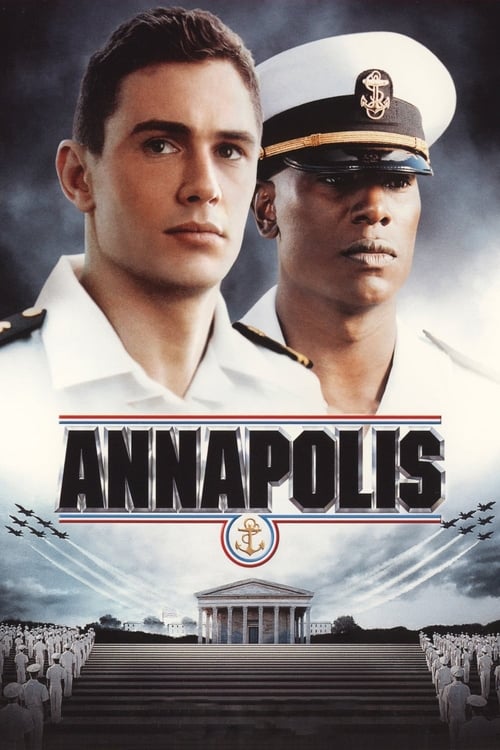
Annapolis
Jake Huard, from a shipbuilders family, promised his dying mother he'ld make it to Anapolis Naval Academy. Thanks to tenaciously bugging a Congressman, he's selected despite dubious grades. Once inside, Jake soon proves sub-standard academically. Constantly challenged to his limits, repeatedly made the 'over-cocky' reason for the entire class to suffer, Jake nearly quits, but after facing his utterly un-supportive father's gloating returns just in time. Stubborn Jake finds support withs mates as well as Senor Ali, his lover-to-be, and a discipline he may excel in: the 'brigade' boxing tournament, open to all ranks.
The film underperformed commercially against its moderate budget of $26.0M, earning $17.5M globally (-33% loss). While initial box office returns were modest, the film has gained appreciation for its fresh perspective within the drama genre.


Plot Structure
Story beats plotted across runtime


Narrative Arc
Emotional journey through the story's key moments
Story Circle
Blueprint 15-beat structure
Arcplot Score Breakdown
Weighted: Precision (70%) + Arc (15%) + Theme (15%)
Annapolis (2006) reveals strategically placed story structure, characteristic of Justin Lin's storytelling approach. This structural analysis examines how the film's 15-point plot structure maps to proven narrative frameworks across 1 hour and 48 minutes. With an Arcplot score of 7.5, the film showcases strong structural fundamentals.
Characters
Cast & narrative archetypes

Jake Huard
Lt. Cole
Ali
Nance
Loo
Twins
Main Cast & Characters
Jake Huard
Played by James Franco
A working-class shipyard worker who fights to prove himself at the Naval Academy despite lacking the pedigree of his classmates.
Lt. Cole
Played by Tyrese Gibson
A hardened Marine drill instructor and boxing champion who becomes Jake's ruthless antagonist and eventual mentor through brutal training.
Ali
Played by Jordana Brewster
A talented female midshipman and Jake's romantic interest who challenges him intellectually and emotionally while pursuing her own naval career.
Nance
Played by Vicellous Shannon
Jake's African-American roommate and loyal friend who provides comic relief while navigating his own struggles at the Academy.
Loo
Played by Roger Fan
An international midshipman and Jake's other roommate who offers a different cultural perspective and becomes part of their tight-knit group.
Twins
Played by Donnie Wahlberg
A legacy midshipman from a prestigious military family who represents the privileged class Jake must compete against.
Structural Analysis
The Status Quo at 1 minutes (1% through the runtime) establishes Jake Huard works as a riveter in the shipyard, building naval vessels but not serving on them. His blue-collar world is established: hardworking, dreaming of something more, building ships for others to command.. Structural examination shows that this early placement immediately immerses viewers in the story world.
The inciting incident occurs at 12 minutes when Jake receives his acceptance to the Naval Academy. This external event disrupts his status quo - he can no longer stay in the safe world of the shipyard. His dream has become real, demanding action.. At 11% through the film, this Disruption aligns precisely with traditional story structure. This beat shifts the emotional landscape, launching the protagonist into the central conflict.
The First Threshold at 26 minutes marks the transition into Act II, occurring at 24% of the runtime. This reveals the protagonist's commitment to Jake actively chooses to stay at Annapolis despite the opportunity to quit during the brutal first confrontation with Cole. When given the chance to ring out (quit), Jake refuses. He commits to the Academy world, entering Act 2., moving from reaction to action.
At 54 minutes, the Midpoint arrives at 50% of the runtime—precisely centered, creating perfect narrative symmetry. Significantly, this crucial beat False defeat: Jake is on the verge of academic failure and faces a major disciplinary board. Cole intensifies pressure to make Jake quit. The stakes raise dramatically - Jake realizes he might not make it. The fun and games are over; survival is now in question., fundamentally raising what's at risk. The emotional intensity shifts, dividing the narrative into clear before-and-after phases.
The Collapse moment at 79 minutes (73% through) represents the emotional nadir. Here, Jake is told he will be expelled from the Academy for academic failure and disciplinary violations. His dream dies. This is the "whiff of death" - not literal, but the death of his identity as a midshipman and his chance to prove himself. He prepares to leave in disgrace., illustrates the protagonist at their lowest point. This beat's placement in the final quarter sets up the climactic reversal.
The Second Threshold at 86 minutes initiates the final act resolution at 80% of the runtime. Synthesis moment: Jake receives a reprieve - he can stay if he wins his final boxing match against Cole in the Brigades. He realizes this isn't about beating Cole or proving others wrong; it's about proving something to himself. He combines his working-class toughness with Academy discipline. New clarity enables the final push., demonstrating the transformation achieved throughout the journey.
Emotional Journey
Annapolis's emotional architecture traces a deliberate progression across 15 carefully calibrated beats.
Narrative Framework
This structural analysis employs structural analysis methodology used to understand storytelling architecture. By mapping Annapolis against these established plot points, we can identify how Justin Lin utilizes or subverts traditional narrative conventions. The plot point approach reveals not only adherence to structural principles but also creative choices that distinguish Annapolis within the drama genre.
Justin Lin's Structural Approach
Among the 6 Justin Lin films analyzed on Arcplot, the average structural score is 7.2, reflecting strong command of classical structure. Annapolis represents one of the director's most structurally precise works. For comparative analysis, explore the complete Justin Lin filmography.
Comparative Analysis
Additional drama films include After Thomas, South Pacific and Dirty Dancing: Havana Nights. For more Justin Lin analyses, see Fast Five, F9 and The Fast and the Furious: Tokyo Drift.
Plot Points by Act
Act I
SetupStatus Quo
Jake Huard works as a riveter in the shipyard, building naval vessels but not serving on them. His blue-collar world is established: hardworking, dreaming of something more, building ships for others to command.
Theme
Jake's friend tells him "You're never gonna be good enough for them" regarding the Naval Academy. This states the central theme: proving your worth despite others' doubts, and the question of whether merit comes from background or character.
Worldbuilding
Jake's life in the shipyard is explored. His strained relationship with his father (a Navy veteran who never made officer). His dream of attending Annapolis. The arrival of his unexpected acceptance letter. The world of working-class aspiration versus military tradition is established.
Disruption
Jake receives his acceptance to the Naval Academy. This external event disrupts his status quo - he can no longer stay in the safe world of the shipyard. His dream has become real, demanding action.
Resistance
Jake debates whether he belongs at Annapolis. His father is unsupportive. He prepares to leave. He arrives at the Academy and faces immediate culture shock during induction. He meets his company officer, Lt. Cole, who is immediately antagonistic. Jake resists the regimentation and questions if he made the right choice.
Act II
ConfrontationFirst Threshold
Jake actively chooses to stay at Annapolis despite the opportunity to quit during the brutal first confrontation with Cole. When given the chance to ring out (quit), Jake refuses. He commits to the Academy world, entering Act 2.
Mirror World
Jake meets Ali (Jordana Brewster), a boxing trainer and midshipman. She represents the thematic counterpoint - someone who belongs in this world but recognizes Jake's potential. Their relationship subplot begins, exploring themes of respect, earning your place, and seeing beyond background.
Premise
The "promise of the premise" - Jake trains for the Brigade Boxing Championships while struggling with academics and military discipline. He explores the Naval Academy world: boxing training, classes, company competitions, relationships with roommates. The fun of watching an underdog train and compete, though he faces constant challenges from Cole.
Midpoint
False defeat: Jake is on the verge of academic failure and faces a major disciplinary board. Cole intensifies pressure to make Jake quit. The stakes raise dramatically - Jake realizes he might not make it. The fun and games are over; survival is now in question.
Opposition
Everything gets harder. Jake's academic probation threatens his boxing. Cole increases harassment. Jake's roommates distance themselves. His relationship with Ali becomes strained. The antagonistic forces close in from all sides - institutional, personal, and internal doubt.
Collapse
Jake is told he will be expelled from the Academy for academic failure and disciplinary violations. His dream dies. This is the "whiff of death" - not literal, but the death of his identity as a midshipman and his chance to prove himself. He prepares to leave in disgrace.
Crisis
Jake's dark night. He processes the loss, confronts his father, and faces the reality that he may not belong. He sits with his failure. The emotional low point where he must decide who he really is beyond the uniform.
Act III
ResolutionSecond Threshold
Synthesis moment: Jake receives a reprieve - he can stay if he wins his final boxing match against Cole in the Brigades. He realizes this isn't about beating Cole or proving others wrong; it's about proving something to himself. He combines his working-class toughness with Academy discipline. New clarity enables the final push.
Synthesis
The finale: Jake prepares for and fights Cole in the Brigade Championship. The bout is brutal and Jake is overmatched, but he refuses to quit. He executes his plan, drawing on everything he's learned. Though he loses the fight on points, his performance earns respect - he proves his character. The resolution of his academic status and his place at the Academy.
Transformation
Final image: Jake in his midshipman uniform, standing with his company, accepted by his peers and superiors. Where the opening showed him building ships from the outside, the closing shows him as part of the Navy from within. He has earned his place not through background but through perseverance and character. Transformation complete.