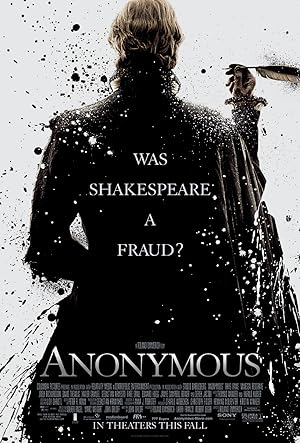
Anonymous
Edward De Vere, Earl of Oxford, is presented as the real author of Shakespeare's works. Edward's life is followed through flashbacks from a young child, through to the end of his life. He is portrayed as a child prodigy who writes and performs A Midsummer Night's Dream for a young Elizabeth I. A series of events sees his plays being performed by a frontman, Shakespeare.
The film underperformed commercially against its moderate budget of $30.0M, earning $15.4M globally (-49% loss). While initial box office returns were modest, the film has gained appreciation for its distinctive approach within the drama genre.
Nominated for 1 Oscar. 7 wins & 12 nominations


Plot Structure
Story beats plotted across runtime


Narrative Arc
Emotional journey through the story's key moments
Story Circle
Blueprint 15-beat structure
Arcplot Score Breakdown
Weighted: Precision (70%) + Arc (15%) + Theme (15%)
Anonymous (2011) reveals carefully calibrated story structure, characteristic of Roland Emmerich's storytelling approach. This structural analysis examines how the film's 15-point plot structure maps to proven narrative frameworks across 2 hours and 10 minutes. With an Arcplot score of 7.0, the film balances conventional beats with creative variation.
Characters
Cast & narrative archetypes

Edward de Vere, 17th Earl of Oxford
Ben Jonson
William Shakespeare
Queen Elizabeth I
Young Queen Elizabeth I
Robert Cecil
William Cecil
Henry Wriothesley, 3rd Earl of Southampton
Anne de Vere
Main Cast & Characters
Edward de Vere, 17th Earl of Oxford
Played by Rhys Ifans
Brilliant nobleman and true author of Shakespeare's works, torn between duty and artistic legacy.
Ben Jonson
Played by Sebastian Armesto
Playwright who becomes reluctant guardian of Oxford's secret authorship.
William Shakespeare
Played by Rafe Spall
Opportunistic actor who takes credit for Oxford's plays.
Queen Elizabeth I
Played by Vanessa Redgrave
Aging monarch with hidden past connections to Oxford.
Young Queen Elizabeth I
Played by Joely Richardson
The young queen in her passionate affair with Oxford.
Robert Cecil
Played by Edward Hogg
Machiavellian advisor plotting to control succession and destroy Oxford.
William Cecil
Played by David Thewlis
Master manipulator and father of Robert, who shapes Oxford's tragic fate.
Henry Wriothesley, 3rd Earl of Southampton
Played by Xavier Samuel
Oxford's secret son and patron of the arts, unaware of his true parentage.
Anne de Vere
Played by Helen Baxendale
Oxford's wife, daughter of William Cecil, trapped in arranged marriage.
Structural Analysis
The Status Quo at 2 minutes (2% through the runtime) establishes Modern theater prologue establishes the authorship question, then dissolves to Elizabethan England. Edward de Vere watches a performance, established as cultured nobleman unable to publicly claim artistic identity.. Notably, this early placement immediately immerses viewers in the story world.
The inciting incident occurs at 16 minutes when De Vere's anonymous play is performed to wild public acclaim. The audience's rapturous response shows him the power his words could have, disrupting his acceptance of silent anonymity.. At 12% through the film, this Disruption aligns precisely with traditional story structure. This beat shifts the emotional landscape, launching the protagonist into the central conflict.
The First Threshold at 33 minutes marks the transition into Act II, occurring at 26% of the runtime. This illustrates the protagonist's commitment to De Vere actively chooses to continue providing plays through Shakespeare, accepting the Faustian bargain. He commits to using theater as political weapon despite the risks and the pain of denied authorship., moving from reaction to action.
At 65 minutes, the Midpoint arrives at 50% of the runtime—precisely centered, creating perfect narrative symmetry. Structural examination shows that this crucial beat False defeat: The performance of Richard II incites the Essex rebellion prematurely. Cecil moves against the theaters and conspirators. What seemed like de Vere's political masterstroke becomes a catastrophic miscalculation. Stakes raise enormously., fundamentally raising what's at risk. The emotional intensity shifts, dividing the narrative into clear before-and-after phases.
The Collapse moment at 98 minutes (75% through) represents the emotional nadir. Here, De Vere confronts the full horror: his son/brother Southampton is imprisoned and may be executed, his political cause is destroyed, and the truth of his incestuous bloodline is revealed. All is lost—personally, politically, artistically., reveals the protagonist at their lowest point. This beat's placement in the final quarter sets up the climactic reversal.
The Second Threshold at 104 minutes initiates the final act resolution at 80% of the runtime. De Vere realizes his plays are his immortality. He chooses to secure their survival over claiming authorship, accepting the bargain. Elizabeth spares Southampton. De Vere synthesizes that the work matters more than the name., demonstrating the transformation achieved throughout the journey.
Emotional Journey
Anonymous's emotional architecture traces a deliberate progression across 15 carefully calibrated beats.
Narrative Framework
This structural analysis employs a 15-point narrative structure framework that maps key story moments. By mapping Anonymous against these established plot points, we can identify how Roland Emmerich utilizes or subverts traditional narrative conventions. The plot point approach reveals not only adherence to structural principles but also creative choices that distinguish Anonymous within the drama genre.
Roland Emmerich's Structural Approach
Among the 12 Roland Emmerich films analyzed on Arcplot, the average structural score is 7.0, demonstrating varied approaches to story architecture. Anonymous represents one of the director's most structurally precise works. For comparative analysis, explore the complete Roland Emmerich filmography.
Comparative Analysis
Additional drama films include After Thomas, South Pacific and Dirty Dancing: Havana Nights. For more Roland Emmerich analyses, see The Day After Tomorrow, White House Down and 10,000 BC.
Plot Points by Act
Act I
SetupStatus Quo
Modern theater prologue establishes the authorship question, then dissolves to Elizabethan England. Edward de Vere watches a performance, established as cultured nobleman unable to publicly claim artistic identity.
Theme
William Cecil warns that "all art is political" and theater is dangerous sedition. This states the film's central theme: the power of words and authorship to shape political reality.
Worldbuilding
Establishing the world of Elizabethan court intrigue, the succession crisis, Cecil's political machinations, de Vere's secret writing, and the thriving but dangerous theater world. Introduction of Ben Jonson and the acting companies.
Disruption
De Vere's anonymous play is performed to wild public acclaim. The audience's rapturous response shows him the power his words could have, disrupting his acceptance of silent anonymity.
Resistance
De Vere approaches Ben Jonson to be his front, but Shakespeare takes credit instead. De Vere debates whether to continue this dangerous arrangement. Flashbacks reveal his past relationship with Queen Elizabeth and his thwarted artistic ambitions.
Act II
ConfrontationFirst Threshold
De Vere actively chooses to continue providing plays through Shakespeare, accepting the Faustian bargain. He commits to using theater as political weapon despite the risks and the pain of denied authorship.
Mirror World
Deep flashback to young Edward's relationship with Queen Elizabeth, revealing their love affair. This subplot carries the theme of forbidden identity and the cost of political necessity over personal truth.
Premise
The "fun and games" of political intrigue through theater. De Vere's plays influence public opinion, the Essex rebellion is fomented, Shakespeare grows famous and insufferable, and the layers of conspiracy deepen with revelations about succession.
Midpoint
False defeat: The performance of Richard II incites the Essex rebellion prematurely. Cecil moves against the theaters and conspirators. What seemed like de Vere's political masterstroke becomes a catastrophic miscalculation. Stakes raise enormously.
Opposition
Cecil tightens his grip, Essex is executed, the succession plot unravels. De Vere's son is revealed to be his brother (both fathered with Elizabeth). Political and personal walls close in. The cost of de Vere's choices mounts catastrophically.
Collapse
De Vere confronts the full horror: his son/brother Southampton is imprisoned and may be executed, his political cause is destroyed, and the truth of his incestuous bloodline is revealed. All is lost—personally, politically, artistically.
Crisis
De Vere in darkness, processing total defeat. Elizabeth dying, his legacy erased, his son imprisoned, his authorship forever hidden. He contemplates the meaning of his artistic legacy versus political failure.
Act III
ResolutionSecond Threshold
De Vere realizes his plays are his immortality. He chooses to secure their survival over claiming authorship, accepting the bargain. Elizabeth spares Southampton. De Vere synthesizes that the work matters more than the name.
Synthesis
Resolution of all threads: De Vere ensures his plays will survive through Shakespeare's name, Southampton is spared, James succeeds to throne, Cecil wins politically but the plays endure. De Vere dies knowing his words will outlive the politics.
Transformation
Return to modern theater where the authorship question continues. The plays endure regardless of who wrote them. Mirrors opening image but transforms it: the mystery itself has become the immortality. Art transcends authorship.