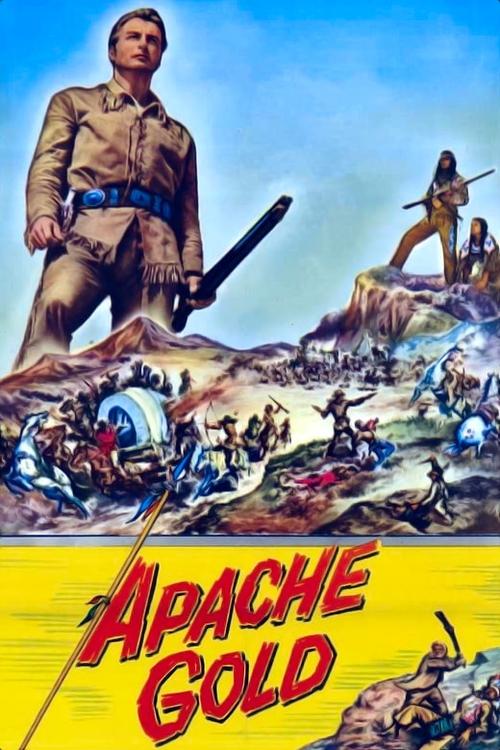
Apache Gold
The construction of the Great Western Railroad creates heavy conflict between the railway company and neighboring Indian tribes. Worse, criminal gang leader Santer sets his eyes on a gold mine located on holy Indian land and influences the construction supervisor to re-rout the planned railroad straight through Apache land. Old Shatterhand, who works as a measurement technician, discovers the evil plan and searches contact with the Apaches in an effort to avert war.
Despite its small-scale budget of $2.1M, Apache Gold became a massive hit, earning $36.7M worldwide—a remarkable 1648% return. The film's fresh perspective connected with viewers, illustrating how strong storytelling can transcend budget limitations.


Plot Structure
Story beats plotted across runtime


Narrative Arc
Emotional journey through the story's key moments
Story Circle
Blueprint 15-beat structure
Arcplot Score Breakdown
Weighted: Precision (70%) + Arc (15%) + Theme (15%)
Apache Gold (1963) exhibits carefully calibrated dramatic framework, characteristic of Harald Reinl's storytelling approach. This structural analysis examines how the film's 15-point plot structure maps to proven narrative frameworks across 1 hour and 41 minutes. With an Arcplot score of 7.3, the film balances conventional beats with creative variation.
Characters
Cast & narrative archetypes

Old Shatterhand
Winnetou
Santer
Sam Hawkens
Intschu-Tschuna
Nscho-Tschi
Main Cast & Characters
Old Shatterhand
Played by Lex Barker
A German frontiersman and adventurer who befriends Winnetou and helps defend Apache territory against gold-hungry villains.
Winnetou
Played by Pierre Brice
Noble Apache chief who forms a blood brotherhood with Old Shatterhand to protect his people from exploitation.
Santer
Played by Mario Adorf
Ruthless villain who massacres Winnetou's family and seeks Apache gold, serving as the primary antagonist.
Sam Hawkens
Played by Ralf Wolter
Grizzled old scout and trapper who provides comic relief while assisting Old Shatterhand on his adventures.
Intschu-Tschuna
Played by Mario Girotti
Winnetou's father and Apache chief who is killed by Santer's gang during the gold rush conflict.
Nscho-Tschi
Played by Marie Versini
Winnetou's sister who develops romantic feelings for Old Shatterhand before being tragically killed.
Structural Analysis
The Status Quo at 1 minutes (1% through the runtime) establishes Young surveyor Old Shatterhand arrives in the American West to work on the railroad, naive to the conflicts between settlers and Apache tribes.. The analysis reveals that this early placement immediately immerses viewers in the story world.
The inciting incident occurs at 12 minutes when Santer's gang massacres Apache warriors and steals their horses, framing the railroad surveyors. The Apaches capture Old Shatterhand and his companions, threatening war.. At 12% through the film, this Disruption aligns precisely with traditional story structure. This beat shifts the emotional landscape, launching the protagonist into the central conflict.
The First Threshold at 26 minutes marks the transition into Act II, occurring at 25% of the runtime. This illustrates the protagonist's commitment to Old Shatterhand defeats the Apache warrior Winnetou in ritual combat, earning respect. He chooses to join forces with the Apache to find the real culprits rather than escape, cementing his commitment to justice and friendship., moving from reaction to action.
At 51 minutes, the Midpoint arrives at 51% of the runtime—precisely centered, creating perfect narrative symmetry. Significantly, this crucial beat The heroes locate Santer's hideout and recover evidence of his crimes. A false victory—they believe they can bring him to justice and prevent war, but Santer is more dangerous than they realized., fundamentally raising what's at risk. The emotional intensity shifts, dividing the narrative into clear before-and-after phases.
The Collapse moment at 76 minutes (75% through) represents the emotional nadir. Here, Santer's gang ambushes and mortally wounds Winnetou's father, Chief Inchu-chuna. The death of this wise leader threatens to destroy any hope of peace and sends both heroes into despair., illustrates the protagonist at their lowest point. This beat's placement in the final quarter sets up the climactic reversal.
The Second Threshold at 81 minutes initiates the final act resolution at 80% of the runtime. Honoring his father's dying wish for peace, Winnetou chooses justice over revenge. Old Shatterhand and Winnetou unite their people for a final confrontation with Santer, synthesizing Apache wisdom with frontier courage., demonstrating the transformation achieved throughout the journey.
Emotional Journey
Apache Gold's emotional architecture traces a deliberate progression across 15 carefully calibrated beats.
Narrative Framework
This structural analysis employs structural analysis methodology used to understand storytelling architecture. By mapping Apache Gold against these established plot points, we can identify how Harald Reinl utilizes or subverts traditional narrative conventions. The plot point approach reveals not only adherence to structural principles but also creative choices that distinguish Apache Gold within the western genre.
Harald Reinl's Structural Approach
Among the 2 Harald Reinl films analyzed on Arcplot, the average structural score is 7.0, reflecting strong command of classical structure. Apache Gold represents one of the director's most structurally precise works. For comparative analysis, explore the complete Harald Reinl filmography.
Comparative Analysis
Additional western films include All the Pretty Horses, Shenandoah and Lone Star. For more Harald Reinl analyses, see Last of the Renegades.
Plot Points by Act
Act I
SetupStatus Quo
Young surveyor Old Shatterhand arrives in the American West to work on the railroad, naive to the conflicts between settlers and Apache tribes.
Theme
A frontier elder warns that "peace between whites and Indians can only come through respect and understanding, not through force," establishing the film's central theme of cross-cultural brotherhood.
Worldbuilding
Introduction to the frontier world: the railroad expansion, the Apache territory under Chief Inchu-chuna, the threat posed by the villainous Santer and his gang, and Old Shatterhand's idealism about the West.
Disruption
Santer's gang massacres Apache warriors and steals their horses, framing the railroad surveyors. The Apaches capture Old Shatterhand and his companions, threatening war.
Resistance
Old Shatterhand must prove his innocence and worth to the Apache. He faces trials of strength and courage, debates his fate with the chiefs, and begins to understand Apache culture and honor.
Act II
ConfrontationFirst Threshold
Old Shatterhand defeats the Apache warrior Winnetou in ritual combat, earning respect. He chooses to join forces with the Apache to find the real culprits rather than escape, cementing his commitment to justice and friendship.
Mirror World
Winnetou and Old Shatterhand form a blood brotherhood, with Winnetou representing the noble warrior who embodies the theme of honor transcending racial divides.
Premise
The "fun and games" of frontier adventure: Old Shatterhand and Winnetou track Santer together, navigate frontier dangers, demonstrate their complementary skills, and build their legendary friendship through shared trials.
Midpoint
The heroes locate Santer's hideout and recover evidence of his crimes. A false victory—they believe they can bring him to justice and prevent war, but Santer is more dangerous than they realized.
Opposition
Santer escapes and escalates his attacks, targeting both the Apache and settlers. Tensions rise as more innocents die. The bond between Old Shatterhand and Winnetou is tested as their two worlds collide with increasing violence.
Collapse
Santer's gang ambushes and mortally wounds Winnetou's father, Chief Inchu-chuna. The death of this wise leader threatens to destroy any hope of peace and sends both heroes into despair.
Crisis
Winnetou grieves his father and struggles with the call for vengeance from his tribe. Old Shatterhand questions whether peace is possible. The dark night of doubt before final resolution.
Act III
ResolutionSecond Threshold
Honoring his father's dying wish for peace, Winnetou chooses justice over revenge. Old Shatterhand and Winnetou unite their people for a final confrontation with Santer, synthesizing Apache wisdom with frontier courage.
Synthesis
The finale: a climactic battle against Santer's gang. Old Shatterhand and Winnetou fight side by side, defeating the villains and bringing Santer to justice. Peace is restored between Apache and settlers through their brotherhood.
Transformation
Old Shatterhand, now a respected blood brother of the Apache, rides alongside Winnetou as equals. The image mirrors the opening but shows transformation: the naive surveyor has become a bridge between two worlds, embodying the theme of unity through respect.