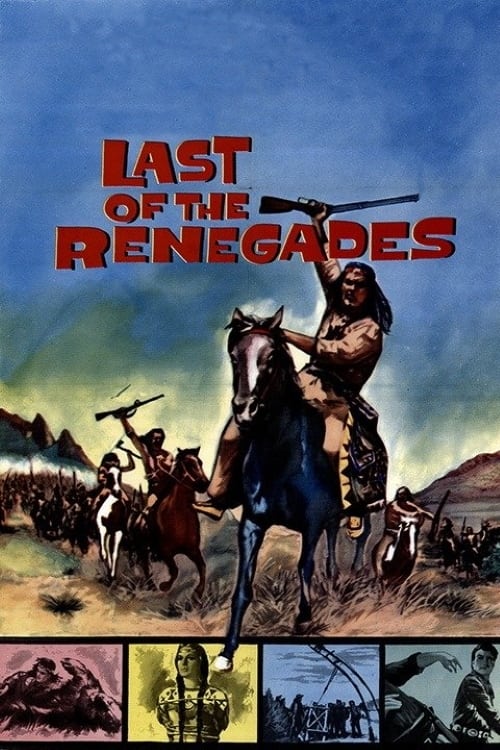
Last of the Renegades
Forester, a ruthless oil baron, wants to create a war between the native American tribes and the white men. Old Shatterhand, Winnetou and their sidekick Castlepool try to prevent this.
The film earned $33.8M at the global box office.


Plot Structure
Story beats plotted across runtime


Narrative Arc
Emotional journey through the story's key moments
Story Circle
Blueprint 15-beat structure
Arcplot Score Breakdown
Weighted: Precision (70%) + Arc (15%) + Theme (15%)
Last of the Renegades (1964) demonstrates carefully calibrated dramatic framework, characteristic of Harald Reinl's storytelling approach. This structural analysis examines how the film's 15-point plot structure maps to proven narrative frameworks across 1 hour and 34 minutes. With an Arcplot score of 6.7, the film balances conventional beats with creative variation.
Characters
Cast & narrative archetypes

Old Shatterhand
Winnetou
Ribanna
Doktor Karl Dodd
Lord Dodd
Castlepool
Annie
Main Cast & Characters
Old Shatterhand
Played by Lex Barker
A frontiersman and blood brother to Winnetou who fights for justice and peace between settlers and Native Americans.
Winnetou
Played by Pierre Brice
Noble Apache chief and blood brother to Old Shatterhand, dedicated to protecting his people and maintaining peace.
Ribanna
Played by Karin Dor
A young Native American woman caught between two worlds who becomes a romantic interest.
Doktor Karl Dodd
Played by Anthony Steel
A villainous oil prospector who schemes to steal Apache land for its valuable resources.
Lord Dodd
Played by Klaus Kinski
A wealthy English aristocrat who becomes entangled in the conflict over Apache territory.
Castlepool
Played by Mario Adorf
A treacherous gunrunner and outlaw who allies with those seeking to exploit the Apache.
Annie
Played by Eddi Arent
A frontier woman who provides assistance to the heroes during their adventures.
Structural Analysis
The Status Quo at 1 minutes (1% through the runtime) establishes Peaceful Apache territory and tribal lands are shown. Winnetou and his people live in harmony, representing the world before oil prospectors and land grabbers arrive.. Structural examination shows that this early placement immediately immerses viewers in the story world.
The inciting incident occurs at 12 minutes when The Forrester gang murders innocent settlers and frames the Apaches for the attack, threatening to ignite a war between whites and Indians that will destroy Winnetou's people.. At 13% through the film, this Disruption is delayed, allowing extended setup of the story world. This beat shifts the emotional landscape, launching the protagonist into the central conflict.
The First Threshold at 24 minutes marks the transition into Act II, occurring at 25% of the runtime. This shows the protagonist's commitment to Old Shatterhand and Winnetou actively commit to infiltrating the Forrester gang and exposing their plot, crossing into enemy territory and leaving the safety of the Apache camp., moving from reaction to action.
At 47 minutes, the Midpoint arrives at 50% of the runtime—precisely centered, creating perfect narrative symmetry. Significantly, this crucial beat The heroes' cover is blown and Forrester captures them. Their plan appears to have failed, and war between settlers and Apaches seems inevitable—a false defeat that raises the stakes., fundamentally raising what's at risk. The emotional intensity shifts, dividing the narrative into clear before-and-after phases.
The Collapse moment at 70 minutes (75% through) represents the emotional nadir. Here, A trusted ally is killed by Forrester's men, and the Apache council votes for war. All hope for peace seems lost, representing the symbolic death of the dream of coexistence., indicates the protagonist at their lowest point. This beat's placement in the final quarter sets up the climactic reversal.
The Second Threshold at 75 minutes initiates the final act resolution at 80% of the runtime. The heroes discover critical evidence proving Forrester's guilt and realize they must unite the settlers and Apaches against the common enemy. They gain clarity and renewed purpose., demonstrating the transformation achieved throughout the journey.
Emotional Journey
Last of the Renegades's emotional architecture traces a deliberate progression across 15 carefully calibrated beats.
Narrative Framework
This structural analysis employs systematic plot point analysis that identifies crucial turning points. By mapping Last of the Renegades against these established plot points, we can identify how Harald Reinl utilizes or subverts traditional narrative conventions. The plot point approach reveals not only adherence to structural principles but also creative choices that distinguish Last of the Renegades within the western genre.
Harald Reinl's Structural Approach
Among the 2 Harald Reinl films analyzed on Arcplot, the average structural score is 7.0, reflecting strong command of classical structure. Last of the Renegades takes a more unconventional approach compared to the director's typical style. For comparative analysis, explore the complete Harald Reinl filmography.
Comparative Analysis
Additional western films include All the Pretty Horses, Shenandoah and Lone Star. For more Harald Reinl analyses, see Apache Gold.
Plot Points by Act
Act I
SetupStatus Quo
Peaceful Apache territory and tribal lands are shown. Winnetou and his people live in harmony, representing the world before oil prospectors and land grabbers arrive.
Theme
A character states that greed for oil and land will destroy the peace between whites and Indians, establishing the film's theme about how avarice corrupts honor and brotherhood.
Worldbuilding
Introduction of the frontier setting, the Apache nation, Old Shatterhand and Winnetou's blood brotherhood, the discovery of oil on Apache land, and the villainous Forrester gang plotting to seize the territory.
Disruption
The Forrester gang murders innocent settlers and frames the Apaches for the attack, threatening to ignite a war between whites and Indians that will destroy Winnetou's people.
Resistance
Old Shatterhand and Winnetou investigate the massacre, debate how to prevent war, and seek evidence to prove the Apaches' innocence. They meet allies including Ribanna, sister of an Apache chief.
Act II
ConfrontationFirst Threshold
Old Shatterhand and Winnetou actively commit to infiltrating the Forrester gang and exposing their plot, crossing into enemy territory and leaving the safety of the Apache camp.
Mirror World
Ribanna becomes a key ally and represents the thematic heart of the story—trust and loyalty between cultures. Her relationship with the heroes embodies the possibility of peace.
Premise
The adventure unfolds as Old Shatterhand and Winnetou work undercover, engage in shootouts, chase sequences, and clever deceptions to gather evidence against Forrester while avoiding detection.
Midpoint
The heroes' cover is blown and Forrester captures them. Their plan appears to have failed, and war between settlers and Apaches seems inevitable—a false defeat that raises the stakes.
Opposition
Forrester tightens his grip, moving forward with his scheme to seize Apache land. The heroes escape but face mounting obstacles. Tensions escalate as both sides prepare for war.
Collapse
A trusted ally is killed by Forrester's men, and the Apache council votes for war. All hope for peace seems lost, representing the symbolic death of the dream of coexistence.
Crisis
Old Shatterhand and Winnetou confront their darkest moment, questioning whether their brotherhood and ideals can withstand the forces of greed and hatred arrayed against them.
Act III
ResolutionSecond Threshold
The heroes discover critical evidence proving Forrester's guilt and realize they must unite the settlers and Apaches against the common enemy. They gain clarity and renewed purpose.
Synthesis
Old Shatterhand and Winnetou lead a climactic battle against Forrester and his gang, exposing the conspiracy. Settlers and Apaches fight side by side, proving unity is possible.
Transformation
Peace is restored. Old Shatterhand and Winnetou stand together as the Apache lands are secured, mirroring the opening but transformed—proving that honor and brotherhood can triumph over greed.