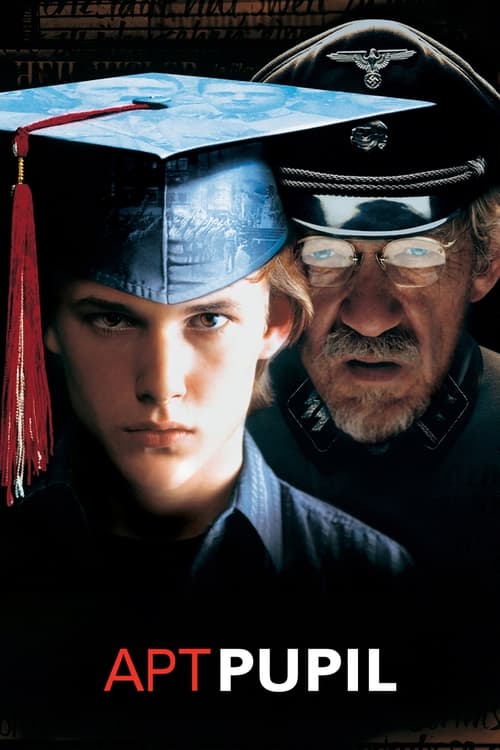
Apt Pupil
One day in 1984, Todd Bowden, a brilliant high school boy fascinated by the history of Nazism, stumbles across an old man whose appearance resembles that of Kurt Dussander, a wanted Nazi war criminal. A month later, Todd decides to knock on his door.
The film struggled financially against its modest budget of $14.0M, earning $8.9M globally (-37% loss). While initial box office returns were modest, the film has gained appreciation for its unconventional structure within the drama genre.
6 wins & 10 nominations


Plot Structure
Story beats plotted across runtime


Narrative Arc
Emotional journey through the story's key moments
Story Circle
Blueprint 15-beat structure
Arcplot Score Breakdown
Weighted: Precision (70%) + Arc (15%) + Theme (15%)
Apt Pupil (1998) exhibits strategically placed narrative architecture, characteristic of Bryan Singer's storytelling approach. This structural analysis examines how the film's 15-point plot structure maps to proven narrative frameworks across 1 hour and 47 minutes. With an Arcplot score of 6.8, the film balances conventional beats with creative variation.
Characters
Cast & narrative archetypes

Todd Bowden
Kurt Dussander
Edward French
Monica Bowden
Richard Bowden
Main Cast & Characters
Todd Bowden
Played by Brad Renfro
A gifted high school student who becomes obsessed with a Nazi war criminal living in his neighborhood and blackmails him into sharing stories of the Holocaust.
Kurt Dussander
Played by Ian McKellen
An elderly Nazi war criminal living under an assumed identity who is discovered and manipulated by Todd, gradually revealing his monstrous past and corrupting influence.
Edward French
Played by David Schwimmer
Todd's guidance counselor who becomes suspicious of the boy's relationship with Dussander and investigates the situation.
Monica Bowden
Played by Ann Dowd
Todd's caring mother who remains unaware of her son's dark obsession and transformation.
Richard Bowden
Played by Bruce Davison
Todd's father, a successful professional who is oblivious to his son's moral descent.
Structural Analysis
The Status Quo at 1 minutes (1% through the runtime) establishes Todd Bowden, an honors student, rides the bus through his suburban neighborhood, appearing to be a normal, high-achieving teenager living a comfortable middle-class life.. Notably, this early placement immediately immerses viewers in the story world.
The inciting incident occurs at 12 minutes when Todd confronts Dussander with evidence of his true identity, disrupting both their lives. The old man's hidden past is exposed, and Todd's innocent world is shattered by coming face-to-face with real evil.. At 11% through the film, this Disruption aligns precisely with traditional story structure. This beat shifts the emotional landscape, launching the protagonist into the central conflict.
The First Threshold at 26 minutes marks the transition into Act II, occurring at 24% of the runtime. This illustrates the protagonist's commitment to Todd actively chooses to continue the relationship with Dussander, making him wear the SS uniform and demanding detailed accounts of atrocities. This choice marks his deliberate entry into moral corruption., moving from reaction to action.
At 53 minutes, the Midpoint arrives at 50% of the runtime—precisely centered, creating perfect narrative symmetry. Of particular interest, this crucial beat Dussander murders a homeless man in his basement, with Todd arriving just afterward. The abstract horror stories have become real murder. The stakes escalate from talk to actual killing, and Todd is implicated., fundamentally raising what's at risk. The emotional intensity shifts, dividing the narrative into clear before-and-after phases.
The Collapse moment at 80 minutes (75% through) represents the emotional nadir. Here, Dussander suffers a heart attack and is hospitalized, where a Holocaust survivor recognizes him. Todd must visit the hospital to maintain the cover story, confronting the reality that everything could be exposed. His mentor/tormentor may die or be revealed., indicates the protagonist at their lowest point. This beat's placement in the final quarter sets up the climactic reversal.
The Second Threshold at 85 minutes initiates the final act resolution at 79% of the runtime. Todd helps Dussander fake his death and assume a new identity, fully committing to protecting the Nazi and their shared secret. He crosses the final moral line, becoming actively complicit rather than just a voyeur., demonstrating the transformation achieved throughout the journey.
Emotional Journey
Apt Pupil's emotional architecture traces a deliberate progression across 15 carefully calibrated beats.
Narrative Framework
This structural analysis employs systematic plot point analysis that identifies crucial turning points. By mapping Apt Pupil against these established plot points, we can identify how Bryan Singer utilizes or subverts traditional narrative conventions. The plot point approach reveals not only adherence to structural principles but also creative choices that distinguish Apt Pupil within the drama genre.
Bryan Singer's Structural Approach
Among the 10 Bryan Singer films analyzed on Arcplot, the average structural score is 6.6, demonstrating varied approaches to story architecture. Apt Pupil represents one of the director's most structurally precise works. For comparative analysis, explore the complete Bryan Singer filmography.
Comparative Analysis
Additional drama films include After Thomas, South Pacific and Dirty Dancing: Havana Nights. For more Bryan Singer analyses, see X-Men, Superman Returns and The Usual Suspects.
Plot Points by Act
Act I
SetupStatus Quo
Todd Bowden, an honors student, rides the bus through his suburban neighborhood, appearing to be a normal, high-achieving teenager living a comfortable middle-class life.
Theme
Todd's guidance counselor Richler mentions how "we never really know what's inside people," foreshadowing the film's exploration of hidden darkness and the seductive nature of evil.
Worldbuilding
Todd is established as an exceptional student obsessed with WWII and the Holocaust. He discovers that his elderly neighbor Arthur Denker is actually Kurt Dussander, a fugitive Nazi war criminal. We see Todd's family life and his academic excellence.
Disruption
Todd confronts Dussander with evidence of his true identity, disrupting both their lives. The old man's hidden past is exposed, and Todd's innocent world is shattered by coming face-to-face with real evil.
Resistance
Todd and Dussander negotiate their relationship. Todd threatens to expose Dussander unless he shares detailed stories about the concentration camps. Dussander resists, attempts to intimidate Todd, but realizes the boy has leverage. A twisted mentorship begins to form.
Act II
ConfrontationFirst Threshold
Todd actively chooses to continue the relationship with Dussander, making him wear the SS uniform and demanding detailed accounts of atrocities. This choice marks his deliberate entry into moral corruption.
Mirror World
Todd meets Becky, a normal teenage girl who represents the healthy, innocent life he's abandoning. She serves as the thematic mirror showing what normal relationships and morality look like versus his corruption.
Premise
Todd becomes increasingly addicted to Dussander's stories of atrocities. His grades drop as he becomes obsessed. The two engage in a mutual corruption: Dussander relives his past, Todd absorbs the evil. They enable each other's darkest impulses.
Midpoint
Dussander murders a homeless man in his basement, with Todd arriving just afterward. The abstract horror stories have become real murder. The stakes escalate from talk to actual killing, and Todd is implicated.
Opposition
Todd's life spirals: his grades plummet, he has violent nightmares, he pushes away Becky. Dussander is hospitalized and nearly exposed. Counselor Richler investigates Todd's decline. The walls close in as both try to maintain their secret while destroying each other.
Collapse
Dussander suffers a heart attack and is hospitalized, where a Holocaust survivor recognizes him. Todd must visit the hospital to maintain the cover story, confronting the reality that everything could be exposed. His mentor/tormentor may die or be revealed.
Crisis
Todd desperately tries to control the unraveling situation at the hospital. He must face what he's become and what he's enabled. The survivor dies before revealing Dussander, but Todd realizes the precariousness of his corruption.
Act III
ResolutionSecond Threshold
Todd helps Dussander fake his death and assume a new identity, fully committing to protecting the Nazi and their shared secret. He crosses the final moral line, becoming actively complicit rather than just a voyeur.
Synthesis
Dussander kills himself with gas, leaving Todd to discover the body. Richler confronts Todd about his relationship with "Mr. Denker." Todd manipulates the counselor, revealing his complete moral corruption. He has become a monster who can convincingly perform normalcy.
Transformation
Todd stands at a rifle range, shooting with disturbing calm and precision, mirroring Dussander's earlier scene. The innocent student from the opening is gone, replaced by someone with the cold capacity for violence. Evil has won.