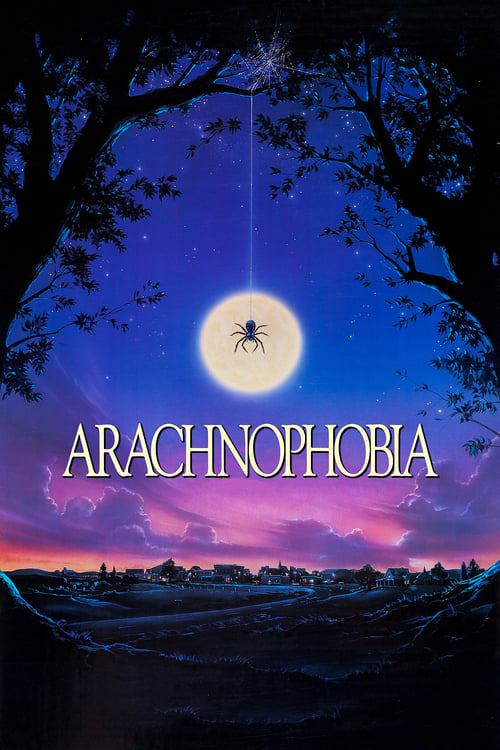
Arachnophobia
A large spider from the jungles of South America is accidentally transported in a crate with a dead body to America where it mates with a local spider. Soon after, the residents of a small California town disappear as the result of spider bites from the deadly spider offspring. It's up to a couple of doctors with the help of an insect exterminator to annihilate these eight legged freaks.
Working with a moderate budget of $31.0M, the film achieved a steady performer with $53.2M in global revenue (+72% profit margin).
2 wins & 5 nominations


Plot Structure
Story beats plotted across runtime


Narrative Arc
Emotional journey through the story's key moments
Story Circle
Blueprint 15-beat structure
Arcplot Score Breakdown
Weighted: Precision (70%) + Arc (15%) + Theme (15%)
Arachnophobia (1990) exemplifies meticulously timed dramatic framework, characteristic of Frank Marshall's storytelling approach. This structural analysis examines how the film's 15-point plot structure maps to proven narrative frameworks across 1 hour and 49 minutes. With an Arcplot score of 7.0, the film balances conventional beats with creative variation.
Characters
Cast & narrative archetypes

Dr. Ross Jennings
Molly Jennings
Delbert McClintock
Dr. James Atherton
Sheriff Lloyd Parsons
Dr. Sam Metcalf
Main Cast & Characters
Dr. Ross Jennings
Played by Jeff Daniels
Big-city doctor with severe arachnophobia who moves to small town and must confront his deepest fear when deadly spiders invade.
Molly Jennings
Played by Harley Jane Kozak
Ross's supportive wife who tries to help her family adjust to small-town life while dealing with spider infestation.
Delbert McClintock
Played by John Goodman
Eccentric local exterminator and military enthusiast who becomes unlikely hero in the spider battle.
Dr. James Atherton
Played by Julian Sands
Entomologist who discovers the deadly spider species and works to understand and combat the outbreak.
Sheriff Lloyd Parsons
Played by Stuart Pankin
Small-town sheriff initially skeptical of spider threat but eventually helps combat the invasion.
Dr. Sam Metcalf
Played by Henry Jones
Elderly local doctor who resents Ross's arrival and views him as competition for patients.
Structural Analysis
The Status Quo at 1 minutes (1% through the runtime) establishes Dr. Ross Jennings lives in San Francisco as a successful doctor, but reveals his lifelong arachnophobia to his wife Molly. Despite his professional success, his fear controls him and prevents him from fully embracing new challenges.. Significantly, this early placement immediately immerses viewers in the story world.
The inciting incident occurs at 14 minutes when A Venezuelan spider hitches a ride in the coffin of a deceased photographer, arriving in Canaima just as Ross and his family settle into town. The deadly spider escapes and breeds with a domestic spider, creating a hybrid species.. At 13% through the film, this Disruption is delayed, allowing extended setup of the story world. This beat shifts the emotional landscape, launching the protagonist into the central conflict.
The First Threshold at 27 minutes marks the transition into Act II, occurring at 25% of the runtime. This illustrates the protagonist's commitment to After the death of Margaret Hollins, Ross decides he must actively investigate what's killing his potential patients. He chooses to fight for his practice and his family's safety, committing to uncover the truth despite his fears., moving from reaction to action.
At 55 minutes, the Midpoint arrives at 50% of the runtime—precisely centered, creating perfect narrative symmetry. Of particular interest, this crucial beat Dr. Atherton arrives and confirms Ross's worst fear: a deadly new spider species is breeding in Canaima and has already killed multiple people. The stakes are raised—this isn't just about Ross's practice anymore; the entire town is in mortal danger. What seemed like a fresh start has become a nightmare., fundamentally raising what's at risk. The emotional intensity shifts, dividing the narrative into clear before-and-after phases.
The Collapse moment at 82 minutes (75% through) represents the emotional nadir. Here, Dr. Atherton is killed by the spiders while searching for the nest. Ross's expert ally dies, leaving him alone to face the threat. This "death of the mentor" represents Ross's lowest point—he must now confront his greatest fear without guidance., shows the protagonist at their lowest point. This beat's placement in the final quarter sets up the climactic reversal.
The Second Threshold at 87 minutes initiates the final act resolution at 80% of the runtime. Ross discovers the spiders' nest is in his own basement. He realizes he must go down there himself—he can't wait for help. Armed with Delbert's knowledge and his own medical understanding, Ross makes the choice to confront his phobia directly. He descends into the cellar alone., demonstrating the transformation achieved throughout the journey.
Emotional Journey
Arachnophobia's emotional architecture traces a deliberate progression across 15 carefully calibrated beats.
Narrative Framework
This structural analysis employs proven narrative structure principles that track dramatic progression. By mapping Arachnophobia against these established plot points, we can identify how Frank Marshall utilizes or subverts traditional narrative conventions. The plot point approach reveals not only adherence to structural principles but also creative choices that distinguish Arachnophobia within the comedy genre.
Frank Marshall's Structural Approach
Among the 4 Frank Marshall films analyzed on Arcplot, the average structural score is 7.1, reflecting strong command of classical structure. Arachnophobia takes a more unconventional approach compared to the director's typical style. For comparative analysis, explore the complete Frank Marshall filmography.
Comparative Analysis
Additional comedy films include The Bad Guys, Ella Enchanted and The Evening Star. For more Frank Marshall analyses, see Congo, Alive and Eight Below.
Plot Points by Act
Act I
SetupStatus Quo
Dr. Ross Jennings lives in San Francisco as a successful doctor, but reveals his lifelong arachnophobia to his wife Molly. Despite his professional success, his fear controls him and prevents him from fully embracing new challenges.
Theme
Molly tells Ross, "Sometimes you have to face your fears to move forward." This establishes the film's central theme: confronting what terrifies you is necessary for growth and transformation.
Worldbuilding
We see Ross's life in San Francisco, his family, and his decision to move to the small town of Canaima, California. Meanwhile, in Venezuela, a deadly spider species is discovered by an expedition team. The two worlds are established separately before they collide.
Disruption
A Venezuelan spider hitches a ride in the coffin of a deceased photographer, arriving in Canaima just as Ross and his family settle into town. The deadly spider escapes and breeds with a domestic spider, creating a hybrid species.
Resistance
Ross struggles to establish his medical practice in Canaima as the local doctor, Sam Metcalf, refuses to retire. Ross debates whether moving was the right choice. Meanwhile, people in town begin dying mysteriously, though the causes seem natural at first.
Act II
ConfrontationFirst Threshold
After the death of Margaret Hollins, Ross decides he must actively investigate what's killing his potential patients. He chooses to fight for his practice and his family's safety, committing to uncover the truth despite his fears.
Mirror World
Delbert McClintock, the eccentric exterminator, enters Ross's life. Delbert represents someone who has mastered what Ross fears—he confidently handles insects and spiders. Their partnership becomes the relationship that will help Ross confront his phobia.
Premise
Ross teams up with spider expert Dr. James Atherton to investigate the spider deaths. This is "the promise of the premise"—a doctor with arachnophobia must hunt deadly spiders. Ross explores this new terrifying world while trying to convince the town of the danger.
Midpoint
Dr. Atherton arrives and confirms Ross's worst fear: a deadly new spider species is breeding in Canaima and has already killed multiple people. The stakes are raised—this isn't just about Ross's practice anymore; the entire town is in mortal danger. What seemed like a fresh start has become a nightmare.
Opposition
The spiders spread throughout the town, killing more people. Ross's family is directly threatened when spiders invade their home. The town turns against him, blaming him for the deaths. His arachnophobia intensifies as the danger grows closer, and he struggles to protect his family while paralyzed by fear.
Collapse
Dr. Atherton is killed by the spiders while searching for the nest. Ross's expert ally dies, leaving him alone to face the threat. This "death of the mentor" represents Ross's lowest point—he must now confront his greatest fear without guidance.
Crisis
Ross processes his terror and despair. His family is in immediate danger, Atherton is dead, and he's the only one who can stop the spiders. He faces the dark reality that he must descend into his worst nightmare—literally entering the spider nest—or everyone he loves will die.
Act III
ResolutionSecond Threshold
Ross discovers the spiders' nest is in his own basement. He realizes he must go down there himself—he can't wait for help. Armed with Delbert's knowledge and his own medical understanding, Ross makes the choice to confront his phobia directly. He descends into the cellar alone.
Synthesis
Ross battles the spiders in his basement, using everything he's learned. He faces the massive queen spider and her offspring in a terrifying confrontation. Combining Delbert's pest control tactics with his own ingenuity, Ross destroys the nest and kills the spider colony, saving his family and town.
Transformation
Ross emerges from the basement victorious, reuniting with his family. He's no longer controlled by his fear—he faced it literally and survived. The final image shows Ross at peace in Canaima, his practice thriving, having proven to himself and the town that he belongs there.