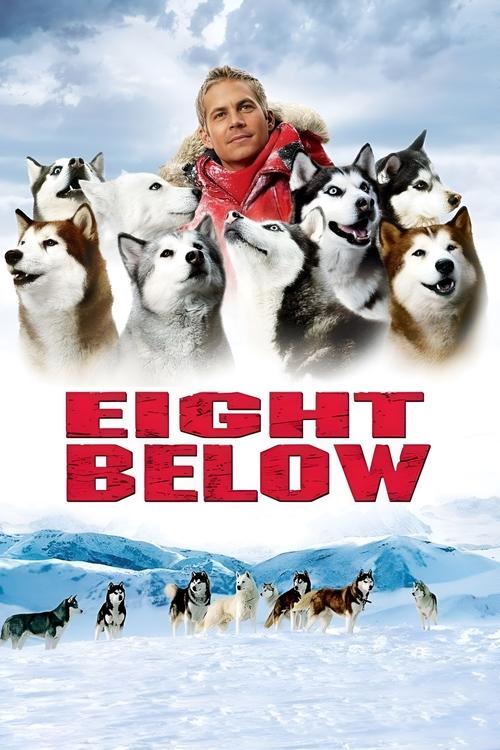
Eight Below
In the Antarctic, after an expedition with Dr. Davis McClaren, the sled dog trainer Jerry Shepherd has to leave the polar base with his colleagues due to the proximity of a heavy snow storm. He ties his dogs to be rescued after, but the mission is called-off and the dogs are left alone at their own fortune. For six months, Jerry tries to find a sponsor for a rescue mission.
Despite a respectable budget of $40.0M, Eight Below became a solid performer, earning $120.5M worldwide—a 201% return.
2 wins & 2 nominations


Plot Structure
Story beats plotted across runtime


Narrative Arc
Emotional journey through the story's key moments
Story Circle
Blueprint 15-beat structure
Arcplot Score Breakdown
Weighted: Precision (70%) + Arc (15%) + Theme (15%)
Eight Below (2006) exhibits strategically placed dramatic framework, characteristic of Frank Marshall's storytelling approach. This structural analysis examines how the film's 15-point plot structure maps to proven narrative frameworks across 2 hours. With an Arcplot score of 7.7, the film showcases strong structural fundamentals.
Characters
Cast & narrative archetypes

Jerry Shepard
Maya
Max
Charlie Cooper
Katie
Old Jack
Dewey
Main Cast & Characters
Jerry Shepard
Played by Paul Walker
Antarctic guide and dog handler forced to leave his sled team behind, who becomes obsessed with mounting a rescue mission.
Maya
Played by Herself (Dog)
Lead female dog of the sled team, wise and protective, who guides the pack through 175 days of survival in Antarctica.
Max
Played by Himself (Dog)
Lead male dog and Maya's counterpart, strong and brave, who helps lead the team through extreme conditions.
Charlie Cooper
Played by Bruce Greenwood
Cartographer and scientist whose emergency evacuation forces Jerry to leave the dogs behind, later helps fund the rescue mission.
Katie
Played by Moon Bloodgood
Bush pilot who flies missions to and from Antarctica, Jerry's romantic interest who supports his rescue efforts.
Old Jack
Played by Himself (Dog)
Aging but wise veteran sled dog who sacrifices himself to help the younger dogs survive.
Dewey
Played by Himself (Dog)
Young, energetic sled dog who becomes injured and tests the pack's loyalty and survival instincts.
Structural Analysis
The Status Quo at 1 minutes (1% through the runtime) establishes Jerry Shepard leads his sled dog team across the pristine Antarctic landscape, showing the harmonious relationship between musher and dogs. The team works in perfect synchronization, demonstrating their bond and Jerry's competence in this frozen world.. Of particular interest, this early placement immediately immerses viewers in the story world.
The inciting incident occurs at 13 minutes when Dr. Davis McClaren arrives needing an emergency expedition to find a meteorite before the season ends. This urgent mission will disrupt the planned evacuation schedule and put everyone at risk, setting the story's events in motion.. At 11% through the film, this Disruption aligns precisely with traditional story structure. This beat shifts the emotional landscape, launching the protagonist into the central conflict.
The First Threshold at 29 minutes marks the transition into Act II, occurring at 24% of the runtime. This demonstrates the protagonist's commitment to Jerry makes the active choice to undertake the dangerous expedition with Dr. McClaren, taking his dog team into the wilderness despite the approaching storm. This decision launches the adventure and will lead to consequences he cannot foresee., moving from reaction to action.
At 59 minutes, the Midpoint arrives at 49% of the runtime—precisely centered, creating perfect narrative symmetry. Significantly, this crucial beat Jerry is forced to leave the dogs chained at the base, promising to return. The evacuation helicopter cannot carry the dogs' weight with the injured McClaren aboard. This false defeat - being forced to abandon his team - raises the stakes enormously and splits the narrative between Jerry's guilt and the dogs' survival., fundamentally raising what's at risk. The emotional intensity shifts, dividing the narrative into clear before-and-after phases.
The Collapse moment at 89 minutes (74% through) represents the emotional nadir. Here, Jerry hits rock bottom: he has exhausted all options for rescue, months have passed, and everyone tells him the dogs cannot possibly have survived. He falls into depression and alcohol, having given up hope. Simultaneously, the weakest dog, Dewey, dies from injuries, providing the literal "whiff of death."., illustrates the protagonist at their lowest point. This beat's placement in the final quarter sets up the climactic reversal.
The Second Threshold at 96 minutes initiates the final act resolution at 80% of the runtime. McClaren, the scientist Jerry saved, arrives with funding and a plane, feeling his own debt of loyalty. This new information and resource gives Jerry the means to return. He synthesizes his bond with the dogs and others' support to mount a final rescue attempt., demonstrating the transformation achieved throughout the journey.
Emotional Journey
Eight Below's emotional architecture traces a deliberate progression across 15 carefully calibrated beats.
Narrative Framework
This structural analysis employs systematic plot point analysis that identifies crucial turning points. By mapping Eight Below against these established plot points, we can identify how Frank Marshall utilizes or subverts traditional narrative conventions. The plot point approach reveals not only adherence to structural principles but also creative choices that distinguish Eight Below within the adventure genre.
Frank Marshall's Structural Approach
Among the 4 Frank Marshall films analyzed on Arcplot, the average structural score is 7.1, reflecting strong command of classical structure. Eight Below represents one of the director's most structurally precise works. For comparative analysis, explore the complete Frank Marshall filmography.
Comparative Analysis
Additional adventure films include The Black Stallion, The Bad Guys and Puss in Boots. For more Frank Marshall analyses, see Congo, Alive and Arachnophobia.
Plot Points by Act
Act I
SetupStatus Quo
Jerry Shepard leads his sled dog team across the pristine Antarctic landscape, showing the harmonious relationship between musher and dogs. The team works in perfect synchronization, demonstrating their bond and Jerry's competence in this frozen world.
Theme
Base manager discusses the importance of loyalty and not leaving anyone behind. This casual dialogue about the Antarctic code establishes the film's central theme: the bonds of loyalty between man and animal, and the moral imperative to honor those bonds.
Worldbuilding
Establishment of the Antarctic research station, Jerry's role as guide, his relationship with each of the eight dogs (Maya, Max, Old Jack, Dewey, Truman, Shadow, Buck, and Shorty), the other station personnel, and the approaching winter deadline. We see Jerry's expertise and deep connection with his team.
Disruption
Dr. Davis McClaren arrives needing an emergency expedition to find a meteorite before the season ends. This urgent mission will disrupt the planned evacuation schedule and put everyone at risk, setting the story's events in motion.
Resistance
Jerry debates taking the dangerous mission in worsening weather conditions. He's torn between his professional duty, the scientist's urgent need, and concern for his dogs' safety. The team prepares for the expedition despite warnings about the approaching storm.
Act II
ConfrontationFirst Threshold
Jerry makes the active choice to undertake the dangerous expedition with Dr. McClaren, taking his dog team into the wilderness despite the approaching storm. This decision launches the adventure and will lead to consequences he cannot foresee.
Mirror World
Katie, the base pilot, represents the emotional connection and civilian life Jerry has been avoiding. Their relationship subplot begins to develop, showing what Jerry could have if he weren't so isolated and committed solely to his work and dogs.
Premise
The expedition into the Antarctic wilderness - the promise of the premise. We see the dogs' incredible abilities, the beauty and danger of Antarctica, the successful meteorite recovery, and then the disaster: McClaren falls through ice, is injured, and a massive storm closes in, forcing an emergency evacuation.
Midpoint
Jerry is forced to leave the dogs chained at the base, promising to return. The evacuation helicopter cannot carry the dogs' weight with the injured McClaren aboard. This false defeat - being forced to abandon his team - raises the stakes enormously and splits the narrative between Jerry's guilt and the dogs' survival.
Opposition
Dual narrative: Jerry desperately seeks funding and transport to return to Antarctica while bureaucracy and winter conditions block him. Meanwhile, the dogs break free from their chains and struggle to survive, hunting seals, evading leopard seals, and battling the elements. Old Jack is killed by a leopard seal. The pressure intensifies on both fronts.
Collapse
Jerry hits rock bottom: he has exhausted all options for rescue, months have passed, and everyone tells him the dogs cannot possibly have survived. He falls into depression and alcohol, having given up hope. Simultaneously, the weakest dog, Dewey, dies from injuries, providing the literal "whiff of death."
Crisis
Jerry's dark night of the soul. He processes his guilt and grief, feeling he has betrayed the dogs who depended on him. Katie and others try to console him, but he cannot forgive himself. He must decide whether to accept their loss or make one final attempt.
Act III
ResolutionSecond Threshold
McClaren, the scientist Jerry saved, arrives with funding and a plane, feeling his own debt of loyalty. This new information and resource gives Jerry the means to return. He synthesizes his bond with the dogs and others' support to mount a final rescue attempt.
Synthesis
The finale: Jerry returns to Antarctica and searches for the dogs. He finds them against all odds - six of the eight have survived 180 days on their own. The reunion is emotional and powerful. He brings them home, honoring his promise and the bond of loyalty that defines the relationship between human and animal.
Transformation
Jerry and the surviving dogs together in civilization, mirroring the opening image but transformed. Jerry has learned the true depth of loyalty and sacrifice, has opened himself to human relationships with Katie, and honors the memory of the dogs who didn't survive. The bond between man and animal has been tested and proven unbreakable.